
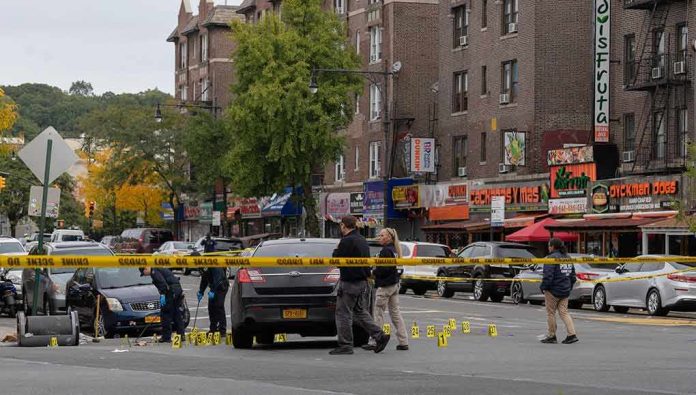
A 12-year-old boy is charged with voluntary manslaughter while armed in the fatal shooting of 13-year-old Ahmad Mims in Northeast Washington, D.C.
Story Snapshot
- Police arrested a 12-year-old boy tied to the July 11 killing of Ahmad Mims.
- Officers found Mims shot on Rosedale Street Northeast around 8:24 p.m.; he died at the scene.
- A search warrant affidavit says witnesses linked the shooting to a fight involving the suspect’s sister.
- Investigators reviewed hallway video that may help map the moments before the gunfire.
The Arrest And The Charge, Stated Plainly
Metropolitan Police said members of the Capital Area Regional Fugitive Task Force found and arrested a 12-year-old boy from Northeast D.C. on August 19. Police charged him with voluntary manslaughter while armed in the fatal shooting of 13-year-old Ahmad Mims. Officers had responded to the 1600 block of Rosedale Street Northeast on July 11. They found Mims on a sidewalk with a gunshot wound. D.C. Fire and Emergency Medical Services pronounced him dead at the scene.
Police tied the arrested youth to that July 11 shooting. The location and time match the initial 911 response. The Washington Times noted that officers reached the scene shortly before 8:30 p.m., which aligns with the call-for-service timeline. The charge of voluntary manslaughter while armed signals a theory of a sudden, intense conflict rather than a planned killing, and it places a firearm at the center of the case. The defendant’s age makes the arrest rare and shocking, even in a city used to hard news.
What Investigators Say About Motive And Moments Before
A search warrant affidavit, as described by NBC Washington, says witnesses told detectives Mims was killed after he hit the suspected shooter’s sister. That account fits a provocation story that prosecutors often align with a voluntary manslaughter charge, which turns on heat of passion and lack of premeditation. FOX 5 reported on video that shows two teens waiting in a hallway before the shooting, a detail that can help build a precise timeline and confirm who was nearby and when.
These pieces do not excuse violence. They do guide how the law sorts facts. Voluntary manslaughter is still a homicide. It punishes deadly acts done in a charged moment. The presence of a gun raises the stakes. Any hallway footage, phone records, or shell casings can anchor the sequence. The case will hinge on who did what, when, and why. The District’s juvenile process will decide what the public sees, because privacy rules cover very young defendants.
The Legal Frame For A Very Young Defendant
Juvenile law treats children differently from adults. The United States Supreme Court has ruled that children have less blame, more capacity to change, and must get a sentencing path with hope. The Court’s Miller v. Alabama line barred mandatory life without parole for juveniles, even in homicide cases. That does not mean light consequences. It means the court must weigh youth, brain development, and the chance to reform when it sentences.
D.C. cases like this usually start in juvenile court. That forum focuses on safety and rehabilitation together. Judges can order secure custody, services, and long terms of supervision. When a gun death involves a preteen, the law’s core tension shows. The city must protect the public and honor a child’s status at the same time. That is not soft on crime; it is constitutional order and basic common sense. A system is strong when it is both firm and fair.
The Broader Youth-Violence Picture In D.C.
The District’s recent crime trend gives needed context. Total violent crime fell sharply in 2024, reaching a 30-year low, according to the Metropolitan Police Department data cited by the Criminal Justice Coordinating Council. Juvenile arrests also made up a smaller share of all violent-crime arrests, at 29 percent. One awful case can dominate attention, but policy should follow the numbers and target the people and places at highest risk.
Public safety gains depend on steady basics. Families need safe blocks, swift police response, and clear consequences. Kids need structure, school safety, and mentors. Courts need tools to hold youths accountable and build a way back. When a 12-year-old faces a homicide charge, the response must be two-track: justice for the victim’s family and a plan to stop the next shooting. That is not a choice between mercy and order. It is how a serious city governs itself.
Sources:
washingtontimes.com, dcchroniclenews.com, abcnews4.com, instagram.com