Congress made a loud promise on stock trading, then exposed how hard it is to turn outrage into a clean rule.
Quick Take
- The House passed the Stop Insider Trading Act by 232 to 198, with 13 Democrats joining Republicans.
- The bill barred lawmakers, spouses, and dependent children from buying new individual publicly traded stocks, but it did not force a full divestment of what they already owned.
- Democrats said the package was poisoned by a voter ID rider, which turned an ethics vote into a broader partisan fight.
- Public polling strongly favors banning congressional stock trading, but the bill was narrower than the demand most voters seem to want.
A Vote That Looked Bigger Than It Was
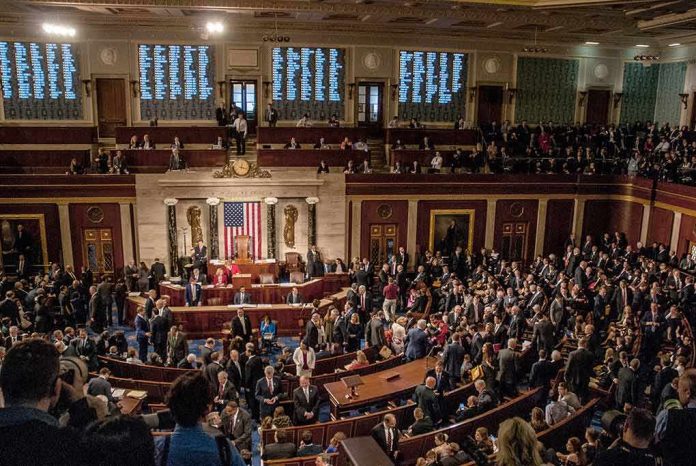
The House vote sounded like a clean strike against self-dealing. It was not that simple. The chamber approved the measure 232 to 198, and only 13 Democrats broke ranks to help Republicans pass it. The bill was presented as a crackdown on congressional stock trading, but the fine print mattered. It targeted new purchases more than old holdings, which is why supporters called it reform and critics called it window dressing.
The basic rule was straightforward: members of Congress, their spouses, and dependent children could not buy new individual stocks while serving in office. Selling existing holdings still remained possible, though with advance notice. Reporting also said the bill carried a penalty structure, including a $2,000 fine or 10 percent of the trade value, whichever was greater, plus any net gain from the violation.
Why Democrats Said No
Democrats did not object only to the stock-trading language. They objected to the package itself. Multiple reports said Republicans tied the trading restriction to federal voter ID language, and that bundle gave Democrats a ready-made reason to vote no. Once the bill became an elections-and-ethics package, the debate stopped being about one clean reform and started looking like a partisan trap dressed up as good government.
That is the part many headlines flattened. The vote did not show a broad Democratic defense of congressional stock trading. It showed a refusal to bless a mixed bill that preserved existing holdings and added a separate voting requirement. Rep. Alexandria Ocasio-Cortez put the objection bluntly, saying the measure was “not a congressional stock trading ban” because it still allowed lawmakers to hold stocks they already owned.
Why the Bill Still Fell Short
The strongest criticism is not that the House did nothing. It is that the House did something narrower than the public probably expects. The measure blocked new purchases, but it did not force lawmakers to sell off what they already had. It also allowed certain investments to remain exempt, including some widely held funds and some trust arrangements. That means the bill addressed future conduct while leaving the deeper conflict of ownership partly intact.
The Swamp Protects Its Own: 198 House Democrats Reject Congressional Stock-Trading Crackdown https://t.co/iRcfQo57Hy
— David Haneman (@dmhaneman) July 23, 2026
That gap matters because public opinion is not shy about the issue. A University of Maryland Program for Public Consultation survey found 86 percent support for banning members of Congress from trading individual stocks, including strong support from Republicans and Democrats alike. That kind of number creates political pressure for a simpler, tougher rule. When a bill keeps old holdings in place, it invites suspicion even if it does move the ball forward.
The Bigger Reform Fight Behind the Headlines
This vote fits a larger pattern in Congress. Repeated proposals have pushed farther than this House bill, including the Bipartisan Ban on Congressional Stock Ownership Act of 2023, which would require divestment, and newer bipartisan and Senate efforts that would go even harder on ownership and trading. That history matters because it shows the House bill was not the end point. It was one version of a fight that keeps returning because lawmakers keep disagreeing on how strict the rule should be.
That is why the political story is more complicated than “198 Democrats voted against a ban.” The House did approve a real restriction on future buying, and that is not nothing. But it also attached a voter ID fight, left existing holdings in place, and stopped short of the stricter designs many reformers prefer. In plain terms, Congress took a step toward reform while still protecting plenty of room for the swamp to keep swimming.
Sources:
redstate.com, facebook.com, nytimes.com, washingtonexaminer.com, youtube.com, publicconsultation.org, en.bloomingbit.io, deseret.com, thehill.com, congress.gov, pbs.org, merkley.senate.gov, magaziner.house.gov