The most powerful government in Afghanistan right now cannot say for sure how many of its own people just died in one night of water.
Story Snapshot
- At least 23 people are confirmed dead after flash floods in Nuristan province, eastern Afghanistan.
- More than 100 people remain missing as rescue crews dig through rubble and mud.
- The floods tore through Parun, the provincial capital, flattening homes and sweeping away families.
- Conflicting death tolls expose a wider problem: Afghanistan’s disaster numbers are often wrong or incomplete.
A mountain city smashed in a single night
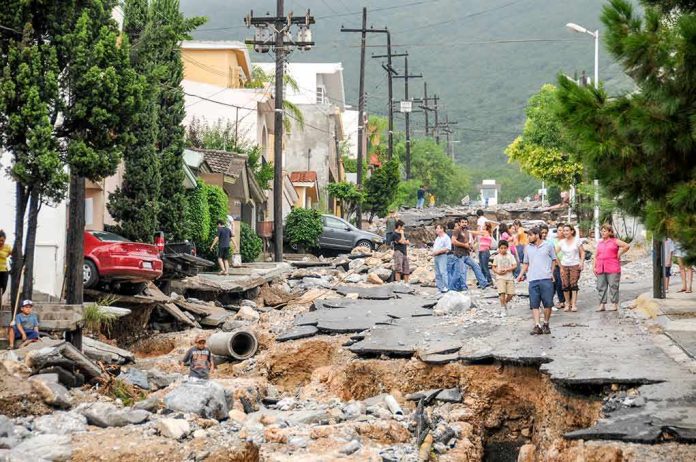
On Monday, torrential rain turned steep valleys in Afghanistan’s Nuristan province into raging rivers of mud and rock. Flash floods slammed into Parun, the provincial capital, and nearby villages, crushing houses and sweeping away people as they slept. Local and national disaster officials now say at least 23 people are dead, more than 80 are injured, and over 100 are still missing across the area. Rescuers climb over broken concrete and twisted metal, searching for bodies and anyone who might still be alive under the debris.
Officials from the Afghanistan National Disaster Management Authority say many of the dead were trapped when their homes simply collapsed under the force of the water and mud. Videos shared from Nuristan show whole blocks of buildings reduced to piles of stone, timber, and rebar, with shocked residents using their bare hands to dig. In Parun, witnesses describe cars tossed aside like toys and hotel walls peeled away, exposing rooms that look frozen in time at the moment the flood hit. For many families, entire generations vanished in a few minutes.
Numbers that change while bodies are still being found
Right after the floods, Taliban-run agencies reported 20 dead, around 80 injured, and more than 100 missing. Within a day, that confirmed death toll rose to 23. Afghan broadcasters and international outlets still quote different figures, and some local sources warn that the real number will likely be higher once remote hamlets report in. This pattern is familiar. In other Afghan floods, early government figures have been far lower than later counts compiled by the United Nations and aid groups.
For ordinary Afghans, this gap in numbers is not just about statistics; it shapes who gets help, and who is forgotten. When a government controls all the official information and there is little independent media on the ground, people outside the country must rely on state statements that may be incomplete. That clashes with basic common sense and with conservative values that say leaders should tell hard truths, especially when lives are at stake. When outside groups later confirm higher death tolls, distrust deepens.
Why Nuristan keeps getting hit so hard
Nuristan sits in Afghanistan’s rugged eastern mountains, in river basins that flood easily when heavy rain hits steep slopes. Scientists who study the country’s floods say these eastern and northeastern regions are prime targets for sudden, violent runoff. Narrow valleys act like funnels, speeding water and debris straight into villages built close to riverbeds. Roads are few. Bridges are weak or missing. When a flash flood tears out one dirt road, whole communities become islands, cut off from help for crucial hours or days.
Flash floods in eastern Afghanistan have killed 20 people, injured about 80 more and left more than 100 missing, Afghan authorities say. https://t.co/t9knmH1aB0
— NBC News (@NBCNews) July 21, 2026
Since 2024, extreme rainfall tied to climate change and patterns like El Niño has driven repeated floods across most of Afghanistan’s provinces. United Nations reports show more than 280,000 people affected by flooding in one recent season alone. Yet, at the same time, war damage, deforestation, and poor drainage design have stripped away many natural protections that once slowed water. Trees are gone. Hill terraces have eroded. The result is simple and brutal: when the rain comes now, it hits harder, and more people die.
A country drowning, with weak warning and slow aid
This latest disaster in Nuristan is only one chapter in a larger story. In May 2024, flash floods in Baghlan province killed more than 300 people and destroyed thousands of homes, according to the United Nations food agency. Other provinces saw dozens of deaths at the same time. Earlier and later floods, from Parwan to Ghor, have followed the same grim script: sudden rain, weak early warnings, fragile houses in risky locations, and rescue teams that arrive late or lacking gear.
Afghanistan’s flood crisis shows what happens when nature’s power meets political weakness. Strong, honest disaster reporting would mean faster aid, clearer planning, and less loss in the next storm. Instead, many villagers in Nuristan and beyond rely on word of mouth, local mosques, and simple observation of the sky to decide when to flee. They live with the knowledge that if the river rises tonight, the outside world may not even learn their names.
Sources:
youtube.com, en.wikipedia.org, efe.com, bbc.com, jpost.com, unn.ua, lemonde.fr, reuters.com, egusphere.copernicus.org, unocha.org