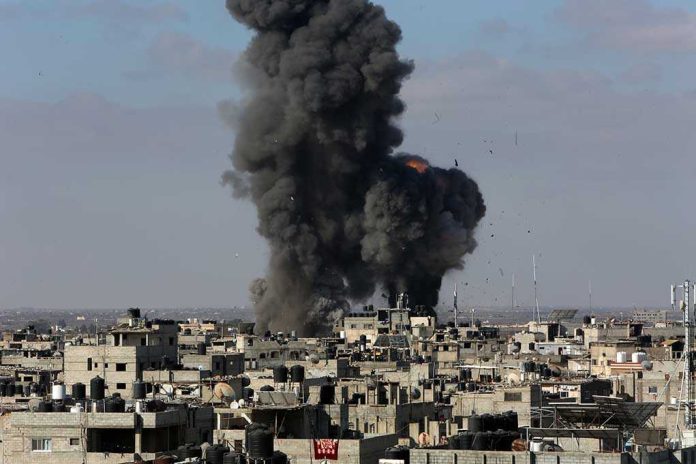
The Trump administration’s aggressive military strategy against ISIS in Syria marked a critical turning point in the fight against terrorism, yet it was not without controversy and consequences.
Story Snapshot
- Intensified U.S. air and advisory campaign against ISIS under Trump.
- Increased airstrikes and looser rules of engagement characterized the strategy.
- Major operations led to the fall of ISIS’s de facto capital, Raqqa, in 2017.
- Post-2019, ISIS operated as an insurgency despite losing territorial control.
The Campaign Against ISIS
The Trump administration’s military operations against ISIS in Syria involved a significant escalation of the existing U.S.-led coalition air and advisory campaign. This effort, part of Operation Inherent Resolve, focused on destroying ISIS’s territorial holdings and leadership. The campaign included increased airstrikes and more aggressive rules of engagement, supporting local partners like the Syrian Democratic Forces (SDF) to reclaim key territories such as Raqqa and Deir ez-Zor.
The fall of Raqqa, ISIS’s de facto capital, in October 2017 marked a pivotal moment in the campaign. With U.S. support, the SDF successfully captured the city, leading President Trump to declare a “critical breakthrough” in the fight against ISIS. However, the campaign also raised concerns about civilian casualties and the long-term implications of the intensified military strategy.
Operational Dynamics
Trump’s approach to the ISIS threat differed from the previous administration by prioritizing speed and intensity. The campaign’s rapid territorial gains and higher strike tempo showcased a shift in tactics, with fewer constraints on military operations. This strategy aimed to deliver a decisive blow to ISIS’s territorial ambitions while demonstrating strong U.S. resolve to combat terrorism.
Despite these achievements, the campaign faced criticism over its impact on Syrian civilians and urban infrastructure. The high-intensity air and artillery strikes, particularly in Raqqa and Deir ez-Zor, resulted in significant civilian casualties and urban destruction. NGOs and international bodies raised concerns about the humanitarian cost of the operations, prompting calls for accountability and better measures to protect non-combatants.
Strategic and Political Implications
The territorial defeat of ISIS did not signify the end of the group as a threat. ISIS persisted as an insurgent and terrorist network, maintaining cells in Syria and Iraq. The campaign’s success in dismantling ISIS’s territorial control did not eliminate its ideology or clandestine operations, underscoring the need for continued vigilance and counterterrorism efforts.
Politically, the campaign allowed the Trump administration to claim a significant victory against ISIS, bolstering its image as a decisive force against terrorism. However, the broader implications of the campaign included strained U.S. relationships with regional partners like Turkey, which viewed the SDF’s Kurdish elements with suspicion. The complex dynamics in Syria, involving multiple actors with competing interests, further complicated the situation.
Long-Term Effects and Perspectives
The long-term effects of the campaign against ISIS continue to unfold. The destruction of urban centers and infrastructure in eastern Syria has crippled local economies, hindering recovery and creating conditions that could foster extremism’s return. The political landscape in Syria remains unstable, with unresolved issues surrounding the governance and security of territories liberated from ISIS control.
Expert analyses highlight the challenges of maintaining a stable post-ISIS environment. The reliance on airpower and local partners remains a central component of U.S. counterterrorism strategy, but it also raises questions about sustainability and effectiveness. The campaign’s outcomes have become a point of contention among policymakers and analysts, reflecting the complexities of modern warfare and counterinsurgency efforts.