A foreign dictator’s death overseas can turn an ordinary New York park into a pressure cooker in under an hour.
Quick Take
- Ali Khamenei’s assassination sparked global mourning rallies, celebrations, and street clashes that quickly spilled into diaspora communities.
- A New York City “vigil” scenario fits a familiar pattern: opposed factions show up, symbols provoke, phones record, and a scuffle becomes the headline.
- Public order in the U.S. hinges on a hard balance: protect speech you hate while stopping hands from flying.
- Viral video rewards outrage, not context, which pushes local confrontations into national political ammunition.
How Khamenei’s death turned diaspora politics into street-level conflict
Ali Khamenei’s killing on February 28, 2026 detonated a uniquely combustible mix: religion, geopolitics, and personal trauma. Iranian state authorities moved fast to formalize grief with official mourning and public holidays, while opponents of the regime treated the moment as overdue justice after years of repression and a brutal recent crackdown. That split doesn’t stay in Tehran; it travels with immigrants, exiles, activists, and the social media ecosystems that connect them.
Fists Fly in NYC Park As Sickos Hold Vigil for the Murderous, Dead Ayatollah Khamenei https://t.co/5ynyO9By7z
— Sharon DiPiazza (@sissyd) March 7, 2026
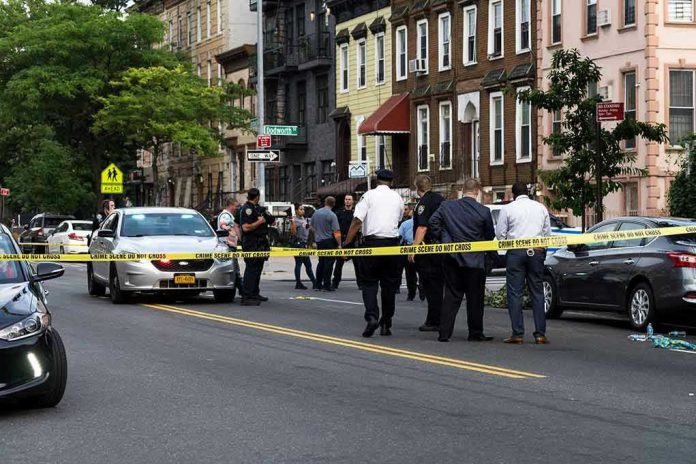
The New York park brawl premise makes sense because New York concentrates nearly every ingredient needed for escalation: dense crowds, visible police, and rival networks that can mobilize quickly. A vigil for Khamenei, framed by supporters as martyrdom, invites counter-demonstrators who view him as a symbol of state violence. Add flags, posters, chanting, and a few people looking for confrontation, and the emotional temperature jumps faster than organizers can control.
The macro-timeline that explains why tempers were already lit
The fight in a park is the last link in a chain that began with a targeted strike and ended with street-level grievance. Iran confirmed Khamenei’s death after early confusion, then rolled out mourning rituals designed to project continuity and legitimacy. Outside Iran, sympathetic protests and riots appeared in multiple countries, while anti-regime Iranians and their allies held celebrations and demonstrations. Early March became the natural window for diaspora events: people react first, secure permits later.
Two realities can coexist without contradiction: some participants genuinely mourn a religious-political leader they revered, and many others genuinely see that leader as responsible for bloodshed and fear. American common sense recognizes grief, but it also recognizes consequences. If someone helped build a system that jailed dissidents and empowered violent proxies, public praise for that figure will collide with families who fled, who lost relatives, or who watched the regime’s crackdowns in real time.
Why “vigils” become flashpoints: symbols, narratives, and the fight for moral high ground
A vigil sounds quiet until you watch what people bring. Portraits, banners, and slogans aren’t decorations; they’re claims about who deserves honor. Pro-Khamenei signs broadcast allegiance to the Islamic Republic’s story of resistance. Counter-protest signs often broadcast the opposite: a demand for accountability, solidarity with victims, and rejection of a system they call tyrannical. When both sides aim to film a “gotcha” moment, the event stops being a memorial and becomes a stage.
The framing matters because it shapes what bystanders think they’re seeing. A tabloid-style headline that calls mourners “sickos” tries to settle the moral argument before any facts arrive. That approach may feel emotionally satisfying, but it also tempts people to treat political opponents as less than human, which makes violence easier. Conservative values emphasize ordered liberty: say what you mean, argue hard, and still keep your hands to yourself.
New York’s hard problem: protecting speech while preventing a punch
City authorities don’t get to pick “good” speech. They manage crowds, enforce permits, and separate groups that want to occupy the same patch of grass. When police show up late, or when groups mingle at choke points like park entrances, confrontations turn physical quickly. Most scuffles begin the same way: shouting, a shove, someone grabbing a sign, and then the first swing. From there, the crowd surges and the phones keep rolling.
Public safety doesn’t require banning unpopular demonstrations; it requires predictable rules and consistent enforcement. Organizers should expect conditions: separate zones, clear walking lanes, no masks for intimidation, and immediate removal of anyone initiating violence. If the state fails at that basic job, ordinary citizens lose trust, and the vacuum gets filled by vigilante impulses. The U.S. can’t function if political disputes migrate from the ballot box to the sidewalk.
The viral video trap that turns a small scuffle into a national storyline
Viral clips rarely show who arrived first, what was said, or who started contact. They show the payoff: the shove, the punch, the takedown, the screaming. That’s why these incidents multiply online even when the on-the-ground event was small. People share what confirms their priors: “Look at these extremists,” or “Look at these thugs,” or “Look at police doing nothing.” The incentive is outrage, not accuracy, which degrades civic judgment.
Adults over 40 have seen this movie with different costumes: Vietnam-era street fights, post-9/11 tensions, Iraq war protests, and more recent clashes over Israel and Gaza. The lesson doesn’t change. When Americans import overseas conflicts into local parks, the first casualty is often neighborhood peace, and the second is truth. The only durable antidote is insisting on lawful protest, firm boundaries, and consequences for anyone who turns politics into battery.
Fists Fly in NYC Park As Sickos Hold Vigil for the Murderous, Dead Ayatollah Khamenei https://t.co/w8npU8jick
— Jacquelyn Lynn (@jacquelynlynn) March 7, 2026
The unanswered question in the NYC-park-style story isn’t whether people will keep showing up; it’s whether institutions will stop treating these events as routine until someone gets seriously hurt. Khamenei’s death created a global wave of passion, and New York is where global passion goes to collide. The U.S. can absorb that collision without surrendering public spaces to chaos, but only if leaders defend free speech and enforce public order with equal seriousness.
Sources:
Iran Death of Ayatollah Khamenei