Madison allowed a days-long street blockade after a fatal police shooting, and the fallout now touches safety, commerce, and trust in city hall.
At a Glance
- Protesters shut a key Madison intersection for days with makeshift barriers.
- Major events were canceled or delayed as the blockade held.
- The city urged peaceful protest but did not publicly authorize a closure.
- The shooting remains under state homicide investigation.
What Triggered The Blockade And Why It Stuck
Police shot and killed Corey Ruiz on a busy Madison street after a struggle where officials say he wielded a knife and injured an officer. The Wisconsin Department of Justice opened a homicide investigation, and the police chief put involved officers on leave while the probe proceeds. Family attorney Ben Crump called the shooting “unjustified and unconstitutional” and urged criminal charges, which poured fuel on growing protests. The city said it supports peaceful protest while the investigation runs.
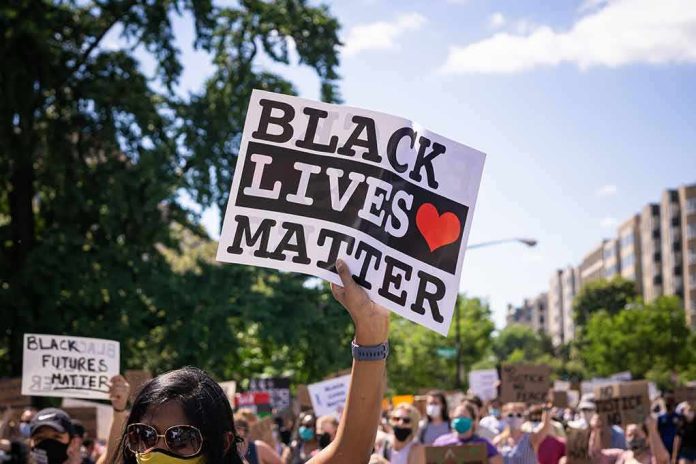
Protesters soon occupied the intersection of Williamson and South Baldwin. They used cars, pallets, furniture, cones, and other debris to block traffic in all directions. The closure persisted for days, not hours, effectively turning a public right-of-way into a protest encampment. Local reporting described the blockade as continuing “until further notice,” signaling no quick return to normal traffic or commerce in the corridor.
City Posture: Encouragement To Speak, Silence On Streets
City leaders promoted a listening session and asked for peaceful protests. The district blog did not grant a permit, name legal terms, or authorize a full street closure. That gap matters. Encouraging speech is proper. Yielding a public artery without a clear plan for access, safety, and end conditions is different. The public record shows engagement and empathy, but not a formal order that closed the street or set time, place, and manner rules. Based on that, “tolerance” fits better than “approval.”
Critics point to knocked-out events and disrupted press briefings as proof that lines were crossed. Reporters documented protesters interrupting the police chief’s press conference and forcing cancellations, including a popular concert series and other community events. That is not debate in the town square; it is coercive disruption that punishes bystanders and businesses who had nothing to do with the shooting. The tactics risk shrinking public sympathy even as the call for transparency remains valid.
Costs On The Ground: Commerce, Access, And Goodwill
The blockade hit more than commutes. Organizers of AtwoodFest canceled. The Madison Public Market delayed its opening. The Dane County Farmers’ Market closed early. Concerts on the Square was shut down after protesters occupied the stage. These are not minor inconveniences; they are the civic rituals that stitch a city together. The city did not publish a formal loss tally, but the visible harm to vendors, workers, and families is real to anyone who lives or shops nearby.
Public safety hinges on clear routes for ambulances, fire trucks, and patrol cars. A hard street closure with improvised barriers adds risk if a call comes from inside the blocked area. If the city believed the blockade was the safest choice, it should have posted an incident action plan with detours, emergency access lanes, and a timeline. Without that, it looks like policy by drift, which satisfies no one and invites longer, riskier standoffs. From a conservative, common-sense view, government’s first duty is order and access.
How To Balance Rights And Order Without Picking Sides
Free speech does not require street seizures when parks, plazas, and sidewalks can host loud, visible protest. Cities have wide leeway to set time, place, and manner rules as long as they apply them evenly. The fix here is not to silence grief or dodge hard questions about force. The fix is a lawful protest perimeter, posted hours, and clear requirements for emergency lanes and cleanup. That approach protects speech, businesses, and first responders at the same time.
Corey Ruiz’s Mom, Sister & Attorney Ben Crump Speak Out: “I Need Somebody to Help Me Understand Why They Felt It Was Ok to Execute My Brother”… “They Took My Baby From Me”
“His Criminal Record Does Not Define Who My Brother Was
He Was Shot Dead by Madison Police While Armed… pic.twitter.com/0JAaKUFLJi— Christina Aguayo (@ChristinaNewstv) July 30, 2026
Next steps are not guesswork. Post all relevant orders, including any traffic-engineering directives, police operational logs, and communications between city hall and organizers. If none exist, say so and issue a formal plan now. Publish a schedule for reopening lanes tied to milestones in the state investigation. Hold firm on neutral rules: no blocked intersections, no stage takeovers, no press gagging. Then let the investigation speak with evidence and let the community respond in places built for crowds, not in the middle of the road.
Sources:
nypost.com, youtube.com, wpr.org, facebook.com, jsonline.com