
A former American Marine in Russian custody is now reported in serious condition, and advocates say his family fears he could die without urgent treatment.
Story Snapshot
- Robert Gilman, a former United States Marine, was hospitalized in Russia and described by advocates as being in a “dissociative stupor.”
- Family-linked advocates say he was fed through a tube and moved to a civilian hospital psychiatric ward.
- His supporters allege harsh treatment in custody, including forced exercise, harassment, and psychotropic drugs.
- The United States government has urged Russia to release him so he can get medical care in the United States.
Hospitalization and the sharpest claims
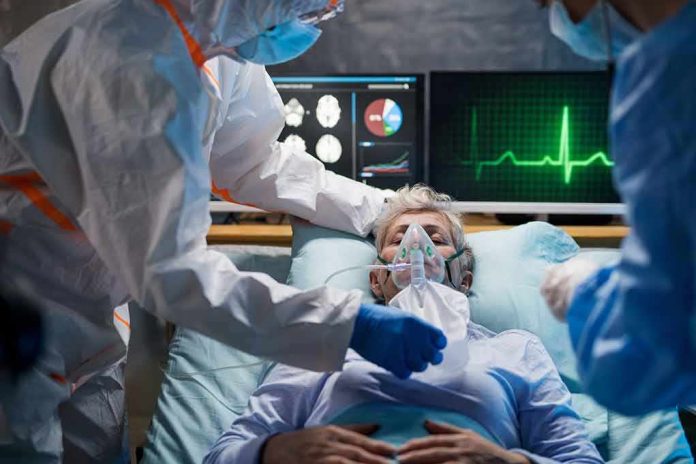
Reporting from Reuters says Gilman was admitted to a hospital after a prison stay in Voronezh, south of Moscow, and later moved into a civilian emergency hospital psychiatric ward. Advocates told Reuters he had slipped into a stupor in June and needed food and fluids through a tube. CBS News likewise reported that he was hospitalized in serious condition and quoted an advocate who described him as unresponsive.
US panics over one American in Russia – Robert Gilman, hospitalized, they demand his release. Meanwhile, 48 Russian citizens sit in US prisons, names hidden behind privacy laws. The numbers don't lie – and neither does the silence. 🫣 #Russia #USA
🔗 https://t.co/9o5Am3TOHY pic.twitter.com/HcI0XZP5LP— #РусскаяВесна (@felix333russia) August 7, 2026
The most alarming claims come from Gilman’s supporters, not from Russian officials. Eric Lebson of Global Reach told CBS News that Russian authorities had subjected Gilman to harassment, forced exercise sessions lasting up to 16 hours, and psychotropic drugs. Reuters later reported that Lebson and Gilman’s sister alleged he had been tortured and injected with mind-altering drugs, and that this treatment led to his transfer from prison medical care.
How the case reached this point
Reuters reported that Gilman was first jailed in 2022 for assaulting a police officer while drunk, then received a longer sentence after later convictions for assaulting prison officials and a state investigator. That history matters because it places the current medical crisis inside a longer and uglier prison record, not a simple one-time incident. It also helps explain why Russian authorities may frame him as a difficult detainee rather than as a vulnerable patient.
Gilman’s supporters tell a different story. The James Foley Foundation says he fell sick while traveling in Russia and was taken to a police station instead of a hospital. The Free Robert Gilman campaign says he faced forced drugging, long exercise punishments, and months in an extreme punishment cell. Those claims are serious, but in the reporting available here, they are still allegations, not independently verified medical findings.
Why the access problem matters
This case is also defined by what outsiders cannot see. Reuters reported that the Russian hospital had barred Gilman’s mother despite a judicial order allowing visitation, and that his U.S. consular officials and Russian lawyer had also been denied access, according to advocates. When family, lawyers, and diplomats cannot get close to the patient, the public record is built from fragments. That makes every confirmed detail more important, and every unsupported claim easier to distort.
🔴 U.S. Marine vet detained in Russia since 2022 hospitalized in serious condition
Robert Gilman, 32, a Marine Corps veteran held by Russia since 2022, is hospitalized in what his family advocate Eric Lebson describes as a "dissociative stupor," fed through a nasal tube.
Lebson… pic.twitter.com/mLFFKrE7BN— NewsTongue (@NewsTongueX) August 6, 2026
The White House and the State Department have urged Moscow to release Gilman so he can receive urgent medical treatment in the United States, Reuters reported. That response shows how seriously Washington views the case. It also places Gilman inside the larger pattern of Russia detention fights, where humanitarian concern, prison secrecy, and hostage diplomacy all collide at once. In that setting, a medical crisis can become both a human emergency and a political weapon.
What is clear is that Gilman is hospitalized, his condition is being described as grave, and his family fears the worst. What remains unproven in the public record provided here is the full medical cause of his collapse, or whether the alleged mistreatment directly caused it. Until those records emerge, the strongest verified fact is also the saddest one: a detained American remains trapped in a system where even basic medical visibility is in short supply.
Sources:
facebook.com, cbsnews.com, reuters.com, infobae.com