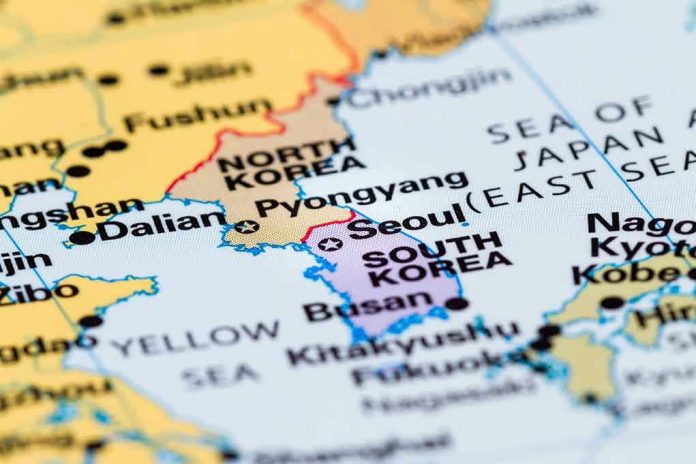
North Korea fired a ballistic missile from Wonsan toward the East Sea, and the timing was no accident.
Story Snapshot
- South Korea tracked a launch from the Wonsan area around late afternoon on Aug. 6, 2026.
- Japan said the missile landed outside its exclusive economic zone; no damage was reported.
- The test came days before annual United States–South Korea military exercises.
- Tokyo lodged a protest through diplomatic channels over the ballistic launch.
What Happened And Where It Landed
South Korea’s Joint Chiefs of Staff said North Korea launched a ballistic missile from the coastal city of Wonsan toward the East Sea on Aug. 6, 2026. South Korean tracking picked up the shot in the late afternoon and labeled it short-range based on early data shared with press outlets. Japan’s defense authorities separately confirmed a ballistic launch and said the projectile fell outside Japan’s exclusive economic zone. Japan reported no harm to ships or aircraft and issued standard public alerts.
Japan followed established playbooks after the North’s launches. Its officials issued notices, tracked the splash point, and pressed a protest through diplomatic channels via its embassy in Beijing, which handles North Korea matters for Tokyo. That sequence—detect, warn, assess, protest—has become routine across the last decade of tests. It reassures mariners and airlines while signaling to Pyongyang that Japan considers every ballistic shot a breach of regional norms.
Why The Timing Matters
The launch lined up with a familiar calendar. It came just days before the annual United States–South Korea military drills, when North Korea often tries to send a message and test gear under pressure. Major exercises raise readiness across the peninsula and highlight allied unity. North Korea has long branded those drills as invasion practice. South Korea and the United States say they are defensive and needed to deter real threats from Pyongyang’s missile and nuclear programs.
Open-source studies have traced a pattern that ties many of North Korea’s tests to allied exercises. A study by a South Korean institute found a majority of nuclear and missile activities in its sample clustered around joint drills, suggesting a blend of politics and training. That fits how leaders in Pyongyang frame these events—as practice for real war and a way to probe allied responses without crossing the line into combat.
What The Launch Says About Capability
Short-range ballistic missiles give North Korea a quick-strike tool against targets in South Korea and Japan. They fly fast, arc high, and can maneuver on the way down. That profile shrinks warning times for defenders and complicates interception. North Korea has rolled out new solid-fuel systems in recent years to cut launch prep and hide movement. The country pairs those systems with frequent field drills to sharpen crews and flood radars during crises, forcing allies to spend time and interceptors wisely.
🚨 Japan says North Korea fires ‘suspected ballistic missile’ amid US-South Korea drill
📍 Suspected launch comes despite US president Trump reducing annual joint exercises with South Korea https://t.co/WaF4OyYMhz pic.twitter.com/xWa34hUJ1A
— Anadolu English (@anadoluagency) August 20, 2026
South Korea and Japan keep improving defenses in reply. Both field layered sensors, land and sea interceptors, and civil alert networks. The United States links with them through shared data and joint training. That mix aims to spot the launch, track it, and if needed, shoot it down. But missile defense is not magic. It buys options and time. Deterrence still rests on clear red lines and the will to enforce them. That is why allied leaders repeat the same message after each test: do not mistake restraint for weakness.
How Leaders Should Read The Signal
This shot was a test of more than metal. It measured allied focus. The answer should be simple and firm. Stay on schedule for drills. Keep sanctions pressure where the law allows. Expand trilateral planning among the United States, South Korea, and Japan. Demand that China press Pyongyang to dial back risk, since instability near Chinese borders serves no one. These steps match common-sense priorities: protect citizens, keep faith with allies, and make cost exceed gain for the aggressor.
Sources:
military.com, chosun.com, stripes.com, news.com.au, nti.org