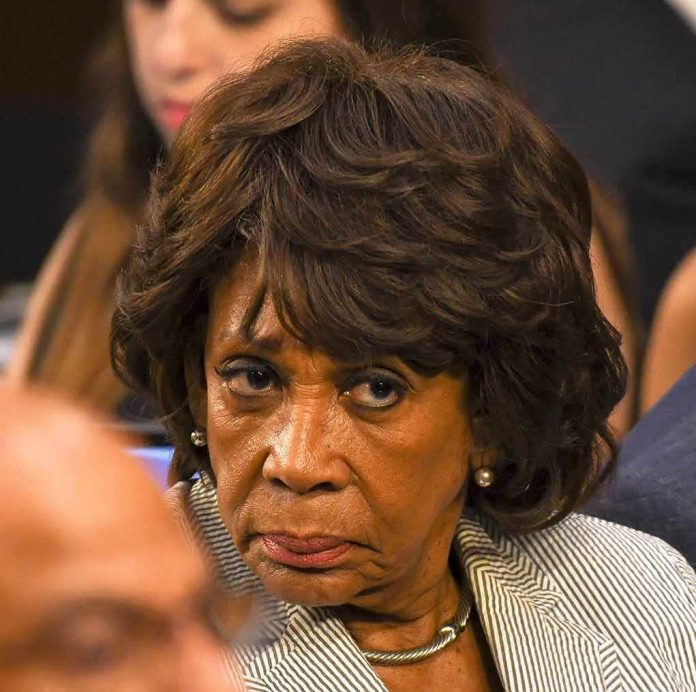
Rep. Maxine Waters claimed “white media” stokes fights between Democrats and socialists to juice ratings, turning race into a shield for party infighting.
Story Highlights
- Maxine Waters blamed “white media” for fueling Democratic infighting to gain ratings.
- Public surveys show most Americans think media increases political division.
- Research finds conflict framing draws attention and can polarize audiences.
- Evidence of intentional efforts to split Democrats for ratings remains unproven.
What Waters Said And Why It Matters
Rep. Maxine Waters argued that “white media” encourages fights between establishment Democrats and the Democratic Socialists of America to boost ratings, according to a contemporaneous summary of her remarks. Waters’ claim puts race at the center of a media critique and reframes a policy and message struggle inside the Democratic Party as a product of outside manipulation. Her comments matter because they cast normal political debate as media-driven division, while dodging the party’s own choices and records.
President Trump’s supporters see a familiar move here. When Democrats face backlash on immigration, crime, or spending, leaders often blame the messenger. Waters’ framing suggests the press is pitting moderates against socialists. That shifts attention away from sharp internal rifts over border enforcement, energy policy, and taxes. It also paints critics as part of a racialized media machine. That approach can chill honest debate and brand dissent as suspect, rather than address policy failures head on.
What The Evidence Shows About Media And Division
Polling and research back up one narrow part of this picture: many Americans think the news media adds to division. A recent index reports that seventy-four percent say the media does more to increase political splits than reduce them. Academic work shows that “conflict framing” — highlighting fights and blame — pulls in attention, boosts engagement, and can heighten polarization across groups. These findings explain why outlets spotlight intraparty clashes. Conflict sells. That does not, by itself, prove a race-based plot.
Broader evidence on intent is thin. A policy review from a center-right-leaning policy shop notes content studies do not show a consistent partisan bias pattern across elections; results vary by cycle and outlet, with some studies finding bias in different directions or toward frontrunners, not parties. That research undercuts sweeping claims that a monolithic “white media” is orchestrating a split for profit. It supports a more basic view: newsrooms chase engagement with conflict-driven stories, regardless of which faction bleeds.
Democratic Infighting Has Real Policy Roots
Fights on the left did not start with a segment producer. Democrats remain split over border security, energy costs, taxation, and street crime. Establishment figures pitch incremental change and message control. Activists demand sweeping amnesty, climate mandates, and wealth taxes. Those differences have spilled into public. Even senior Democrats have scolded their own messaging strategies and reliance on media channels, which is a critique of execution, not proof of a media conspiracy. Voters see the results at the pump, at the grocery store, and on their streets.
Maxine Waters Claims the ‘White Media’ is Trying to Divide Democrats for Ratings | Mike LaChance, The Gateway Pundit
Rep. Maxine Waters recently told followers that the Democrats are doing ‘pretty good’ with regards to the midterms, before warning people that when it comes to… https://t.co/U97vQRjjqP
— Owen Gregorian (@OwenGregorian) September 1, 2026
For constitutional conservatives, two points stand out. First, race-based blame of the press dodges accountability for policies that raised costs and weakened borders. Second, conflict coverage is real, but responsibility still lies with elected leaders. If Democrats choose open-border signals or heavy green mandates, the coverage follows the choice. Media noise cannot hide broken promises or bad results. The answer is not to muzzle the press; it is to fix failing policies and respect open debate.
How Readers Should Weigh Waters’ Claim
Readers should separate three things. What is confirmed: Waters tied Democratic infighting to “white media” and ratings. What research supports: media conflict framing can drive clicks and deepen divides. What is not shown: proof that a coordinated “white media” scheme is intentionally splitting Democrats for profit, as a matter of design and race, across the industry. That distinction keeps the focus on facts, not slogans. It also protects free speech while calling out spin.
Bottom Line For Conservatives
Waters’ charge uses race to deflect from real policy cracks inside the Democratic Party. Americans largely believe the press fans division, and studies describe how conflict framing works. But evidence falls short of a race-based plot to divide Democrats for ratings. The real test is policy, not scapegoats. Under President Trump, the priority remains secure borders, affordable energy, sound money, and safe streets. Voters should demand debate on those goals and reject efforts to silence critics.
Sources:
congress.gov, waters.house.gov, thedailybs.com, transcripts.cnn.com, politico.com