
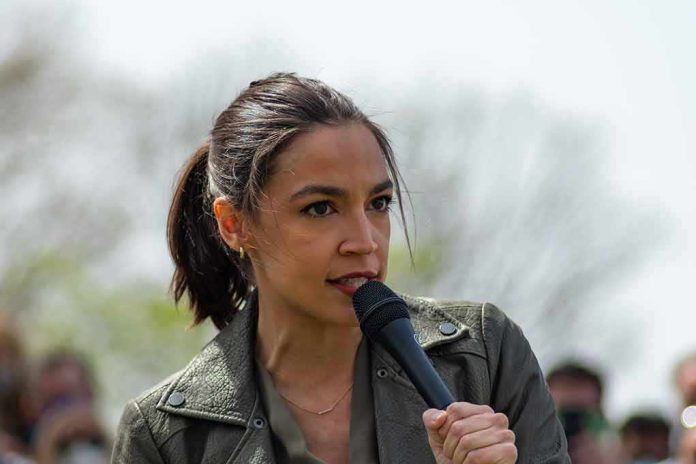
Alexandria Ocasio-Cortez says she will decide her 2028 path after the midterms, and she has not ruled out the presidency or a Senate run.
Story Snapshot
- She left the door open to a 2028 presidential bid and a Senate challenge to Chuck Schumer.
- She says her focus is on the midterms now, with decisions coming afterward.
- Reporters describe her as truly undecided about 2028 moves.
- Her language reflects common political strategy: keep options open while facts develop.
What She Said, When She Said It
Ocasio-Cortez told national outlets that she has not ruled out a 2028 presidential run. She paired that with a clear timeline: decide after the midterms. In an August ABC News appearance recapped by major outlets, she said she was running for Congress now and keeping future options open. She also allowed that a Senate run against Majority Leader Chuck Schumer remains possible, saying “anything is possible” at this stage. The New York Post reported she would consider those choices after November.
Her statements followed months of speculation about whether she would enter the national field or target the Senate. Outlets tracked a steady pattern: she avoided any firm pledge and repeated her midterms-first focus. This language signaled possibility without commitment. It also gave allies and donors a simple frame for the fall: help hold the House now, revisit the big move later. That is sound political sequencing for anyone eyeing 2028.
The Options She Kept Open
Two paths stand out. She could run for president and test her national brand. Or she could primary Schumer in New York and try to change the Senate from within. She left both on the table. She used on-record phrases like “haven’t ruled out” and “anything is possible” when pressed on both routes. A New York Post item captured her timing line cleanly: decisions after the midterms, with lessons learned from November shaping the call. That timing makes practical sense for fundraising, staffing, and message testing.
Coverage by national outlets described her posture as real but not resolved. A June report said she was “truly undecided” about 2028, noting she could run for president or for Schumer’s seat. That phrase matters because it tells readers this is not a coy non-denial. It reads as genuine uncertainty paired with planning. Reporters also noted that she is trying to reach beyond deep-blue audiences, a key sign of national testing. That aligns with a figure weighing multiple maps.
Strategic Ambiguity Done by the Book
Keeping options open is old-school campaign craft. Political researchers call it strategic ambiguity. The play is simple: say enough to show interest, but not so much that you are boxed in before facts harden. Academic work calls it a tool to hold broad coalitions while events unfold. That matches her approach. She gives a timeline, lists options, and avoids a binding statement. Voters now know the menu. Donors know when to check back. Opponents cannot pin her to a single lane yet.
NYT: AOC says the country never electing a female president will factor into her 2028 decision.
“This country has never elected a female president. Why are we pretending that this is not a factor?” AOC said with a laugh. “That doesn’t make it impossible, but to act as though… pic.twitter.com/NYM3j0uvqK
— Politics Watch (@politics_watch1) September 22, 2026
Critics may call this hedging. A cleaner read is discipline. She faces three big variables: the midterm results, the Democratic map in 2028, and her own capacity to build a national machine fast. A cautious stance respects all three. It also fits conservative common sense about risk: do not bet the house before you see the cards. Her vow to decide after the midterms puts outcomes before ambition and keeps her accountable to near-term voters first. One caveat applies: she has made no formal declaration.
Why the Timeline Matters
Waiting until after the midterms tells observers a lot. If Democrats gain or hold key ground, a presidential run may look more viable and less fractious. If the party stumbles, a Senate path could appear smarter, especially if she wants leverage on policy fights. Reporters noted that she linked her decision to what November reveals. That binds her to real-world results, not to hype. It also filters noise from daily social media speculation that cannot raise a dollar or pass a bill.
How to Read the Signals Without Overreading Them
Take her at her word that nothing is decided yet. She has named the choices and the clock. She has set a review point after the midterms. She has not filed paperwork or launched an exploratory committee, based on current reporting. That does not make the interest fake. It makes the process normal. Serious contenders test lanes, hold powder, and watch the map. The next real signal will be post-midterm moves: staff hires, donor calls, travel, and message pivots.
Sources:
townhall.com, nytimes.com, axios.com, en.cibercuba.com, nj.com