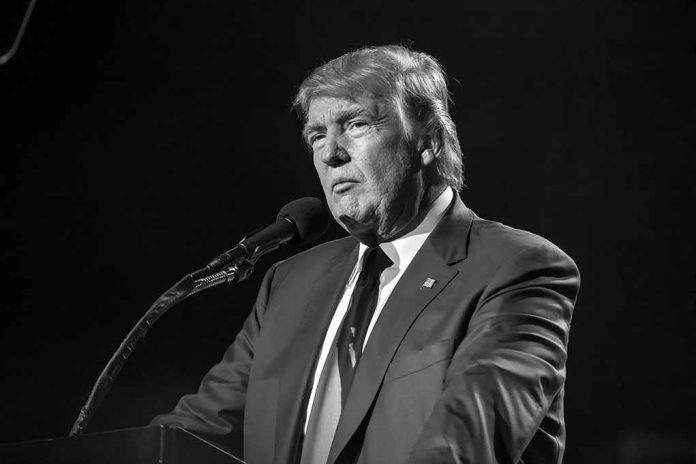
A network anchor tried to nail Trump on facts at the United Nations—and tripped over her own numbers on live TV.
Story Snapshot
- MS NOW cut into President Trump’s United Nations speech with on-air fact-checks.
- The anchor cited a $21 trillion versus $11.2 trillion investment figure—and drew fire for conflating pledges and commitments.
- Major outlets ran same-day fact checks of Trump’s claims, including on wars ended and shipping through the Strait of Hormuz.
- The White House posted its transcript, letting viewers check every line themselves.
What Triggered The Blowback
MS NOW interrupted the address to challenge Trump’s numbers on foreign investment, shipping traffic, and war claims. The anchor, Stephanie Ruhle, said Trump’s “$21 trillion” in foreign commitments was wrong because the White House site listed “$11.2 trillion,” and that they were only pledges. Viewers pounced on the slip. Critics argued she mixed up categories and framed uncertainty as proof. The segment hardened battle lines: fans cheered instant accountability; skeptics saw a rush to dunk, not to inform.
Trump’s speech had plenty to chew on. He praised policy wins, claimed large global investment interest, and repeated that he had settled multiple wars. The Associated Press, Cable News Network, Public Broadcasting Service, the New York Times, and PolitiFact all posted fact checks that day. They flagged exaggerations and framing issues, including his line about settling eight wars, which they labeled false or misleading. Supporters said the speech set clear goals; critics called it swagger with shaky receipts.
The Numbers Fight: Investments And Ships
The investment dispute turned on definitions. Trump spoke of “commitments” from foreign entities; the cable segment pointed to a smaller “pledges” total on a White House page and treated it as the hard cap. Those are not the same thing if commitments span multi-year announcements while pledges reflect shorter windows or nonbinding intents. Without the full ledger, precise scoring stays tricky. The better move is disclosure: release the deal list and dates so citizens can add it up.
The Strait of Hormuz claim drew a similar tangle. Trump cited daily ship ranges. The segment cited a weekend comparison showing fewer commodity vessels over a short window. That is apples to oranges if one side uses daily averages across categories and the other uses a two-day slice of a subset. If you count crude tankers one weekend, you will miss container ships and gas carriers over a month. Method matters; so does the time frame.
What The Fact-Checks Got Right, And Where They Strain
Independent reviews flagged the “settled eight wars” line as a reach. Ending a war means more than brokering a ceasefire or freezing a front line. It requires durable peace terms and verified drawdowns. On that, the evidence is thin. Calling this claim false or misleading is fair based on public records. But several other lines in the speech lean on contested benchmarks, where judgment calls can beat hard proof. That is where caution should replace dunking.
Many outlets also challenged Trump’s figures on drugs, energy, and diplomacy. Some of those calls rest on measured data, like official counts or budget lines; others rest on modeling or rival definitions, which invite debate. The safest standard is the conservative one our grandparents used: show your work, name the source, and keep opinion in the opinion lane. When journalists do that, they earn trust. When they rush, they gift the other side an easy counterpunch.
The Real Lesson For Viewers
The White House posted a transcript of Trump’s remarks. That gives every reader a primary text. Match each claim to a cited source and decide. If the administration wants credit for investment wins, it should publish the underlying list of deals and timelines. If networks want to fact-check in real time, they should flash documents on screen, not just confident tones. Viewers deserve receipts, not vibes. When both sides raise the bar, the country gets smarter.
Trump’s September 22 UN speech, translated into plain English: 😂@POTUS: “The U.S. and Venezuela have more than 60% of the world’s oil.”
TRANSLATION: “I found 22% and decided it needed a promotion.”
FACT: Together they have about 21.9% of proven global oil reserves.
TRUMP:…
— DC (@D_L_Hopper) September 23, 2026
Real-time fact-checking can help, but only when precise and sourced. It can also backfire when swagger outruns certainty. On the investment and shipping claims, the anchor tried to score fast and stumbled on definitions. On the war claim, the outside reviewers had the stronger hand. The fix is simple, if difficult: slow down, cite once, and be exact. That is not partisan. That is common sense.
Sources:
townhall.com, nytimes.com, pbs.org, cnn.com, idahostatejournal.com, ground.news