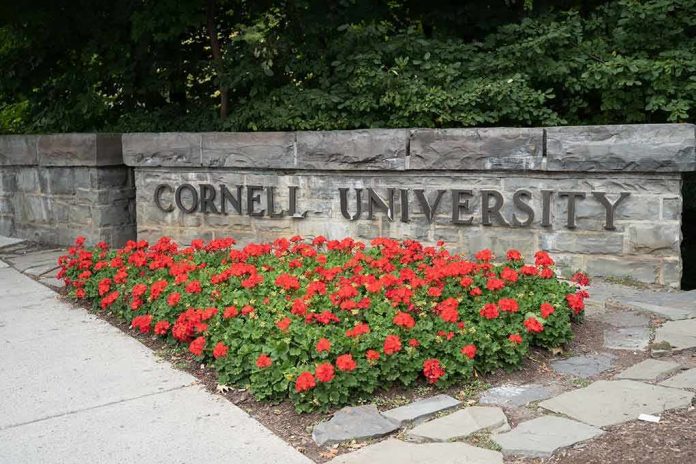
The Cornell case is racing from campus rumor to criminal courtroom, and the clock finally matters.
Story Snapshot
- Tompkins County prosecutors say they will take the case to a grand jury with the accuser’s help.
- Cornell says it finished its own process and kept the Chi Phi chapter barred from campus.
- Defense lawyers flatly deny the assault and claim they have documents and science to prove it.
- A civil lawsuit appears to have surfaced new records that prosecutors had not reviewed in 2024.
Prosecutors Move Toward A Grand Jury After A New Push
Tompkins County District Attorney Matthew Van Houten said his office will present the 2024 Chi Phi allegations to a grand jury if the complainant cooperates. He also said he wants to reexamine whether more evidence now changes the case. His on-record plan signals a live criminal path, not just talk. ABC News reported the office had not seen a key group chat until the civil case surfaced it this fall, which explains the renewed look.
Grand juries test whether there is enough evidence to charge a crime. They do not decide guilt. This step matters because campus cases often stall when early files are thin or scattered. A grand jury also compels testimony and records. That can force clarity on timelines, chat logs, and lab tests. If the complainant speaks and the data line up, charges could follow. If gaps remain, the panel can say no true bill. Either way, the secrecy ends at indictment.
What Cornell Already Did Under Its Own Rules
Cornell says it ran a Title IX process with trained staff and faculty, issued sanctions, and kept Chi Phi banned from campus. The university backs the district attorney’s move to give the student’s account to a criminal panel. That split is common. Schools use a lower burden of proof and administrative tools. Prosecutors must prove crimes beyond a reasonable doubt. The result is often discipline on campus while police hold back until more evidence appears.
Adults deserve plain talk on standards. Campus hearings can use “more likely than not.” Criminal court demands near-certainty. That gap shapes outcomes. A text thread that tips a campus panel may not meet criminal proof. A toxicology hint may raise concern at school but not survive a courtroom cross. When civil filings later surface messages or expert reports, prosecutors sometimes revisit. That appears to be the path here, with the lawsuit pressing fresh material into view.
The Denials, The Claims Of Proof, And What Should Count
Defense counsel for one named student says the incident “did not happen.” Lawyers claim they hold the complainant’s own words, third-party statements, and scientific evidence that back their client. One lawyer called a group chat line immature but said his client did nothing else. Those are strong words, and they should be tested under oath and lab review. A grand jury is the place to vet bold claims against timelines, devices, and forensics.
SHOULD DA Van Houten/TCDAO RECUSE itself, given PUBLIC COMMENTS about VICTIM, AFTER Tompkins County District Attorney REOPENED the 2024 Chi Phi Fraternity SEXUAL ASSAULT Case after arguable intense backlash over how the DA/ @Cornell handled it or the arguably INADEQUATE… pic.twitter.com/mBwE3rdiGs
— L Ortiz (@l_ortiz81888) September 29, 2026
Fair process means hard questions for both sides. Who saw what, when, and sober? What do device logs show about location and time? What do medical records confirm or rule out? Anonymous rumor is cheap; sworn testimony with exhibits is not. American conservative values lean on due process and personal responsibility. If crimes were done, charge and punish. If the evidence fails, clear the names quickly and publicly. The worst outcome is a murky middle that smears everyone and protects no one.
Why This Case Feels Different Right Now
Timing and paper trails create leverage. The district attorney states he intends a grand jury path, which adds stakes and subpoenas. Cornell’s continued ban keeps institutional pressure on the fraternity space. The civil suit turns private pain into public claims that force records to surface. Together, those gears can move facts out of shadows. A community that has heard whispers for two years may soon see documents, dates, and decisions it can actually judge.
What To Watch Next
Watch for phone and chat records tied to verified timestamps. Look for medical and toxicology detail, not vague labels. Track whether witnesses line up or fall apart when separated. See if any plea talks start, which often signal that prosecutors feel confident. Or watch for a no true bill, which means the evidence does not meet the standard. Either path beats endless noise. Truth needs a forum with rules and consequences. That is what a grand jury provides here.
Sources:
abcnews.com, cornellsun.com, newser.com, abcnews4.com, statements.cornell.edu, people.com, cbsnews.com, economictimes.com