
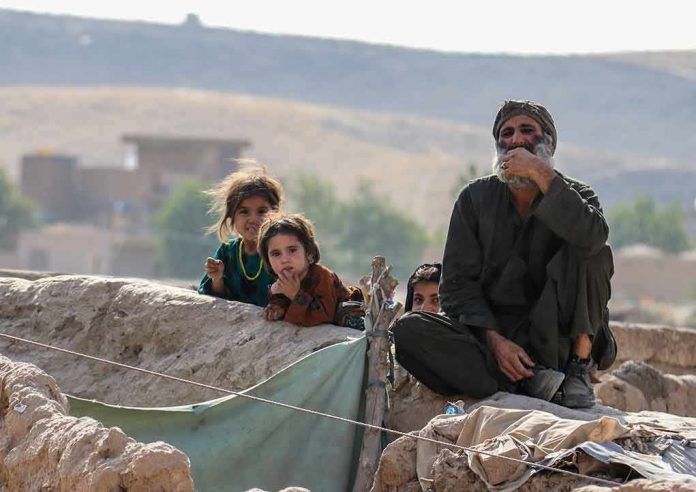
Millions of Afghan families are running low on food after donor nations slashed humanitarian funding, forcing the United Nations to cut life-saving aid to some of the hungriest people on earth.
Quick Take
- The World Food Programme cut rations for at least four million Afghans starting in March 2023 after funding dried up.
- Afghanistan’s 2023 humanitarian plan needed $3.2 billion but received only $1.67 billion.
- About 2.3 million children under five suffered moderate acute malnutrition, with 800,000 more facing the severe form.
- The World Food Programme dropped 10 million people from assistance rolls and cut some rations nearly in half.
Funding Collapse Forces Deep Cuts To Food Aid
In March 2023, the World Food Programme announced a grim milestone. A lack of funds had forced deep cuts to life-saving assistance for at least four million people that month alone. The agency had warned for months that money was running out, but the scale of the reduction still marked a turning point for a country already struggling with poverty, conflict, and drought-like conditions.
The cuts did not stop there. The World Food Programme later reported that Afghanistan received 80 percent less funding in 2023 than it had the year before. That shortfall forced the agency to remove 10 million people from assistance entirely and reduce some community rations from 75 percent of a full food basket down to just 50 percent.
The Scale Of Hunger Among Afghan Children And Mothers
The human toll behind these numbers is staggering. United Nations agencies counted 800,000 malnourished pregnant or breastfeeding women across Afghanistan in 2023. Among children between six months and five years old, 2.3 million suffered moderate acute malnutrition, while another 800,000 faced the severe, life-threatening form of the condition. These are not abstract statistics. Each figure represents a child or mother whose body is not getting what it needs to survive.
The money simply was not there to meet the need. Afghanistan’s 2023 Humanitarian Response Plan required about $3.227 billion, but incoming funding reached only $1.674 billion. The United Nations’ humanitarian coordination office separately flagged a $1.3 billion critical funding gap that year, warning that food-security and nutrition programs faced the risk of total collapse between July and September. Independent reporting later confirmed the plan was only 45.4 percent funded, leaving the World Food Programme able to reach just one in five Afghans in need.
A Crisis Shaped By More Than Money
Aid officials are careful to note that funding cuts are not the only force driving hunger in Afghanistan. The United Nations’ humanitarian office points to poverty, lingering conflict damage, and drought-like weather conditions as compounding pressures that existed alongside the funding shortfall. An independent inter-agency evaluation found the humanitarian response had generally kept pace with assessed needs until 2023, when funding reductions caused a sharp and growing divergence between what was needed and what aid groups could deliver.
That distinction matters for anyone trying to understand why conditions worsened so quickly. Afghanistan was already vulnerable after decades of war and a fragile economy. But the sudden withdrawal of international funding in 2023 turned a chronic problem into an acute emergency, stripping away the safety net millions of families had come to depend on just as their other options ran out.
Nearly 19 million people in Afghanistan face acute hunger, while aid cuts are leaving malnourished children without treatment. Food and nutrition support must reach families before a treatable condition becomes a tragedy. Funding decisions have human consequences.
— Terri L. Williams (@PanacheCareerSt) October 15, 2026
Humanitarian agencies continue to warn that without renewed and sustained funding, Afghanistan’s food and nutrition pipelines remain at risk of further disruption. For American taxpayers and policymakers who have long funded a large share of global humanitarian response, the Afghanistan case is a stark reminder that aid dollars, once withdrawn, can produce consequences measured not in budget lines but in malnourished children.
Sources:
youtube.com, apnews.com, unocha.org, fts.unocha.org, news.un.org, abcnews.com