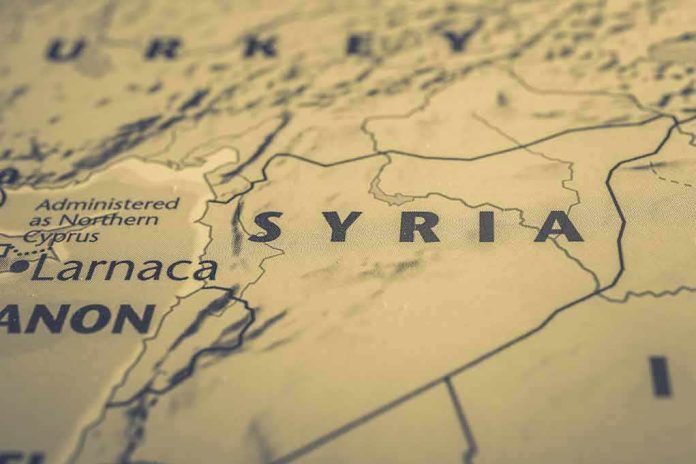
Syria said it is weighing whether to join the Saudi-led Mecca defense pact, and that single line could redraw quiet lines across the Middle East.
Story Snapshot
- Syria’s foreign minister said Damascus is evaluating entry into the Mecca pact.
- The pact links Saudi Arabia, Türkiye, and Pakistan in a mutual defense framework.
- Reports stress consideration, not a final decision or application.
- Analysts see early-stage talks and unclear mechanics for new members.
Syria signals interest, stops short of a decision
Syrian Foreign Minister Asaad al-Shaibani said Damascus is “evaluating” whether to join the Mecca defense pact during the International Institute for Strategic Studies Manama Dialogue in Bahrain on October 31, 2026. He framed the move as an active discussion, not a done deal. Multiple outlets echoed that wording, noting there was no formal application or vote. The signal matters because it places Syria near a defense grouping anchored by Saudi Arabia, Türkiye, and Pakistan.
The Mecca pact is described as a mutual defense arrangement that its founders signed in August 2026. Reports present it as a pledge to respond if one member is attacked, drawing comparisons to alliance models familiar to Western readers. The text of the agreement has not been widely published in full, which keeps debate alive about how automatic or binding any response would be. Existing members are Saudi Arabia, Türkiye, and Pakistan.
Why Syria might want in now
Damascus faces hard security math. War damage at home, a shaky economy, and threats across its borders create pressure to find cover. A defense pact offers signaling power even if the machinery is thin. Joining would also restore some regional standing after years of isolation. Syria’s move would align it more closely with Saudi-led security habits at a time when the region is tense and fluid. That realignment could reshape how neighbors read Syrian risk and resolve.
Saudi Arabia, Türkiye, and Pakistan bring different strengths. Saudi Arabia adds money, air defense, and diplomatic reach. Türkiye brings a large and experienced military. Pakistan contributes manpower depth and defense industry links. For Syria, that menu looks attractive if it comes with real backing. The catch is whether the pact delivers firm obligations or stays as a flexible alignment that signals intent but avoids strict triggers for war.
What “considering” actually means in practice
Government language like “evaluating” often marks the start of a test. Officials float the idea to measure reaction at home and abroad. This step can open technical talks on command rules, legal terms, and any carve-outs. Reporting so far does not cite a Syrian cabinet decision, a signed application, or a set clock for accession. One cited analyst called the talks early-stage, which suggests Syria is probing the door rather than stepping through it today.
Membership would demand answers to basic questions. Who commands joint missions? Which threats count as an attack? How fast must partners respond? Would Syria seek exceptions tied to its Russia and Iran ties, or to its posture in Lebanon? These are not small details. They decide whether a pact is a shield or a slogan. Middle East security deals have often favored flexibility over firm triggers, which can keep partners aligned but also blur expectations.
The stakes for Washington, Tehran, and common sense security
A stronger Saudi-linked bloc that adds Syria would send a message in three directions. Washington would see partners trying to share more of their own security load. Tehran would read a larger ring of states signaling a joint response to attacks. Local audiences would see leaders taking steps to avoid being picked off one by one. That kind of burden-sharing and deterrence logic matches conservative common sense: clear lines, fewer surprises, and strength that prevents fights, not invites them.
Syria Says It's Considering Joining Saudi-Led Mecca Defense Pacthttps://t.co/O0mBKfzmB8
— † Crusader (@Wil_Johnson1) November 2, 2026
Caveats still apply. The best reporting stresses that Syria has not joined and has not filed paperwork. Words can move fast in this region, but institutions move slow. If Syria does apply, the hard part begins. The members must agree on terms that Syria can accept and that still mean something in a crisis. If they can lock in those rules, the pact gains real weight. If not, it risks becoming another pledge that fades when the shooting starts.
Sources:
zerohedge.com, yahoo.com, middleeasteye.net, defence24.com, dailysabah.com, koreatimes.co.kr, ynetnews.com, sup.org, onlinelibrary.wiley.com, policycenter.ma