Ballot scanners failed across Westchester County right at 6 a.m., forcing a countywide shift to emergency paper-ballot procedures on a day that could decide control of the House.
Story Snapshot
- Countywide ballot scanners would not accept ballots from the moment polls opened.
- Voters filled out paper ballots and placed them in secure emergency bags for later counting.
- Officials acknowledged the scope early and could not give a fix time as voting continued.
- The cause was not settled during voting; ballots or machines were both cited as possibilities.
What Broke, When It Broke, and How Voters Kept Voting
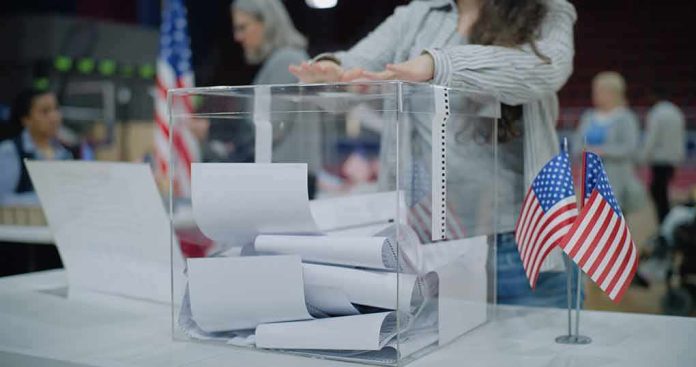
Ballot scanners malfunctioned at polling places across Westchester County starting at 6 a.m., when doors opened to voters. County officials and local outlets described a widespread failure that blocked scanners from accepting ballots. Poll workers shifted to the backup plan used in such events. Voters completed their ballots as usual, then placed them in sealed emergency bags for later tabulation under standard rules. The process kept lines moving, though it was slower and more visible than normal scanning.
The Westchester County Board of Elections cited an issue involving paper ballots that kept scanners from accepting them. The exact cause was not clear during the day. Reports and statements left open whether ballot stock, formatting, or the machines themselves were to blame. That uncertainty did not halt voting. Poll workers continued to issue ballots, direct voters, and secure completed ballots for canvass after the polls closed, as required by law.
What Officials Said As The Situation Unfolded
County Executive Ken Jenkins confirmed the scope early and said there was no timeline for a fix while teams worked with vendors. Local reports quoted Jenkins describing a countywide issue and emphasizing that voting would go on under contingency procedures. The message from campaigns also focused on continuity. Representative Mike Lawler urged voters to stay in line and cast ballots, pointing to the emergency process. Both parties told voters the same thing: vote and your ballot will count.
The New York Attorney General’s office said it was monitoring the situation, adding more oversight to the mix as the emergency process ran during peak hours. That attention matched the stakes, since the congressional race in the district had national implications. The county and state election agencies worked with vendors to diagnose the failure while poll sites executed the paper-based fallback that New York law expects in a scanner outage.
Why The Backup Worked And What To Look For Next
Optical-scan systems rely on paper, which remains the safety net when scanners reject ballots. Elections across the country have seen jams, feed errors, and paper problems. The usual fix is to secure ballots and count them later under strict chain-of-custody rules. That design trades speed for resilience and protects voter intent. Westchester followed that playbook, using sealed emergency bags and later tabulation to preserve votes despite the morning breakdown.
ELECTION DAY WATCH 2026 | REPORT 01
WESTCHESTER COUNTY, NY: WIDESPREAD BALLOT SCANNER FAILURESNovember 3, 2026
Ballot scanners across Westchester County, New York, began rejecting completed paper ballots shortly after polls opened at 6 a.m.
Officials acknowledged problems…
— Receipts Matter (@ReceiptsMatter) November 3, 2026
County leaders should now do three things fast. First, publish a clear cause with evidence: the scanner model, ballot stock specifications, and vendor diagnostics. Second, reconcile every emergency bag against poll books and canvass totals so the public sees that the number of ballots issued matches the number counted. Third, release a timeline of detection and response to show when alerts fired, who responded, and how the fix rolled out. These steps align with common-sense accountability and conservative values: transparent records, verified counts, and competent stewardship of public systems.
What This Means For Voters And Elections
Voters did their part. They showed up, waited, and used the backup process when asked. The central question is not whether chaos ruled. It did not. The question is whether officials can prove, with documents and totals, that every emergency ballot moved from bag to count without loss or error. Post-election reviews exist for that reason. When done well, they settle doubts and improve future preparation, from paper stock checks to stress tests before the next high-stakes contest.
Sources:
thegatewaypundit.com, thehill.com, timesunion.com, rawstory.com, cbsnews.com, fox5ny.com, lohud.com, theexaminernews.com, myrye.com