

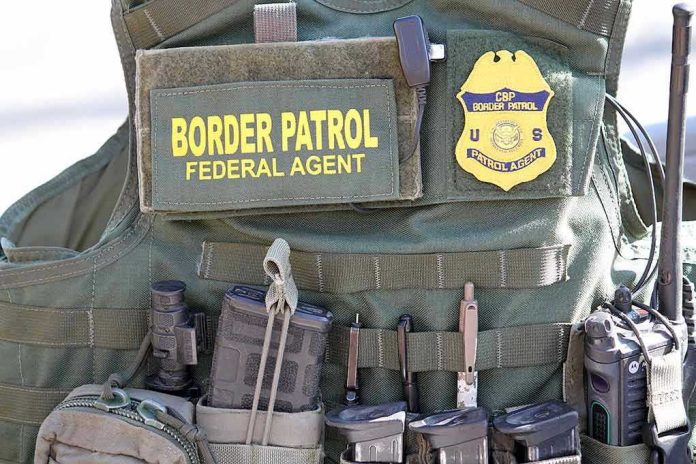
An ICE agent’s cellphone captures a shocking reality of a fatal shooting that has ignited public outrage and demands for accountability.
Story Overview
- An ICE agent fatally shot Renee Nicole Good in Minneapolis on January 7, 2026.
- The incident was recorded on the agent’s cellphone, capturing his derogatory remarks afterward.
- The shooting is under intense public scrutiny due to the agent’s language and the circumstances.
- Minneapolis, still sensitive from past incidents, is at the forefront of this national debate.
ICE Agent’s Actions Under Scrutiny
On January 7, 2026, Renee Nicole Good was fatally shot by a U.S. Immigration and Customs Enforcement agent during a vehicle stop in Minneapolis. The incident was recorded on the agent’s cellphone, capturing not only the shooting but also the agent’s immediate reaction, where he called Good a “f**king b**ch.” This video has become central to the public’s scrutiny and the potential investigation surrounding the use of force.
The recording, now public, shows the moments leading up to the shooting from the agent’s perspective. This is not just another case of excessive force; it’s a stark reminder of the power dynamics and the critical role that visual evidence plays in shaping public perception and legal outcomes. The derogatory language used by the agent has intensified the call for transparency and accountability.
Minneapolis’ History of Tension
The incident occurs in a city already central to discussions about police use of force, particularly after the killing of George Floyd in 2020. Minneapolis has been under a microscope, making any law enforcement action ripe for scrutiny. The involvement of ICE, a federal agency, adds another layer of complexity and raises jurisdictional questions, especially concerning civil rights and the appropriate use of force in fugitive apprehensions.
Historically, ICE has faced criticism for its lack of transparency and accountability in use-of-force incidents. The agency’s decision-making, especially in urban environments like Minneapolis, often involves high-stakes situations that demand both precision and restraint. The shooting of Renee Nicole Good is a flashpoint in these ongoing debates around law enforcement practices and federal oversight.
The Role of Technology in Accountability
The video evidence from the ICE agent’s cellphone is pivotal. Unlike standard body cams used by local police, ICE agents do not universally employ such technology. This case highlights the importance of recording practices in law enforcement and the potential policy implications for federal agencies. The fact that this footage was captured on a personal device rather than an official body cam raises questions about evidence handling and transparency.
The public release of this footage by FOX 9 has allowed independent review by journalists and civil rights advocates, adding pressure on ICE and the Department of Homeland Security to justify the actions taken and the language used. The derogatory language captured on video is not just an issue of professionalism; it speaks to deeper concerns about bias and the emotional regulation of law enforcement officers in high-stress situations.
Impact and Repercussions
The immediate public reaction has been one of outrage, with calls for accountability and transparency. The derogatory language used by the agent post-shooting has been perceived as callous, fueling mistrust in federal law enforcement. This incident is likely to spur protests and demands for policy changes from civil rights and immigrant rights organizations, particularly in a city like Minneapolis, which has a history of activism in response to police violence.
Long-term implications could include a review of ICE’s use-of-force policies, particularly concerning the use of deadly force during vehicle stops. The potential for civil or criminal legal actions could set precedents for future cases involving federal agents. Moreover, the incident could renew debates over the role of ICE in urban areas and the need for body-worn cameras to ensure accountability and transparency in law enforcement operations.