
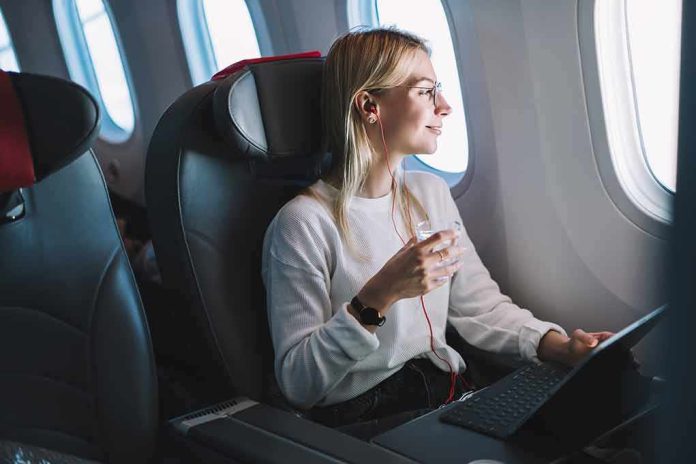
A single screaming toddler delaying a Swedish flight by an hour lit the fuse on a question millions of adults quietly ask: why can’t we buy some peace and quiet at 30,000 feet?
Story Snapshot
- A Sweden flight delay blamed on a 3-year-old’s tantrum reignited calls for adults-only flying.
- Surveys show most travelers say they want child-free options and would pay extra for them.
- Several airlines already sell adults-only or child-free zones as a premium, quiet product.
- Age rules and surcharges for kids prove airlines can segment cabins by age when it suits them.
The Sweden tantrum that touched a nerve
A routine evening flight in Sweden turned into a test of everyone’s patience when a three-year-old refused to sit down and buckle in. Crew tried to calm the child and work with the parents, but the standoff went on long enough that the family was eventually removed from the plane. The result was about an hour of delay for every passenger on board. When the story hit social media, one comment captured the mood: “I would seriously pay extra for adults-only flights.” That line struck a chord because it matched what many travelers already feel but rarely say out loud.
The anger was not just about one child. Many adults feel air travel has become loud, cramped, and stressful, with no way to “opt out” of other people’s chaos. Parents feel judged. Non-parents feel trapped. The Sweden case simply gave both sides a clear picture to point to and ask: if one difficult situation can delay a whole flight, why can’t airlines offer spaces where the risk is lower by design?
Travelers say they will pay for quiet cabins
Recent surveys back up that social media frustration with hard numbers. A major study for PhotoAid found that about 80 percent of travelers said they want adults-only flights. About 64 percent said they would pay more for them, often in the range of 10 to 30 percent above a normal long-haul ticket. Other research on American travelers reports that more than half would choose an adults-only option and accept a similar price bump for the chance to fly without small children nearby.
Australian polling shows the same trend. One report noted that 53 percent of Australian travelers support child-free flight options or adults-only sections, and many accept surcharges of around 30 percent for seats in those quiet zones. For an airline executive, those are not soft feelings; they are a clear market signal. Large groups of paying customers are literally asking to be charged more for a calmer cabin. For conservatives who value choice, that sounds like the kind of free-market sorting the industry usually loves.
Airlines are quietly testing adults-only zones
Airlines in Asia and now Europe have already put money behind the concept. Scoot, a Singapore-based budget carrier, sells “Scoot-in-Silence” cabins on some flights, open only to passengers aged 12 and above and priced as a quiet premium space. AirAsia X, a Malaysian long-haul airline, set up a “Quiet Zone” where children under 10 are not allowed, and charges extra for access. Demand for both products has grown, with some travelers picking those airlines mainly for the child-free sections.
In Europe, Corendon Airlines launched an “Only Adult” zone on flights between Amsterdam and Curaçao. The first part of the plane is reserved for passengers 16 and older, separated by walls and curtains to keep it calm. Seats in this section cost about €45 more for a regular spot and €100 more for extra legroom. Families still fly on the same plane, but parents with young kids are grouped in the remaining rows. The airline’s founder has argued this setup can help both sides: adults who want quiet can buy it, while parents avoid hostile stares from exhausted strangers.
Existing age rules show airlines can segment
Supporters of adults-only zones point out that airlines already sort passengers by age when it helps operations. Many carriers require young children traveling alone to use “unaccompanied minor” services. For example, KLM states that a child traveling alone pays an adult ticket price plus a set service fee on top. Other airlines set minimum ages for solo travel or require that children sit with an adult of a certain age.
These rules prove age-based policies are not some radical new idea; they are baked into modern aviation. Airlines already charge more for some children, restrict where kids can sit, and cluster families together. From a common-sense view, letting adults pay extra to cluster away from young children is simply the mirror image of grouping families near bassinets or the back rows. The structure exists. What is missing is the will to expand it.
Benefits and the pushback from family advocates
Supporters say adults-only flights or zones lower tension for everyone. Parents are spared dirty looks when a baby cries. Adults who dread long-haul trips next to a kicking toddler can buy relief instead of rolling the dice. Noise drops, helping business travelers sleep or work. Social media comments after the Sweden delay echoed this, with posters arguing that one angry child should never be able to hold a whole plane “hostage” for an hour.
Critics worry about creeping age discrimination and a slide toward punishing families for normal childhood behavior. They argue that kids are part of public life, and that learning to handle them with patience is part of being a decent adult. Some fear that if half a cabin becomes adults-only, the remaining rows turn into a noisy “kids’ ghetto” where parents get worse service. In fairness to those concerns, the strongest case for adults-only zones rests on voluntary choice and clear value: no one is banned from flying, but people who want quiet can pay for it, just as they pay for extra legroom or business class.
Could adults-only flights become the new normal?
So far, major United States and European airlines have held back from full adults-only flights, even as they test child-free rows and commit to fee-free family seating. Legal fears, public relations worries, and complex network planning all play a part. Still, voter-like survey results and the success of quiet zones in Asia and Corendon’s “Only Adult” cabin show a clear direction: where airlines allow the market to speak, many travelers vote with their wallets for calm.
For now, adults-only flying lives in that gray area between “great idea” and “standard option.” But that one Swedish toddler’s tantrum made something clear. The next time a plane full of tired adults sits on the runway listening to a meltdown, more of them will think the same thing: I would seriously pay extra not to be here, and someday an airline may finally decide to take their money.
Sources:
facebook.com, klm.se, ug.se, finnair.com, transportstyrelsen.se, thetraveler.org, faa.gov, europa.eu, youtube.com, reuters.com