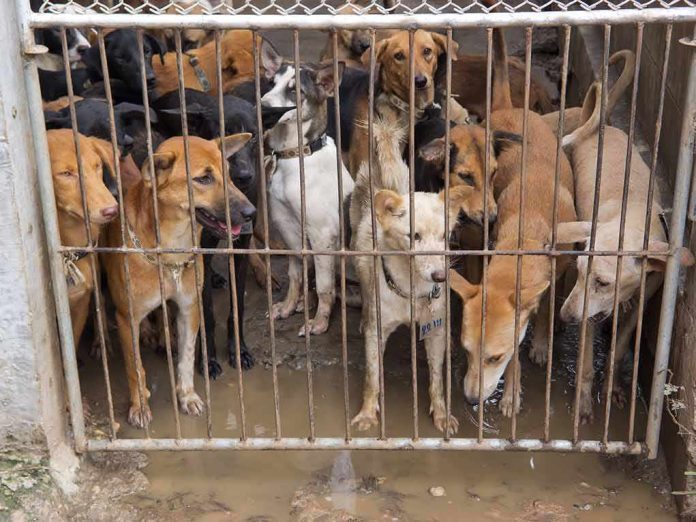
A South Carolina congresswoman just found out more than 1,500 dogs were shipped to laboratories in eighteen months, and she wants to shut the pipeline down for good.
Quick Take
- Rep. Nancy Mace introduced the PUPPS Act on September 21, 2026, to ban breeding and selling dogs for lab research.
- White Coat Waste says records show breeder Oak Hill Genetics shipped 1,518 hound-mix dogs to labs between January 2025 and June 2026.
- The watchdog group also claims the National Institutes of Health poured more than $225 million into new dog and cat experiments since February 2025.
- Mace had already pressed the Department of Health and Human Services in January 2026 after accusing the agency of breaking a promise to end painful dog experiments.
- No independent audit or the bill’s full text has been made public yet, and one breeder defends its practices as science-based and humane.
A Bill Aimed At The Whole Supply Chain
Mace’s office says the Puppy Protection and Unnecessary Product Suffering Act, or PUPPS Act, would “shut down America’s puppy pipeline to research labs” and protect dogs “already trapped in the system”. Congress.gov confirms the bill was formally introduced and sent to the House Agriculture Committee on September 21, 2026. That framing treats the practice as a running commercial operation, not a handful of isolated incidents.
The bill follows months of pressure from Mace herself. Back in January 2026, she sent a letter to Health and Human Services Secretary Robert F. Kennedy Jr. accusing the National Institutes of Health of breaking a promise to end harmful dog and cat research. Her letter said the agency was still funding experiments that induce strokes in puppies and breed dogs to go blind or suffer bleeding disorders.
The Number Driving The Outrage
The spark for the new bill traces back to a White Coat Waste investigation. The group says Freedom of Information Act records show breeder Oak Hill Genetics shipped 1,518 hound-mix dogs to laboratories between January 1, 2025, and June 30, 2026, some of them tied to labs still receiving federal money. That is roughly two dogs a day, every day, for a year and a half.
White Coat Waste separately reports that Marshall BioResources, described as the nation’s largest commercial breeder of dogs and cats for labs, supplied animals used in National Institutes of Health-funded studies. A related report from the group puts total new federal spending on dog and cat experiments since February 2025 at more than $225 million, including breeding puppies specifically to go blind. Congressional testimony from Rep. Greg Steube in 2024 had already flagged “tens of millions of dollars annually” going toward similar breeding and testing programs.
Money Trail Still Missing Some Links
These figures come from the advocacy group’s own review of records, not from the raw documents themselves, so the exact scope and selection criteria are not independently verifiable yet. The public record also does not yet include the PUPPS Act’s actual bill text, which means it is unclear whether it contains exemptions or phase-in periods. A Guardian report from 2025 noted the agency had already faced criticism for continuing dog and cat funding despite promising cuts, suggesting this fight has been simmering for a while.
The Breeder’s Side Of The Kennel Gate
Not every breeder fits the villain narrative advocates are painting. Standing Stone Kennels, a working-dog breeder unrelated to the labs named in the investigation, says every breeding is “planned in advance and chosen to produce puppies with sound genetics”, and that its dogs are trained, tested, and titled before being used for breeding. It is a reminder that breeding itself is not inherently cruel — the argument is over what happens to dogs once they reach a lab.
Federal guidance backs up that nuance. National Institutes of Health rules on research animal colonies say breeding programs can be justified when investigators need specific genetic lines to study inherited diseases like muscular dystrophy or cancer. The agency also moved years ago to phase out buying dogs from so-called Class B dealers after a National Academies panel concluded those dealers were not necessary for the work. That history shows reform is possible when the pressure builds high enough.
NEW: A bill introduced in Congress would ban breeding and selling dogs for use in research labs.@RepNancyMace (R-SC) introduced the Prohibiting Unethical Procedures on Pets in Science (PUPPS) Act, which would amend the Animal Welfare Act to:
🔹 Ban breeding dogs specifically… pic.twitter.com/dukvWALKfR
— Scott Taylor (@ScottTaylorTV) September 22, 2026
What Happens Next
The PUPPS Act now sits with the House Agriculture Committee, where its fate depends on hearings, amendments, and whether other lawmakers sign on. A government watchdog report already flagged that the National Institutes of Health lacks clear short-term goals for improving animal research oversight, which gives Mace’s push added weight. Taxpayers deserve a straight answer on how their money is spent, and dogs bred for suffering deserve better than silence from the agencies funding it.
Sources:
thegatewaypundit.com, breitbart.com, whitecoatwaste.org, animalwellnessaction.org, ground.news, mace.house.gov, x.com, congress.gov, thecooldown.com, ncbi.nlm.nih.gov, standingstonekennels.com, frontiersin.org