
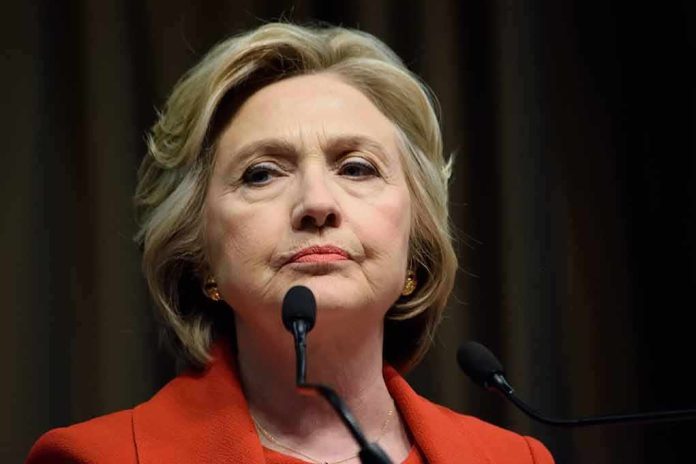
While Hillary Clinton served as First Lady, her younger brother Tony Rodham was the named target of an active Federal Bureau of Investigation fraud probe tied to a Romanian car import scheme, and those buried files are only now seeing daylight.
Story Snapshot
- Federal Bureau of Investigation records show Tony Rodham was under investigation in 1996 for alleged wire and mail fraud linked to a Romanian vehicle import venture.
- Judicial Watch forced release of 77 heavily redacted pages, three decades after the case quietly vanished from public view.
- The probe centered on East European Imports, Incorporated, which collected money from American dealers for Romanian sport utility vehicles that never arrived.
- The case fits a familiar pattern with the Clinton political orbit: serious federal scrutiny, intense political sensitivity, and very few clear answers.
A fraud investigation hiding in the Clinton White House years
In the spring of 1996, while Bill Clinton campaigned for a second term and Hillary Clinton lived in the White House, the Miami Field Office of the Federal Bureau of Investigation opened a case titled “Anthony D. Rodham.” The case number carried the bureau’s “196” designation, which Judicial Watch notes is used for wire fraud investigations. These were not rumors on talk radio. These were official case files, locked away for decades and now revealed only in a heavily edited form.
FBI Records Expose Secret Fraud Probe into Hillary Clinton’s Brother During Bill Clinton’s Presidency | David Lindfield, Slay News
Newly released FBI records show that Hillary Clinton’s late brother, Tony Rodham, was investigated for fraud in the 1990s over allegations tied to a… pic.twitter.com/NPqKWwA6T5
— Owen Gregorian (@OwenGregorian) July 7, 2026
The newly surfaced documents describe a strange business venture called East European Imports, Incorporated. Tony Rodham and his partners claimed they had exclusive rights to import two models of Romanian four-wheel-drive vehicles into the United States. They pitched American car dealers on a new opportunity, collected deposits and fees, and promised inventory that never materialized. According to the released records and coverage based on them, no Romanian vehicles ever reached those dealerships.
How the Romanian car scheme allegedly worked
Judicial Watch’s summary of the files shows Rodham and associates traveling to Romania and dealing with government officials to secure import rights for ARO brand vehicles. The Federal Bureau of Investigation narrative, as described by Judicial Watch, indicates there were “credible allegations” that Rodham knew partners had submitted inflated or fraudulent financial statements to Romanian authorities to make East European Imports, Incorporated look like a viable importer. Despite those warnings, he reportedly kept pushing the company as legitimate. That behavior is what triggered the deeper fraud scrutiny.
The business model targeted smaller American dealerships hungry for a unique product. The records say Rodham’s group asked for nearly seventy thousand dollars in deposits and fees from each prospective dealer. Dealers put real money on the line for promised trucks and sport utility vehicles that never arrived. That kind of pattern—money collected, no goods delivered—is exactly the sort of scheme the wire and mail fraud statutes are designed to cover. For conservatives who care about basic fairness, it reads like the classic story of insiders talking big and leaving working dealers holding the bag.
Judicial Watch, redactions, and the politics of disclosure
These details surfaced only because Judicial Watch sued the United States Department of Justice for the records and forced a Freedom of Information Act release. The group received seventy-seven pages, but they are heavily blacked out. Names of witnesses, some facts, and investigative conclusions are missing. The Federal Bureau of Investigation acknowledged in 2019 that it held roughly thirteen thousand pages and media files tied to Tony Rodham, which suggests the public still sees only a sliver of the full picture.
That selective window creates a familiar cycle. Conservative watchdogs frame the records as proof of deep corruption around the Clinton family. Many establishment outlets either ignore the story or treat it as partisan opposition research. Yet the core fact is not contested: the Federal Bureau of Investigation opened and ran a criminal fraud probe into the First Lady’s brother during a presidential campaign. From a common-sense American viewpoint, that alone deserves serious attention, no matter who benefits politically.
A pattern of “open but unresolved” Clinton-world probes
Commentary on Tony Rodham’s record often notes that he turned up again and again in awkward headlines: pressing immigration officials for visa approvals tied to an electric car company, chasing a twenty-two million dollar housing deal in Haiti, and getting dragged into debt and consulting lawsuits that settled quietly. In each case, investigators or inspectors raised concerns about influence or judgment, but formal charges either never came or never stuck. The Romanian car probe fits right into that pattern.
Broader reporting on the Clinton Foundation tells a similar story. Whistleblowers and oversight officials have described multiple Federal Bureau of Investigation inquiries into possible pay-to-play behavior that were opened and later closed without prosecution. Critics say this shows a protected political class. Defenders say it proves nothing criminal could be found. What cannot be denied is the trajectory: serious questions, official case numbers, and then a foggy, inconclusive end. The Tony Rodham files, with their thick black redactions, now stand as one more example.
Why this matters for trust in institutions
For older Americans who have watched Washington for decades, this story hits a nerve. When a First Lady’s brother is under federal fraud investigation and the public learns details thirty years later, trust takes another blow. People ask whether political sensitivity slowed the case, buried findings, or discouraged prosecutors. The available documents do not prove a cover-up, but they reflect a justice system that treats powerful families differently from local car dealers.
From a conservative, common-sense view, the lesson is simple. The law must apply the same to political royalty as to everyone else. When Federal Bureau of Investigation case files show credible fraud allegations against a president’s relative, citizens deserve clarity: was he cleared, was he charged, or was the matter quietly shelved in a drawer? Until more of those thirteen thousand pages see daylight, the Tony Rodham investigation will remain not just a footnote, but a symbol of how much we still are not allowed to know.
Sources:
thegatewaypundit.com, en.wikipedia.org, politico.com, cnn.com, instagram.com, nbcnews.com, law.com, nypost.com, voz.us, justice.gov