

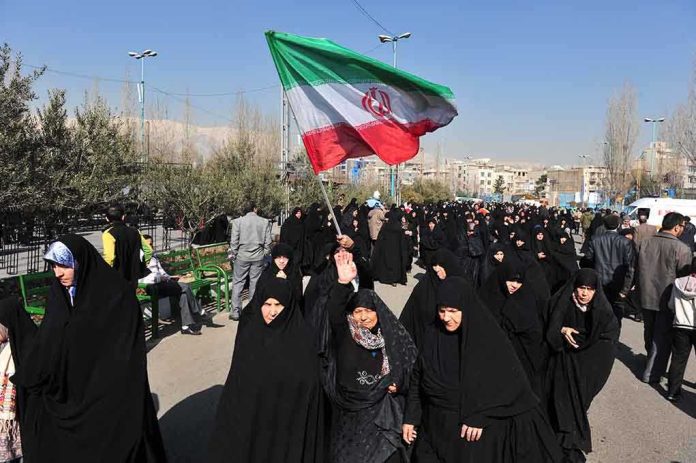
Iranian protesters chant “Neither Gaza nor Lebanon, my life for Iran,” turning guns on their own regime while rejecting foreign wars that drain their nation.
Story Snapshot
- Protests ignited December 28, 2025, in Tehran’s Grand Bazaar over economic collapse, exploding into nationwide anti-regime uprising by January 6, 2026.
- Chants demand Khamenei’s ouster and prioritize Iran over regime proxies in Gaza and Lebanon, signaling deep nationalist fury.
- Security forces killed 32, arrested 1,000, raided hospitals, yet 110 cities in 24 provinces erupt in defiance.
- Bazaar merchants strike, women lead charges, protesters hurl Molotovs—regime cracks widen.
- Experts see suppression failure; bazaar dissent hints at elite fractures threatening theocracy’s grip.
Protests Erupt from Economic Despair to Regime Defiance
Tehran’s Grand Bazaar merchants shut down on December 28, 2025, sparking strikes in Isfahan, Shiraz, and Mashhad over inflation and shortages. Protesters quickly shifted to political demands, chanting “Death to the dictator” and “Death to Khamenei.” Security forces deployed tear gas and live fire in Hamadan and Tehran, killing initial victims. Nationwide shutdowns followed on December 31, blamed on weather, but rallies persisted in Kermanshah. This evolution exposed regime mismanagement fueling unrest.
Nationalist Slogans Reject Foreign Entanglements
Protesters in 10 cities on January 2 chanted “Neither Gaza nor Lebanon, my life for Iran,” scorning regime spending on proxies amid domestic starvation. Funerals turned into rallies with anti-regime cries by January 3, reporting 16 deaths. Bazaar gold and currency traders joined strikes, paralyzing trade in 21 provinces. Women prominently led actions, amplifying calls for Khamenei’s overthrow. Social media spread footage despite controls, outpacing regime censorship.
Regime Escalates Brutal Crackdown
January 4 saw Khamenei’s speech harden security response; forces fired rifles and raided Ilam hospital, arresting wounded including minors. Protesters countered with Molotov cocktails in 179 events across 24 provinces. By January 5, nearly 1,000 arrests accumulated. Grand Bazaar sit-ins on January 6 met tear gas, turning the site into a war zone. IRGC strained by foreign commitments like Iraq militias, as clashes hit universities and western provinces.
On January 6, protesters declared “This year is the year of sacrifice, Seyed Ali will be overthrown,” with women at the forefront in 110 cities. Regime survival hinges on coercion, but bazaar elite dissent signals internal erosion. Common sense aligns with protesters’ view: nations prioritizing distant wars over citizens invite collapse, a conservative principle of sovereign duty over globalist overreach. Facts show suppression falters—protests endure day 10.
Historical Echoes and Future Stakes
Iran’s 50-year protest cycles—from 1979 revolution fallout, 2009 Green Movement, 2017 riots, to 2022 Mahsa Amini uprising—mirror current fury over repression and economics. Past crackdowns killed 1,500 in 2019 fuel protests; 500 in 2022. Bazaar strikes historically precede elite revolt. Analysts note social media accelerates spread but fragments organization. Short-term: economic paralysis, deaths mount. Long-term: regime destabilization looms if women and merchants sustain pressure.
Sources:
Iran has been shaken by a series of protests over the past 50 years. Here’s a look at them