

Could a political confrontation on the House floor reveal deeper truths about federal overreach and law enforcement in America?
Story Snapshot
- Rep. Angie Craig and Rep. Tom Emmer clashed after an ICE agent fatally shot Renee Good in Minneapolis.
- Craig accused Emmer and GOP rhetoric of creating dangerous conditions, while Emmer defended ICE actions.
- The incident has become a flashpoint in national debates over immigration enforcement and domestic terrorism.
- Video evidence contradicts official claims, intensifying the political and public reaction.
Political Shockwaves from a Fatal Shooting
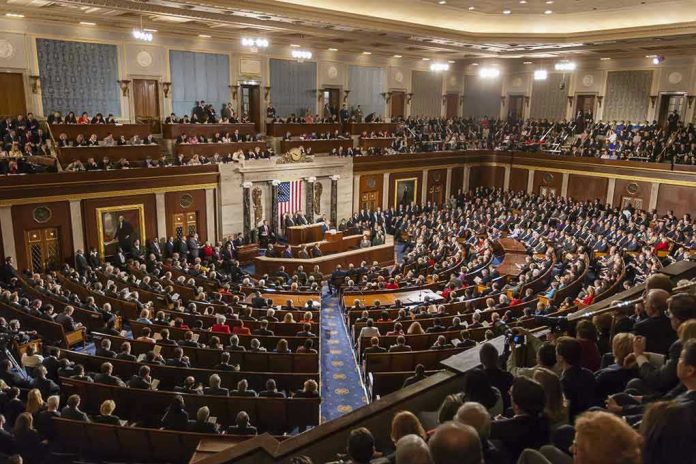
The fatal shooting of Renee Good, a U.S. citizen, by an ICE agent in Minneapolis has ignited political tensions, particularly on the House floor. Rep. Angie Craig (D-Minn.) confronted Rep. Tom Emmer (R-Minn.) after viewing video evidence that contradicted official claims of domestic terrorism. Craig accused Emmer of perpetuating dangerous rhetoric that led to Good’s death, a charge he vehemently denied. The confrontation highlights the broader political divide over federal immigration policies.
Emmer, recently endorsed by Trump, has been pivotal in supporting the ICE surge in Minnesota, part of a broader Republican strategy to combat fraud and enforce immigration laws. He insists the shooting was justified, portraying local Democratic leaders as inciters of violence. However, Craig and her Democratic colleagues argue that the rhetoric surrounding the incident only exacerbates tensions and fosters unnecessary violence.
Symbolism of the Shooting Location
The location of the shooting, near where George Floyd was murdered, adds a symbolic weight to the incident. Minneapolis has been a focal point for discussions on policing and federal law enforcement. The confrontation between Craig and Emmer underscores the complexities of policing, immigration, and federal versus local authority—a delicate balance that has been tested repeatedly since Floyd’s death.
The broader context includes a significant increase in ICE presence in the Twin Cities, ordered by the Trump administration to address alleged fraud. This decision has been controversial, as community advocates claim it creates an environment of fear and intimidation. Emmer’s alignment with Trump on this issue has been clear, while Craig continues to push for accountability and transparency, particularly when federal actions impact local communities.
Video Evidence and Political Fallout
Video evidence has played a crucial role in shaping public perception and political discourse around the incident. Craig asserts that the footage disproves DHS Secretary Kristi Noem’s claims of domestic terrorism. This discrepancy has fueled Democratic calls for accountability, with some members, like Rep. Robin Kelly, even suggesting impeachment proceedings against Noem for obstruction and breach of public trust.
The political fallout extends beyond the House floor, impacting local and state responses. Minnesota’s Governor Tim Walz has announced a state investigation, citing a need for transparency after the FBI assumed control of the federal investigation, effectively sidelining state authorities. This move reflects ongoing tensions between federal and state jurisdictions over law enforcement actions.
A National Debate with Local Implications
The incident has intensified the national debate over immigration enforcement, federal authority, and civil liberties. Emmer’s defense of ICE and criticism of local leaders reflects a broader GOP narrative focusing on law and order. In contrast, Craig’s response highlights concerns over civil liberties and the potential for federal overreach to harm citizens.
As this story unfolds, it serves as a microcosm of the larger partisan battles playing out across the country. The confrontation on the House floor is not just about one incident but reflects deeper divisions over the role of federal law enforcement, the balance of power between state and federal authorities, and the political narratives that shape American public life.