
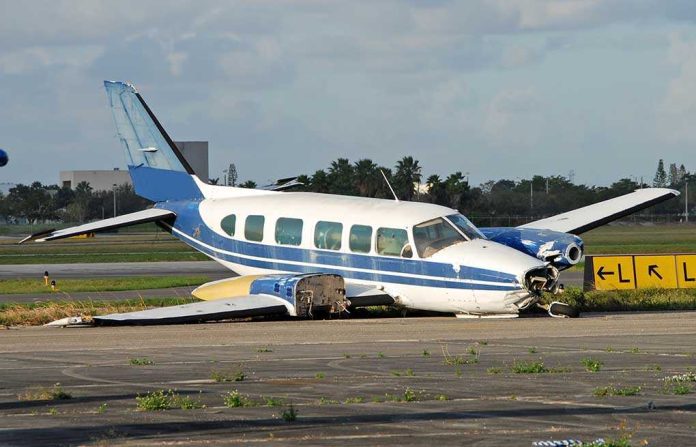
A young Cape Air pilot’s final takeoff from a snow-covered Cape Cod runway ended in flames, exposing the deadly risks that regional aviators face every winter night across New England.
Story Snapshot
- 28-year-old Kerry Anne Smith died when her Cessna 208B crashed during takeoff from Cape Cod Gateway Airport on December 30, 2024
- The aircraft lost control in marginal winter weather conditions with snow, low visibility, and gusty crosswinds
- NTSB investigation points to weather factors rather than mechanical failure, with final report still pending
- Cape Air temporarily suspended operations before resuming flights to Martha’s Vineyard the next day
- The crash highlights ongoing safety challenges for single-pilot operations in winter weather conditions
A Routine Flight Turns Fatal
Cape Air Flight 401 should have been a milk run. The 15-minute hop from Hyannis to Martha’s Vineyard was a route Kerry Anne Smith had flown countless times in her two years with the regional carrier. But at 9:15 PM on December 30, 2024, as her Cessna 208B Grand Caravan lifted off from Runway 24, something went catastrophically wrong. The aircraft failed to gain altitude, veered left off the runway, and slammed into the snowy ground before erupting in flames.
Smith, the sole occupant, died at the scene. The 28-year-old Barnstable resident had accumulated 1,800 flight hours and recently passed her checkride. Emergency responders arrived within minutes and contained the blaze, but the aircraft was destroyed. Cape Cod Gateway Airport closed for 24 hours, stranding holiday travelers during one of the busiest travel periods of the year.
Weather Creates Perfect Storm for Disaster
The crash occurred amid challenging winter conditions that would test any pilot’s skills. A nor’easter had dumped 6-8 inches of snow on Cape Cod, reducing visibility to half a mile with a ceiling of just 400 feet. Runway 24, though cleared of snow, faced gusty crosswinds of 10-15 knots. These marginal conditions created what aviation experts call a “perfect storm” for single-engine operations.
Captain Jason Knight from the Air Line Pilots Association emphasized the inherent risks: “Marginal weather plus short runway equals high risk; we need better go/no-go criteria.” The 5,000-foot runway at Hyannis, while adequate in good conditions, offers little margin for error when winter weather reduces performance and visibility. MIT’s Professor John Hansman later suggested the crash likely resulted from wind shear-induced stall, possibly complicated by airframe icing.
Investigation Reveals Troubling Pattern
The National Transportation Safety Board’s preliminary report, released in March 2025, found no evidence of mechanical failure but identified weather as a contributing factor. The black box data revealed Smith’s aircraft briefly lifted off before descending rapidly and impacting approximately 500 feet left of the runway end. This sequence mirrors a troubling pattern in regional aviation safety.
Since 2010, the NTSB has documented 12 similar loss-of-control crashes involving Cessna 208 aircraft in winter conditions. Many resulted from tailwinds, icing, or wind shear that overwhelmed single pilots managing complex weather scenarios. The Cape Air crash joins a growing list of regional aviation tragedies that highlight the unique pressures facing Part 135 carriers operating in challenging New England weather.
Industry Grapples With Regional Safety Challenges
Cape Air, founded in 1989 and based in Provincetown, operates 85 aircraft serving short-haul routes across New England. CEO Dan Wolf expressed “deepest condolences” and pledged full cooperation with investigators, but the crash exposed broader challenges facing regional carriers. These operators often fly single-pilot missions in weather conditions that major airlines would avoid, using smaller aircraft with fewer safety redundancies.
The tragedy prompted the FAA to issue enhanced winter operations advisories for Cessna 208 fleets, while insurance premiums for similar operations increased an estimated 5 percent industry-wide. Massachusetts lawmakers have called for increased regional airport funding, arguing that better weather detection and runway systems could prevent future tragedies. The final NTSB report, expected in early 2026, may trigger additional regulatory changes for single-pilot operations in marginal weather.
Sources:
NTSB Preliminary Report (DCA25FA044, Mar 2025)