Russia freed 74-year-old American Stephen Hubbard during a face-to-face meeting between Vladimir Putin and U.S. envoy Steve Witkoff, and the handoff began at a St. Petersburg airport.
Story Snapshot
- Steve Witkoff confirmed Hubbard’s release during a meeting with Putin
- Putin said Hubbard was taken to Pulkovo Airport in St. Petersburg
- Hubbard, a retired Michigan teacher, had been detained since 2022
- The State Department had labeled him wrongfully detained in 2025
A release confirmed in the room where it happened
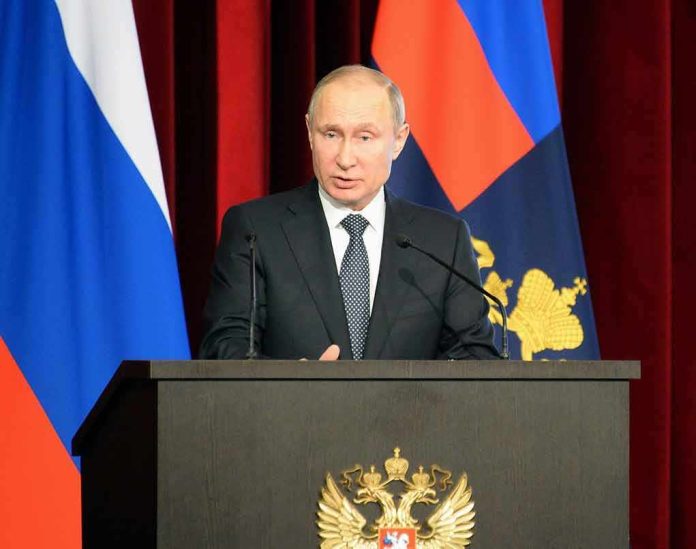
Steve Witkoff, a close outside envoy to President Trump, told reporters in Moscow that Russia had released Stephen Hubbard during his meeting with Vladimir Putin. Russian outlets echoed the news, and coverage from major U.S. outlets confirmed Witkoff’s account. The detail that matters most is proximity. The envoy did not brief from afar; he confirmed the release while sitting across from the Russian leader, tightening the chain of custody for the news to one room and two principals.
Putin said Hubbard had been moved to Pulkovo Airport in St. Petersburg after the release. That specific location clue, broadcast through Russian channels and carried by Western outlets, anchors the timeline to a real place where transfers occur. It signaled that Russian security services had shifted from prison protocol to outbound logistics. Such a move often marks the last stage before a medical check and consular handover in cases like this.
Who Hubbard is, and why his case drew White House focus
Stephen Hubbard is a 74-year-old retired American teacher from Michigan. Russian authorities accused him of serving with a Ukrainian defense unit in 2022, after he was detained in eastern Ukraine early in the war. A closed court later convicted him on mercenary charges and sentenced him to almost seven years, a claim his family and U.S. officials disputed. The United States classified him as wrongfully detained in 2025, which escalated his case to specialized negotiators.
The wrongfully detained label matters. It triggers the Office of the Special Presidential Envoy for Hostage Affairs and changes the posture from quiet consular help to active negotiation. That shift matched how the Trump administration treated Hubbard’s case. Trump said he pressed Putin on the matter, and aides pointed to targeted diplomacy in the run-up to Witkoff’s visit. This approach aligns with a broader U.S. strategy to bring Americans home, even when an adversary calls a case routine criminal law.
How the timeline fits the larger pattern of state leverage
Hubbard’s detention began in 2022, and he spent years in Russian custody before this week’s development. The arc matches a wider pattern: governments use criminal charges to hold foreign nationals, then trade or release them when the moment advances other aims. Russia has done so across several cases tied to its conflict with Ukraine and its standoff with the West. The details of Hubbard’s legal process stayed behind closed doors, as did the motives for the timing of his release.
Conservative common sense reads the moment plainly. Results matter more than posturing. The White House put a single American at the center of a bounded ask. Moscow got a photo-friendly meeting and room to claim magnanimity. Washington got an American home without telegraphing concessions. That is not appeasement; it is prioritizing citizens over speeches. Voters tend to reward that kind of quiet, effective deal-making when the facts show a clean outcome, as they do here.
What we know, what comes next
Media accounts agree on the key facts: Witkoff confirmed the release in person; Putin said the transfer moved through Pulkovo Airport; Hubbard is an American senior who had been detained since 2022; and the United States had labeled him wrongfully detained last year. The precise legal mechanism of release has not been detailed, which is common in sensitive prisoner matters, but the operational steps point to a standard exit path that ends with a medical review and U.S. consular contact.
🇺🇸🇷🇺 Trump says numerous people who called for immediate sanctions on Russia have apologized to him, saying they did not know he was negotiating the release of Stephen Hubbard, which he described as a major and important deal for the U.S. He added that imposing sanctions would… pic.twitter.com/bDYlTbNuTz
— KOSO🇳🇬 (@KosoNwa1) October 21, 2026
The next chapter is practical: health checks, debriefs, and a trip home. Family and medical teams will evaluate Hubbard’s condition after years in custody. U.S. officials will log the timeline and add lessons to a growing playbook on wrongful detention. The broader stakes remain. More Americans are still held abroad under political or disputed charges. The Hubbard outcome proves that targeted engagement can work, and it argues for staying focused on people, not optics.
Sources:
cbsnews.com, bostonglobe.com, cnn.com, bbc.com, foxnews.com