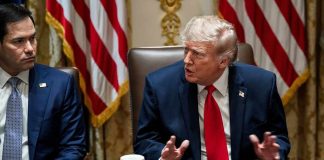
President Trump says Israel is “very happy” because Hamas has agreed to lay down its guns and hand Gaza over to a new government.
Story Snapshot
- Trump announced a deal for the complete disarmament of Hamas and all armed groups in Gaza.
- The Board of Peace says Hamas accepted a detailed roadmap tied to Gaza’s ceasefire and future governance.
- Israel’s withdrawal and Gaza’s reconstruction depend on weapons being surrendered and verified in phases.
- Trump claims Israeli leaders welcome the deal, but Hamas stresses strict conditions and timing.
Trump’s announcement and Israel’s reported reaction
President Trump used a social media post to declare that his Board of Peace had reached an agreement for the “COMPLETE DISARMAMENT of Hamas and all other armed groups in Gaza.” He called it a “major milestone” in his 20-point Gaza peace plan, which already stopped active fighting and set up a new international structure around the strip. Trump later told reporters Israel was “very happy” with the deal, framing it as the breakthrough Israeli leaders had long demanded before any full exit from Gaza.
That claim matters because Israeli security has always hinged on one core demand: Hamas cannot keep rockets and tunnel networks and still expect normal relations. Trump’s team says Israeli officials privately backed the disarmament road map because it pairs weapon surrender with a phased troop pullout and outside help to police Gaza. For many conservatives, that package hits the sweet spot: fewer American boots on the ground, a safer Israel, and a clear expectation that Gaza’s rulers abandon terrorism and accept accountability.
What Hamas agreed to under the Board of Peace roadmap
The Board of Peace, a multinational body created under Trump’s peace plan, issued a statement saying Hamas had “agreed to a detailed Roadmap for implementing the next phases of the Gaza ceasefire” and “committed to an actionable plan for relinquishing all its weapons.” The roadmap links disarmament to a step-by-step process. Hamas and other militant groups in Gaza would hand over weapons to a new Palestinian technocratic committee and international mediators, not directly to Israel, addressing one of Hamas’s long-standing political fears.
Al Jazeera’s reporting says Hamas acknowledged a deal “aimed at fully ending Israel’s war on Gaza,” including provisions to disarm and surrender weapons in stages. That staged design appears across many descriptions of the plan. Weapons and tunnels are dismantled over months, while Israeli forces leave areas once monitors confirm they are clear. Hamas officials stress that their pledge is conditional; they expect Israel to halt military actions, stop targeted killings, move troops back, and allow serious humanitarian aid before they fully carry out disarmament. That insistence on conditions shows Hamas is not simply surrendering, but trying to trade weapons for what it sees as real guarantees.
The 20-point Gaza peace plan and phased disarmament
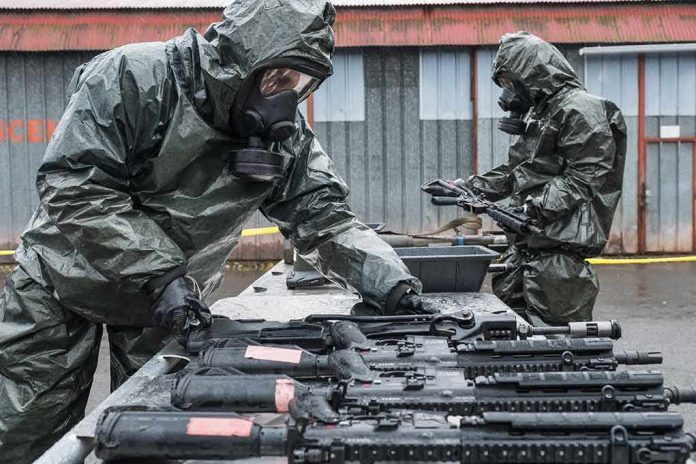
Trump’s 20-point Gaza peace plan lays the foundation for this moment. The published text says Hamas and other factions will not govern Gaza “directly or indirectly,” and that all “military and offensive infrastructure” will be dismantled and not rebuilt. The plan calls for demilitarization overseen by independent monitors and an agreed process to permanently decommission weapons. This is not just a speech line; it lays out a structure with verification, buyback programs, and international funding to help fighters rejoin civilian life.
Reuters earlier described a disarmament proposal where Hamas would surrender arms over about eight months, while Israel would withdraw troops once Gaza was confirmed to be free of weaponry. Axios reported a 15-point framework hammered out by the Board of Peace and mediators from Egypt, Qatar, and Turkey, built around demilitarizing Gaza and transferring authority to a new National Committee for the Administration of Gaza. These details show a clear logic: no guns, no rockets, and no tunnels in exchange for a real end to war, an Israeli exit, and a chance to rebuild Gaza with technocrats instead of terrorists calling the shots.
Why this matters for Israel, Gaza, and American conservatives
For Israel, a credible Hamas disarmament deal is more than a diplomatic trophy. It means fewer rocket sirens, less threat of tunnel raids, and a path to step back from direct control of a hostile, crowded territory. Trump’s message that Israel is “very happy” reflects years of Israeli demands: any peace worth the name must strip Hamas of tools to attack Jewish civilians while keeping a hard line against future rearmament. If independent monitors really confirm weapons are gone, many Israelis may see this as the best deal they will ever get.
🇺🇸 🇵🇸 #US President Donald #Trump announced the complete #disarmament of all armed groups in the #Gaza Strip, while Hamas confirmed Friday it had agreed to a deal. pic.twitter.com/4n8T3gAaYv
— Moses (@moses_kendi) July 31, 2026
For American conservatives, the values test is straightforward. Does the deal reduce terrorism, protect an ally, and avoid endless U.S. war commitments? The plan pushes responsibility onto local technocrats, regional partners, and an international stabilization force, while tying every benefit for Hamas to verifiable steps. That reflects common sense: rewards follow proof, not promises. Skeptics warn that any roadmap is only as strong as its enforcement, and some earlier reports showed Hamas stalling or rejecting timelines. Still, if Trump’s Board of Peace can turn this agreement into real disarmament on the ground, it would mark one of the most significant conservative-led peace wins in the Middle East in a generation.
Sources:
cbsnews.com, abcnews.com, bbc.com, theguardian.com, npr.org, cbc.ca, ecfr.eu