

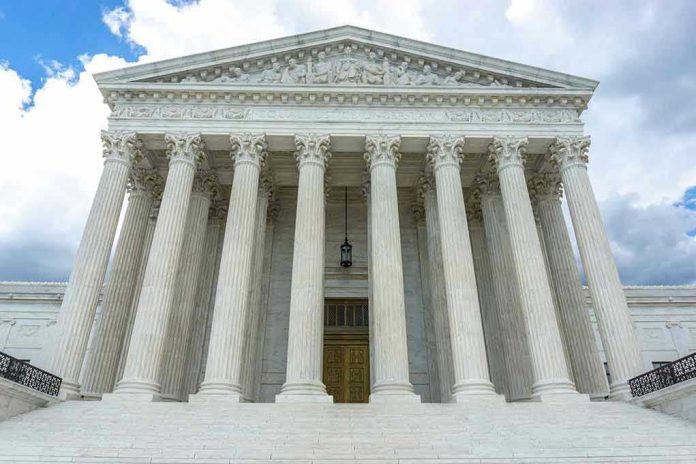
The owners of a 240-year-old American newspaper just decided they would rather bury it than live under a union contract they fought all the way to the Supreme Court and lost.
Story Snapshot
- A founding-era daily newspaper will shut down both print and digital on May 3 after a Supreme Court loss.
- Owners cite $350 million in losses and a 2014 union contract they call unworkable in today’s media market.
- Union leaders say management tried to bust the union, lost in court, then chose closure over compliance.
- Pittsburgh will lose its primary daily watchdog just as another major local outlet has already gone dark.
A 240-Year Pillar Collapses In An Afternoon
Executives at Block Communications did not hold a town hall or face questions in a bustling newsroom when they announced the end of the Pittsburgh Post-Gazette. They used a prerecorded Zoom video and a four-paragraph statement to tell staff and readers that a paper traced back to 1786 will publish its final edition on May 3, shutting down both its printing presses and its website after roughly 239–240 years of continuous operation.
Pittsburgh Post-Gazette ownership announces it’s shutting down paper in May.
READ MORE: https://t.co/JtyMolmWkr pic.twitter.com/yWnzCqlEgg
— WGN TV News (@WGNNews) January 8, 2026
The timing was not random. Hours earlier, the U.S. Supreme Court refused to pause a Third Circuit Court of Appeals order enforcing National Labor Relations Board rulings against the company, which required restoring health-care benefits and other terms from a 2014 collective bargaining agreement that management had unilaterally discarded. After years of appeals, from an administrative law judge to the full NLRB to the Third Circuit and finally SCOTUS, the legal string ran out.
How A Labor War Became A Death Spiral
The conflict that ended the paper did not start in a courtroom; it began in contract talks that soured in 2017. By July 2020, Post-Gazette management tore up the existing union contract, imposed new work rules, and shifted more health-care costs onto employees who had already gone two decades without across-the-board raises to help keep the paper solvent. Editorial staff drew a line on Oct. 18, 2022, when they walked out on strike over what they called bad-faith bargaining and illegal unilateral changes.
Federal labor law is not ambiguous about ripping up a bargaining agreement. An NLRB administrative law judge ordered the company in January 2023 to reinstate prior terms while negotiating a new deal. The Board upheld and broadened that ruling in September 2024, and the Third Circuit followed with an injunction in March 2025 and a full enforcement order in November 2025, requiring restored benefits and back payments for costs illegally shifted to workers. The company chose to appeal repeatedly instead of opening its books or cutting a deal, a strategy that may resonate with corporate rights but clashes with basic conservative respect for contracts and the rule of law.
Management’s Math Versus Workers’ Reality
Block Communications claims the numbers alone forced its hand: more than $350 million in operating losses over 20 years, a structurally broken ad market, and a 2014 contract they say locks in “outdated and inflexible operational practices” unfit for digital-era local journalism. From that vantage point, a family company facing continual red ink and fresh legal mandates looks like any other business owner deciding not to pour more good money after bad in a shrinking industry.
The Newspaper Guild of Pittsburgh answers with a starkly different ledger. Guild leaders argue that journalists effectively subsidized the paper for years through frozen wages, then saw their health care gutted when management unilaterally rewrote the rules. They point out that the company never opened its books while pleading poverty, fought the union at every step, and only announced closure within hours of losing its final attempt to dodge compliance at the Supreme Court. From that angle, the case resembles a failed union-busting campaign more than an inevitable economic casualty.
What Pittsburgh Loses When A Daily Dies
Numbers alone do not capture what vanishes when a founding-era metropolitan daily disappears. The Post-Gazette carried the civic memory of Pittsburgh through industrial booms, steel’s collapse, mayoral scandals, sports triumphs, and neighborhood reinventions. Commentators in Pittsburgh Magazine describe the shutdown as an epitaph for a defining institution whose absence will leave City Hall, courts, universities, and corporate boardrooms with one less consistent watchdog looking over their shoulders.
Pittsburgh Post-Gazette ownership announces it's shutting down paper in May https://t.co/vFZp72jO4I pic.twitter.com/uVmKFlbBQD
— The Independent (@Independent) January 8, 2026
The local news ecosystem was already wobbling. Block Communications had closed the Pittsburgh City Paper, a 34-year-old alt-weekly it acquired in 2023, just days before announcing the Post-Gazette’s death. Remaining outlets—TV stations, radio, niche online startups—will try to cover the gap, but they lack the combination of institutional memory, investigative resources, and daily reach that a major newspaper brings. Research on news deserts suggests communities in similar situations see lower civic engagement, weaker oversight, and more room for mismanagement, which should concern anyone who values limited, accountable government.
Rule Of Law, Responsibility, And What Comes Next
Union leaders view the legal outcome as proof that the system worked, even if the paper did not survive it. NewsGuild president Jon Schleuss said the Block family has now admitted it cannot run a business and follow the law at the same time, framing the shutdown as a choice to close rather than honor binding labor obligations. Local Guild president Andrew Goldstein was blunter, charging that the owners “couldn’t bust the union, so they shut down the paper,” and vowing to pursue new models to keep quality journalism alive in Pittsburgh.
From a conservative common-sense perspective, both sides expose uncomfortable truths. A family-owned paper hemorrhaging money in a broken advertising market faces harsh realities that nostalgia cannot erase. Yet a long campaign to unilaterally rewrite contracts, strip health benefits, and fight regulators to the bitter end clashes with core principles of honoring agreements and respecting lawful authority. When a 240-year-old newspaper dies in the shadow of a Supreme Court order, the autopsy points not only to market forces but also to management decisions about how to treat workers, follow the law, and shoulder the basic civic responsibility that comes with owning a community’s loudest megaphone.
Sources:
Pittsburgh Magazine – “Why Is the Pittsburgh Post-Gazette Closing?”
Courthouse News – “Pittsburgh Post-Gazette to close after 239 years following union dispute”
Pittsburgh Post-Gazette – “Post-Gazette to publish final edition and cease operations on May 3”