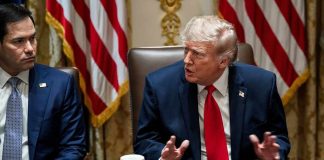
Donald Trump turned a primetime speech into a fresh fight over broadcast power, then demanded that ABC and NBC lose their licenses for not airing it live.
Quick Take
- Trump said ABC and NBC should have carried his election security speech live.
- He accused the networks of hiding what he called election fraud.
- He said their broadcast licenses should be revoked for refusing to air it.
- Federal Communications Commission rules and the First Amendment limit that kind of punishment.
Trump Treats Coverage as a Loyalty Test
Trump’s complaint was not subtle. He said ABC and NBC “knew what it was about” and still refused to interrupt regular programming for his address. He framed that choice as proof of bias, not editorial judgment. The speech itself focused on election security, but Trump cast the networks’ decision as part of a larger plot against him and his allies.
That is why the threat landed so hard. Trump did not just criticize the networks. He said fraud like this should mean a revocation of their licenses. He also argued that the public airwaves have value and that the networks use them without paying enough for the privilege. That claim fits a familiar Trump theme: if media coverage hurts him, he treats the coverage as an abuse of power, not a business choice.
A Familiar Pattern, Not a One-Time Outburst
This fight fits a pattern that has run through Trump’s public comments for years. In August, he called ABC and NBC “two of worst and biased networks history” and said 97 percent of their coverage of him was “BAD STORIES.” He said the Federal Communications Commission should revoke their licenses or, at minimum, punish them for how they cover Republicans and conservatives. Reuters later reported similar attacks on ABC after a reporter’s question about Jeffrey Epstein files.
The pattern matters because Trump keeps pushing the same message: broadcasters should lose access to the airwaves if they cross him. That is more than bluster. It is a public test of how far a president can go in pressuring media companies that depend on federal licensing. For readers who value plain dealing, the point is simple. He is not asking for better coverage. He is asking for consequences when coverage displeases him.
Why the Threat Runs Into the Law
Broadcast licenses are not handed out as rewards for flattering coverage. The Federal Communications Commission reviews them under public interest rules, but it does not have free rein to punish a station for a single news story or editorial choice. Brookings says the agency lacks authority to revoke a license based on particular newscasts, and former FCC chairs have said the same. The First Amendment gives that protection real force.
That legal wall is why Trump’s demand is loud but weak. Federal regulators can examine compliance issues, but they cannot lawfully strip licenses because a network offended the White House. Even Trump’s allies at the Federal Communications Commission face those limits. The broader danger is not that a sudden revocation will happen tomorrow. The danger is the steady pressure that comes from treating independent news as something the government should discipline.
What This Says About the Media Fight
Trump’s clash with ABC and NBC also shows how quickly he turns a programming choice into a political weapon. Networks decide every day which speeches to carry live, which to delay, and which to skip. That judgment can be fair or flawed, but it is still editorial judgment. Trump responded by raising the stakes as high as possible: not a complaint, not a boycott, but a call to take away licenses.
For his supporters, the message is clear and easy to repeat. He says the networks are biased, so they should not enjoy the benefits of public airwaves while opposing him. For his critics, the episode is another sign that he sees news coverage as something to be controlled. Either way, the fight reveals a basic truth about modern politics: the battle over who gets to tell the story now reaches all the way to the broadcast license itself.
Sources:
mediaite.com, reuters.com, theguardian.com, npr.org, cnbc.com, politicalwire.com, nbcnews.com, youtube.com, brookings.edu, nytimes.com, internazionale.it