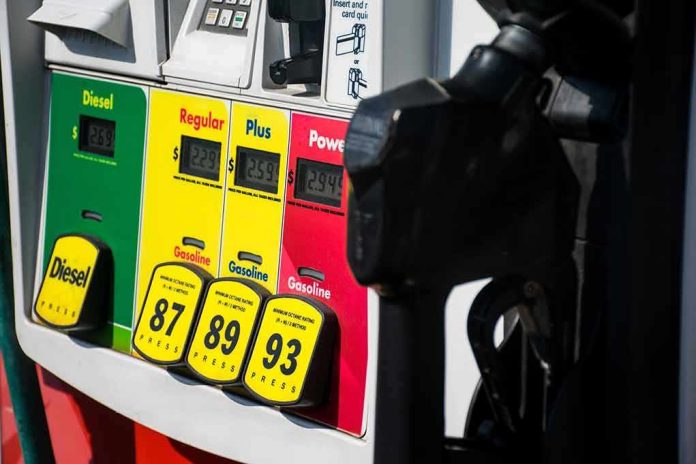
President Trump told Americans that paying a little more at the pump is the price of stopping Iran from getting a nuclear weapon.
Story Snapshot
- Trump linked higher gas prices to pressuring Iran’s nuclear ambitions.
- He called the price hit “peanuts” next to preventing a nuclear-armed Iran.
- Prices move with global oil, not just U.S. drilling or politics.
- The Strait of Hormuz chokepoint remains the risk engine for oil shocks.
Trump’s Case: Pay A Little More Now To Avoid A Bigger Threat
President Trump urged Americans to accept slightly higher gasoline prices as the cost of stopping Iran from obtaining a nuclear weapon. He made the point at a Garden City, New York rally, saying a “tiny little bit more” at the pump is worth it to deny a hostile regime the bomb. He also used the word “peanuts” when pressed by reporters, arguing that national security comes first and that any price surge would not last long once the crisis eases.
Trump’s logic tracks with a hard trade-off many leaders make in war. Security actions can ripple through energy markets fast. He has said Americans should expect higher gas prices “for a little while,” but that prices would fall once an agreement is reached or the mission is finished. The message targets a core conservative value: peace through strength. The idea is that short-term cost can prevent a far more dangerous and expensive future if Iran reached a nuclear threshold.
Why Gas Prices Jump During A Gulf Crisis
Gasoline prices follow crude oil, and crude oil is priced on a global market. Supply shocks and shipping risks raise prices quickly at the pump. The energy pinch today ties back to threats around the Strait of Hormuz, the narrow passage that moves about a fifth of the world’s oil. Any closure, attack, or war risk there can drive up oil costs everywhere, including in the United States. That is why even strong U.S. oil output does not fully shield drivers.
Market analysts have warned the White House that refining inventories remain tight and could lift prices more if disruptions drag on. Risk premiums on oil rise when traders expect more danger at sea or at key facilities. Forecasts vary, but they agree on one thing: the longer the Hormuz threat lasts, the higher the chance of a price spike and slower relief at the pump. That feedback loop explains the urgency behind any plan to reduce risk in the Gulf.
The Political Heat: Pump Prices As A Proxy For Policy
Voters feel fuel prices in a visceral way. Politicians know that, so they frame the story. Trump is telling Americans that the squeeze is temporary and strategic. He claims prices will fall when a deal comes, or after the job is done. Energy scholars add context here: voters often credit or blame presidents for gas prices, but the largest drivers are global supply, shipping risk, and refinery capacity, not one policy lever in Washington.
Some media outlets highlighted Trump’s “peanuts” line and his focus on the nuclear threat. That framing invites a values test: Is a short-term price rise worth stopping a nuclear breakout by a hostile regime? On the merits, the facts favor his core linkage. War risk around Hormuz raises oil prices. Narrowing that risk lowers them. The question is timing. Markets move faster than diplomacy, so drivers feel the pain before they feel the payoff.
What Relief Could Look Like And When
Relief comes from three channels: reduced threat to shipping, more barrels to market, or more refining capacity available. Any de-escalation that reopens Hormuz would cool prices. Allowing more supply from elsewhere can also help, though moves that involve sanctions policy bring trade-offs of their own. Analysts at major banks estimate a meaningful risk premium remains baked into prices until the Gulf is safer for tankers again.
That’s a flex 💪The Democrat will win due to Trump fucking Israel 🇮🇱 romance Treatment of the military.. gas ⛽️ prices due to the Jews war… food..housing.. oh ..all of our promises 💩 on the American 🇺🇸 people… the Fake nukes in Iran 🇮🇷.. If you can’t see government lies!
😂 pic.twitter.com/JNItZP5P1x— Daffy Duck (@daffy_duck11975) August 15, 2026
Trump’s bet is simple: hold firm now to prevent a nuclear-armed Iran and restore stable flows later. That stance lines up with common sense and conservative priorities: deter threats, keep sea lanes open, and protect American families from a larger war. The near-term inconvenience is real. But preventing a nuclear crisis would spare Americans far higher costs in money, freedom, and security down the road.
Sources:
feedpress.me, yahoo.com, usatoday.com, nbcnews.com, youtube.com, hks.harvard.edu, bbc.com, washingtonpost.com, sciencedirect.com