Spain watched nearly an entire city’s worth of people rush its African border in a single day, and now Washington is quietly telling Americans to think twice before going anywhere near Ceuta.
Story Snapshot
- Tens of thousands of migrants crossed from Morocco into the tiny Spanish territory of Ceuta in about 24–48 hours.
- Spain deployed troops, reinforced fences, and is now installing a 500‑meter floating barrier to lock down the sea border.
- Dozens of migrants died in the rush, while most of those who crossed were quickly sent back or returned to Morocco on their own.
- The U.S. is urging Americans to reconsider travel to Ceuta as Spain treats the surge as a sovereignty and security crisis.
Ceuta’s sudden shock: a tiny city meets a massive rush
Ceuta is a small Spanish territory on the coast of North Africa, squeezed against Morocco and home to fewer than 100,000 people. Late July, its calm streets suddenly faced a human wave. In roughly one day, about 49,000 migrants from Morocco made it across the border by land and sea, swimming around breakwaters or climbing fences to reach European soil. Spanish officials said the total influx over about 48 hours may have reached 50,000 to 60,000 people.
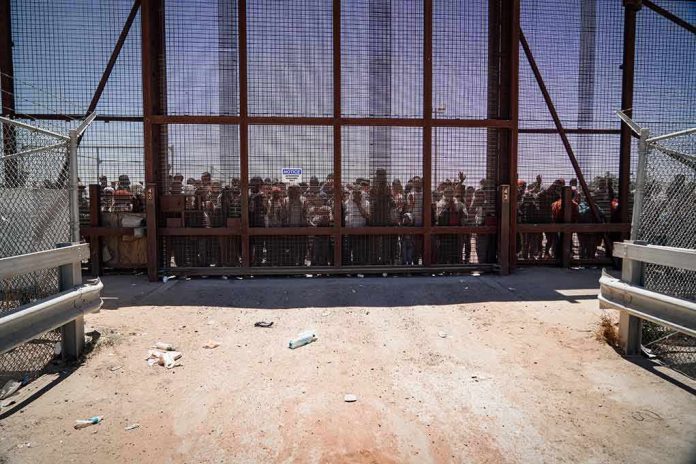
The scenes were raw and chaotic. Video and eyewitness reports showed long lines of young men sprinting across the sand, packed groups clinging to border fences, and exhausted swimmers dragged out of the water by Spanish troops. Many chased the same basic hope: Europe meant work, money, and escape from hardship back home. Some had followed social media rumors that Spain’s border rules had loosened, or that reaching Ceuta now offered a safer, faster path into the European Union.
Spain calls it a sovereignty crisis and sends in the military
Madrid did not treat this as a normal migration spike. Prime Minister Pedro Sánchez called the surge a “violation of Spanish sovereignty” and promised that those who crossed illegally would be sent back as quickly as possible. Ceuta’s local leader asked the central government to declare an emergency and restore control. Spain deployed its Armed Forces to back up the Civil Guard police, putting soldiers on the beaches and at key border points to stop more crossings and to escort migrants back to the frontier.
Within about 24 to 48 hours, Spain claimed it had largely restored order. Officials said most of the migrants were no longer in Ceuta. One government representative reported that more than 48,000 of those who crossed had already returned to Morocco, many after being accompanied back to the border in organized operations. This rapid pushback fits a pattern: politicians frame the event as an “invasion” and then race to show voters that the state still controls the frontier, even though the crowd was made of civilians, not soldiers.
A deadly border and a new floating wall in the sea
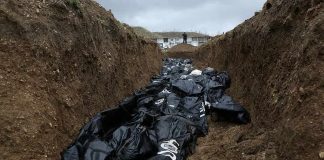
The human cost was brutal. Spanish authorities reported at least 57 to 67 deaths linked to the rush, as some migrants drowned and others were crushed while trying to climb the breakwater and fences near Ceuta. For a territory smaller than many American suburbs, that death toll and sudden crowd shook daily life. Local residents spoke of fear, overwhelmed services, and worry that the incident exposed deeper cracks in Europe’s border security.
Spain answered with steel and rubber, not just words. On the sea line between Ceuta and Morocco, the Interior Ministry ordered a new 500‑meter floating barrier installed alongside anchored naval buoys. The inflatable structure rises about 30 to 70 centimeters above the water and extends up to one meter below the surface, creating a kind of low wall in the sea that is hard to swim around without being seen. A narrow channel between the barrier and the buoys lets Civil Guard boats patrol and intercept swimmers quickly.
Why Washington is now waving a caution flag
As Spain raced to secure its border, the United States watched the same images of crowds, bodies in the surf, soldiers on the beach, and angry protests in Spanish cities. American officials now urge U.S. citizens to reconsider travel to Ceuta during this period, citing the strain on local infrastructure, the heavy security presence, and the risk of unrest around border areas. That is not a formal ban, but it is a clear signal: this is no longer a sleepy seaside stop; it is a live border crisis.
After Migrant Surge, Ceuta Still Struggles to Recover
(Location: Ceuta, Spain)
#Ceuta #Spain #Migration #MigrantCrisis #BorderSecurity #BreakingNews #WorldNews #Europe #LatestNews #InternationalNews #NewsUpdate #TrendingNews pic.twitter.com/8VM2Htn5uo— TheNewsroomindia (@TNewsroomindia) August 3, 2026
From a conservative, common‑sense view, Spain’s reaction makes sense. A country that loses control of a border, even for 24 hours, loses confidence at home and invites testing by traffickers, hostile actors, and copycat waves. The push to remove illegal entrants quickly, reinforce fences, and build a physical barrier in the water reflects a basic duty: protect your people, enforce your laws, and keep humanitarian help from turning into a permanent open door.
Europe’s wider fault lines and what comes next
Ceuta’s crisis did not stay local. Italy briefly halted its open border agreement with Spain inside the European Union’s travel zone, arguing that Spain’s shock became everyone’s problem once migrants could move onward inside Europe. Old arguments over burden‑sharing, asylum rules, and the line between “refugee” and “economic migrant” flared again. Some leaders demanded tougher outer borders; others warned that walls without legal paths only push more people into deadly waters.
What is clear is this: tens of thousands of people can now appear at a weak point in Europe’s defenses within hours, driven by poverty, online rumor, and the belief that once inside, it will be hard to remove them. Ceuta showed how fast that belief can crash into a firm response. Spain reinforced fences, sent troops, and is building a floating wall. The U.S. is telling its citizens to stay back and watch from a distance. The next surge, whether on Europe’s coast or America’s southern border, will test who learned anything from Ceuta.
Sources:
youtube.com, reuters.com, nytimes.com, bbc.com, forbes.com, abc.net.au, dailymotion.com, apnews.com