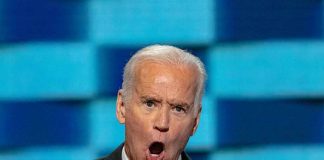
When even Steven Spielberg quietly changes his “home base,” the real story isn’t celebrity gossip—it’s how tax policy turns residency into a survival skill for the rich and a revenue gamble for everyone else.
Story Snapshot
- Steven Spielberg and Kate Capshaw became New York City residents on January 1, 2026, tied to a long-planned family shift and an Amblin office presence in New York.
- A proposed California wealth-tax push ignited speculation that his move signals a broader billionaire exit, even as his spokesperson denied taxes as the motive.
- California’s budget depends heavily on high earners, so even a small number of departures can rattle revenue projections and politics.
- The public argument split predictably: conservatives saw hypocrisy and policy failure; mainstream reporting stressed timing and family reasons, not proof of tax flight.
The Move Was Real; The Motive Became the Battlefield
Steven Spielberg and his wife, Kate Capshaw, officially became New York City residents at the start of 2026, linked to their long-standing bi-coastal life and proximity to children and grandchildren. That part is straightforward. The fight began when commentators tied the timing to California’s latest flirtation with a wealth tax aimed at billionaires. A spokesperson called the move “long-planned” and “purely” family-driven, leaving critics to argue from coincidence.
That gap—between what can be proven and what feels obvious—drives the entire controversy. If you’ve watched high-net-worth behavior for any length of time, you know the drill: wealthy people rarely hold press conferences to announce their tax planning, and they don’t need to. The legal definition of residency, the calendar, and a couple of addresses can do more damage than a thousand speeches. Speculation filled the vacuum because state tax policy makes “where you sleep” a political act.
California’s Problem: A Revenue System Built on a Few Big Checks
California’s finances lean hard on the top slice of earners, with revenue that swings with capital gains, stock compensation, and boom-and-bust markets. That structure can look painless when the economy hums and punitive when it doesn’t. Talk of a new wealth tax, reportedly framed as a way to raise massive funding for priorities like healthcare and education, hits a nerve because the state already carries one of the nation’s highest income tax rates.
Supporters sell wealth taxes as fairness; opponents see an invitation to leave. Common sense says you don’t build a stable household budget by relying on one unpredictable bonus, and the same principle applies to a state treasury. Conservatives tend to be right to warn that governments often treat “the rich” as an infinite ATM—until the ATM relocates. Even if only a handful move, California’s reliance on a narrow base makes the downside asymmetrical and immediate.
The “Billionaire Exodus” Narrative: True Pattern, Slippery Proof
Recent examples keep the storyline alive: tech and venture figures opening offices in Texas or Florida, and reports of major fortunes exploring residency changes. Add those headlines to a famous director and you get a neat morality play—Hollywood liberal flees his own politics. The trouble is that “pattern” doesn’t automatically prove “cause” in any single case. Spielberg has owned property on both coasts for decades, which makes a residency switch easier to execute quietly.
That’s why the cleanest factual framing matters: the move happened, a tax proposal exists, and the public is arguing over motive. Social media sharpened the argument into a verdict, but the available reporting doesn’t nail down a direct tax trigger. When people jump from “this could matter” to “this is why,” they make themselves easy to dismiss. Conservatives win more lasting credibility by focusing on incentives and outcomes rather than reading minds.
New York Isn’t a Tax Paradise; It’s a Different Kind of Bet
Switching from California to New York doesn’t automatically scream “tax escape,” because New York carries its own reputation for high taxes and aggressive revenue politics. That detail undercuts the simplest version of the story. What New York offers instead is something wealth also buys: proximity to family, access to power, cultural status, and privacy inside rarefied addresses. If the move was primarily personal, New York makes perfect sense; if it was strategic, it may be about shaping exposure, not eliminating it.
That distinction matters for readers who want to understand the broader game. A wealth tax targets accumulated assets, not just annual income, and the fight over such a policy invites legal questions, valuation disputes, and residency enforcement battles. Billionaires don’t need a “zero tax” state to respond; they just need optionality. The moment lawmakers float a new category of recurring tax, the rational response is to model scenarios and keep doors open.
The Political Lesson: Symbolism Can’t Replace Sound Policy
The conservative critique lands hardest where it sticks to verifiable incentives. Politicians can campaign on soaking billionaires, but states compete with each other, and money moves faster than bureaucracy. If California wants world-class services, it needs a tax system that doesn’t depend on trapping a tiny number of people inside its borders. If it wants fairness, it still needs predictability and enforceability. A ballot-box slogan doesn’t solve the reality that residency is mobile and audits are messy.
https://twitter.com/PJMedia_com/status/2024729488307655015
Spielberg’s move, quiet and plausible on family grounds, still functions like a flare. It reminds voters that the wealthy often have choices that regular families don’t, and lawmakers should expect those choices to show up in budgets. Conservatives should resist the temptation to turn every relocation into a purity test and instead press the stronger point: policies that punish success tend to export it. In the end, the state left holding the risk isn’t Hollywood—it’s every taxpayer who can’t pick up and change jurisdictions on January 1.
Sources:
ET Leaves Home: Steven Spielberg Is the Latest Billionaire to Leave California – PJ Media
Fact Check: Did Steven Spielberg flee California to escape proposed wealth tax – Meaww
Billionaires Spielberg, Zuckerberg eyeing East Coast properties – AOL