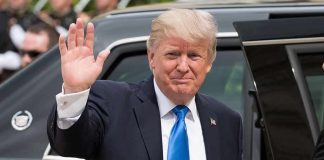

Donald Trump turned a one-minute computer lag in the Los Angeles mayoral primary into a full-blown “rigged election” narrative — and then walked off national television rather than defend it with facts.
Story Snapshot
- Trump seized on a brief vote-reporting quirk in the Los Angeles mayoral race to claim the primary was “rigged” against Spencer Pratt.[1][2]
- County officials and a federal prosecutor said every candidate received votes in every update, debunking the “zero votes” claim.[1]
- Trump repeated fraud allegations about California’s primaries without offering evidence, focusing on mail ballots and slow counting.[2][3]
- When pressed on NBC’s “Meet the Press,” he abruptly ended the interview rather than substantiate his claims.[1]
How a Glitchy-Looking Screen Became a ‘Rigged’ Election
The drama began with a standard election-night vote update in Los Angeles County, where results upload in automated electronic batches. One update briefly showed votes for only part of the mayoral field, followed one minute later by an update that added the remaining candidates, including Spencer Pratt.[1] That short lag created screenshots that conspiracy accounts blasted out as proof that Pratt had received “zero votes” in a batch and that the system was fixed.
The Los Angeles County registrar responded that no candidate ever received zero votes in an update and that the apparent anomaly reflected nothing more exotic than staggered automated reporting. Official county records showed that “each candidate received votes in every update,” according to First Assistant United States Attorney Bill Essayli, who publicly stated that the viral claim was false.[1] That is the kind of concrete, checkable evidence serious people look for before shouting “fraud.”
Trump’s Narrative: Cheating, Delays, and Mail Ballots
Donald Trump did not wait for those facts to land. He went online and accused California Democrats of “cheating” and trying to “steal” both the gubernatorial and Los Angeles mayoral primaries, tying his narrative to mail-in ballots and the pace of counting.[2][3] He complained that after four days the state was “not even close” to finishing the tally, framing ordinary processing of hundreds of thousands of mail ballots as evidence of a fix.[1][2]
Trump also told supporters that the vote was “under investigation” by the United States Attorney’s Office in Los Angeles, a claim that lacked support at the time he made it.[2][3] California Democratic Party Chair Rusty Hicks called Trump’s allegations “baseless” and expressed confidence that the state would complete “a fair and accurate count.”[3] From a common-sense conservative standpoint, the question is simple: if you allege a federal criminal conspiracy, you ought to be ready to produce more than frustrated hunches about slow returns.
What Investigators and Officials Actually Found
First Assistant United States Attorney Bill Essayli is not exactly a darling of the left, which makes his public intervention significant. Essayli said that the now-infamous “zero votes” update never existed in the official data and that every candidate had votes in every batch.[1] He did confirm that his office, working with the Federal Bureau of Investigation (FBI) in Los Angeles, has multiple election-fraud investigations open, but none matched the social media narrative Trump amplified.[1]
That distinction matters for anyone who values the rule of law. Federal prosecutors are supposed to follow evidence, not social-media outrage. The fact that the same office debunked the Pratt “zero votes” story while also acknowledging ongoing fraud probes actually reinforces confidence in the system: they are willing to say “this claim is garbage” even as they pursue real cases. That aligns with a core conservative instinct: target actual wrongdoing, not imagined plots that happen to be politically convenient.
The NBC Confrontation and the Limits of the Story
The tension peaked when Kristen Welker pressed Trump on NBC’s “Meet the Press,” asking for specific evidence that California officials were rigging the election. Trump repeated that California was “cheating” and insisted the elections were “rigged,” again focusing on mail ballots and slow counting, but did not provide new factual support.[1] As Welker pushed back, citing the lack of proof and the routine nature of extended counting in a heavy mail-ballot state, Trump abruptly ended the interview and walked off.
🚨BREAKING: President Trump is repeating his claim that California's elections are rigged, sharing a post from Rep. Abe Hamadeh (R-AZ) on Truth Social alleging the state is "incapable of running free and fair elections consistent with our constitution."
Trump added his own… pic.twitter.com/JaVbhzjSFz
— Off The Press (@OffThePress1) June 8, 2026
That exit said more than another twenty minutes of talking would have. When a claim rests on a genuine glitch, a good-faith critic adjusts once the glitch is explained and the data checked. When the claim rests on a narrative that must stay alive at all costs, the easiest move is to attack the process, the media, or the motives of everyone asking hard questions, then leave. Voters who care about both election integrity and basic fairness should notice which path was chosen.
Sources:
[1] Web – NEW: “Rigged Election!” – Trump Responds to Nithya Raman’s Impossible …
[2] Web – L.A. mayoral race voter fraud claim gets debunked – by Trump’s …
[3] YouTube – Trump accuses Democrats of trying to ‘steal’ California primaries