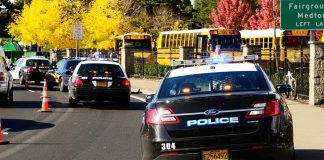
A van attack at Berlin’s Pride parade turned a night of celebration into a deadly test of how Europe handles Islamist extremism, public safety, and truth in real time.
Story Snapshot
- A van was deliberately driven into Berlin Pride crowds, killing 1 and injuring at least 16.
- Police say the identified suspect is part of Berlin’s “Islamist scene” and known to authorities.
- A massive manhunt emptied one of Europe’s largest Pride events and froze central Berlin.
- Officials have not yet confirmed a motive, even as media and activists rush to call it terror.
A Pride celebration turns into a crime scene
Berlin’s annual Christopher Street Day Pride parade drew tens of thousands of people into Tiergarten park and the streets near the Brandenburg Gate, as it does every year for one of Europe’s largest LGBTQ events. That familiar scene ended in chaos when a white passenger van drove into the crowd on Lennestrasse, striking people at speed before crashing into a tree. One person died, and at least 16 others were hurt, with several described as seriously or critically injured.
Emergency crews rushed into what, minutes earlier, had been a party zone. Firefighters and paramedics treated multiple victims lying on the road, some with life-threatening wounds. Police ordered the parade and street festivities shut down and evacuated the area around Tiergarten and the Brandenburg Gate. For ordinary Berliners, the shift was whiplash: rainbow flags and music replaced by sirens, cordons, and officers searching for a killer.
Police say the ramming was deliberate, not an accident
Berlin police did not treat this like a normal traffic crash. Officials quickly described the van strike as a deliberate act, not an accident, based on the way the vehicle was driven into pedestrians and the aftermath at the scene. Witness accounts spoke of the van charging into the Pride crowd before slamming into a tree, rather than losing control or slowly veering off course. That deliberate framing matters: it moves the case from tragic mishap to intentional violent attack.
After the crash, the driver did not stay to help the injured or explain what happened. He reportedly climbed out of the wreckage and fled on foot, disappearing into central Berlin as victims lay on the ground. Police said the driver had escaped and confirmed a manhunt was underway, with helicopters deployed over the city and officers conducting an “intensive search for possible suspects.” This response clearly fits a criminal attack scenario, not a mere accident investigation.
The suspect and the “Islamist scene” in Berlin
Within hours, Berlin police spokespeople went beyond describing what happened and spoke about who they believed was behind it. Police said they had identified a suspected perpetrator, who was known to them as a member of the “Islamist scene” or “Islamic circles” in Berlin. One spokesman stated that “measures against this suspected perpetrator, who has not yet been arrested, are under way,” and stressed that the suspect was already on their radar as an Islamist.
Major news agencies and broadcasters repeated that police attribution. Associated Press, Reuters, and other outlets reported that the suspect had links to Islamist circles or Islamic extremist groups in the German capital. Some television reports, citing police and local media, named a 21-year-old suspect and described him as having Islamist ties, with commentators openly calling the incident a likely Islamist terror attack. This was not random social media rumor; it came from official police briefings filtered through mainstream media.
Motive still unconfirmed, but the symbolism is hard to ignore
Despite these strong hints, police repeatedly said they did not yet know the motive. Officials stressed that while they viewed the ramming as deliberate and had linked the suspect to Islamist circles, they could not publicly call it terrorism until investigators understood why he did it. That caution may frustrate people who feel the ideological picture is obvious, but it matches long-standing legal practice: motive requires evidence, not assumptions.
German police hunt suspect in Berlin Pride van-ramming attack that left 1 dead and 16 injured https://t.co/nKf5nnlQwJ
— CTV National News (@CTVNationalNews) July 26, 2026
The target, however, tells its own story. The vehicle struck crowds gathered for an LGBTQ Pride event, a type of public celebration that has often been in the crosshairs of ideological extremists who reject Western social norms. From an American conservative, common-sense view, the combination is chilling: a known Islamist figure, a deliberate vehicle attack, and a Pride parade full of civilians. Many will reasonably see this as part of a wider pattern of Islamist hostility to Western freedoms, including sexual freedom and public expression.
Information whiplash and the problem of early narratives
Details in the first hours came fast and did not always match. Some outlets reported 15 injured, others 16 or 17. Some said car, others van, though police later clarified it was a passenger van. There were reports that some victims had stab wounds, raising the possibility that the attacker used a knife after leaving the vehicle. This messy information environment is typical of major attacks, but it also makes it easy for early claims to harden into political talking points that outrun the facts.
At the same time, police held back key information: no public name for the suspect at first, no arrest, and no official terrorism designation. That vacuum invited commentators to connect dots based on ideology rather than confirmed evidence. For citizens who have watched repeated Islamist attacks in Europe over the past decade, the pattern feels familiar enough that waiting for motive can seem like elite denial. Yet, if later investigation finds a different driving factor, such as mental illness or personal grievance, overconfident early “Islamist terror” labels will badly damage trust.
What this says about security, values, and public debate
This Berlin attack sits in the wider struggle over how Western societies respond to Islamist-linked violence without losing their own values. On one hand, police deserve credit for rapidly calling the ramming deliberate and warning the public about a suspect from the Islamist scene already known to them. That kind of clarity respects citizens’ right to honest information about risks. It also raises fair questions: if the suspect was known to police as an Islamist, what monitoring or preventive measures were in place before he drove a van into a Pride crowd?
On the other hand, the careful approach to motive reminds us that justice systems must work with evidence, not headlines. From a conservative perspective grounded in law and order, the path forward is not silence or euphemism; it is firm, specific transparency. That means releasing charging papers, suspect identity, and any proven extremist links once confirmed, while resisting the urge to either downplay Islamist ideology or to declare terror before the case file is complete. Berlin’s Pride tragedy shows that both safety and truth are at risk when ideology runs ahead of facts.
Sources:
facebook.com, youtube.com, smh.com.au, en.wikipedia.org, thesun.co.uk, malaymail.com, kob.com, irishtimes.com