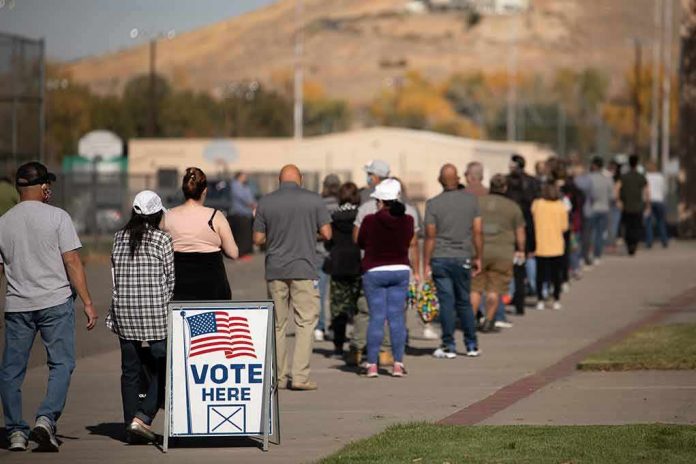
Inside a Highland Township polling place, a voter says a young man told people to turn around if they weren’t voting for Abdul.
Story Snapshot
- A voter reported a pointed “turn around” comment near check-in at a Highland Township poll.
- An Oakland County Republican official received the report and had a photo of the alleged speaker.
- Michigan law bans attempts to influence or deter a voter through threat or harassment.
- Local Republicans alerted a national voter-protection effort and asked witnesses to come forward.
What Was Reported Inside The Polling Place
A voter approached an Oakland County Republican official outside a Highland Township polling place on Election Day and relayed a blunt encounter. Near the check-in table, a young man in a hoodie with Arabic writing allegedly said, “If you’re not here to vote for Abdul, then you should turn around.” The report places the remark inside the polling area and aimed at at least one voter, possibly two, as they prepared to vote.
The official said he possessed a photograph of the young man, which The Gateway Pundit published with the face blurred. The outlet’s account includes the voter’s description of the location, timing, and quoted words. The item ties the comment to support for Abdul El-Sayed, a well-known Arab American Democrat, though the report does not establish the speaker’s identity or any campaign role.
How Michigan Law Frames Voter Intimidation
Michigan’s guidance is clear about polling place behavior. No one may threaten or try to scare voters, question voters in a harassing way, or interfere with a person’s choice. The law forbids attempts to influence how someone votes through menace or other means and bars conduct that deters or interrupts voting. Poll workers hold authority to address issues on site and can remove disruptive or intimidating actors from the premises.
State resources direct witnesses to report problems right away to precinct workers, local clerks, the Attorney General’s election protection team, or voter-protection hotlines. The state also highlights language access support to help voters understand rights and rules. The goal is fast action to keep lines moving, stop pressure at the source, and document facts while memories are fresh.
What Local And Party Actors Did Next
The Oakland County Republican Party treated the account as a serious matter. Party communications referenced “credible reports” of voter intimidation in Highland Township. They contacted the Republican National Committee’s voter-protection effort and circulated a hotline for witnesses to call. These steps match standard election-day protocols: secure statements, gather details, and pass leads to legal teams and election officials as needed.
This kind of rapid response reflects a broader trend. Small but sharp incidents at polls can ripple into larger debates about fair access and order. Responsible actors seek facts, not theater. The best practice is simple: fix the issue in the room, record what happened, and route it to authorities who can verify and, if warranted, enforce the law. That measured approach protects voters and the process without feeding chaos.
Why The Words Matter And What Comes Next
Direct language that tells a voter to leave if they will not support a named candidate crosses a bright line of common sense and law. A free election requires that voters enter, cast a ballot, and exit without pressure or fear. If the reported statement occurred as described, it fits the kind of conduct Michigan warns against: attempts to affect how someone votes or to deter voting through words that sound like a demand to leave.
A Michigan voter reported a concerning incident to an Oakland County Republican official this afternoon. According to the GOP official, whom I spoke with this evening, the incident reportedly happened inside the polling place near the check-in table. The unidentified voter…
— Patricia (@Patrici04211472) November 4, 2026
Accountability now turns on standard steps. Election workers and clerks can check precinct logs. Voter-protection teams can gather sworn statements from the reporting voter and any second voter present. If a clear photo exists, election officials can match timing and location. These basic checks honor the rights of every voter and the due-process rights of any accused person. The system works best when facts, not rumors, drive the next move.
Sources:
thegatewaypundit.com, commondreams.org, michigan.gov