When barricades flew in Midwood, the unit some leaders want gone was the one that showed up.
At a Glance
- Protesters and counterprotesters clashed outside a kosher deli in Brooklyn; police made arrests.
- The New York Police Department’s Strategic Response Group mobilized to restore order, as it was designed to do.
- Mayor Zohran Mamdani has moved to disband that unit and replace it with a civilian-led protest response.
- The clash reignites a core question: who handles unrest when words turn into fists and broken lines?
Brooklyn Clash Puts Policing Debate On The Street
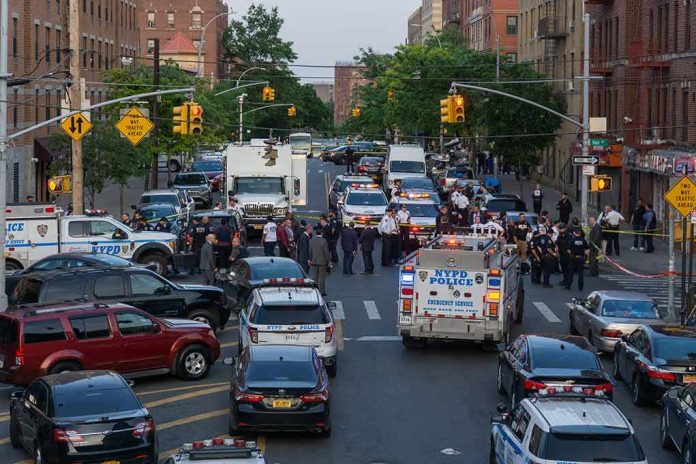
New York Police Department officers arrested several people after a protest outside Essen NY Deli in Midwood turned violent on November 25, 2026. Pro-Palestinian demonstrators and pro-Israel counterprotesters pushed into each other and against police lines. Reports show the New York Police Department’s Strategic Response Group deployed to stabilize the scene and separate the groups. The Jerusalem Post cited four arrests tied to the confrontation and disorder at the site.
The Strategic Response Group exists to rush toward volatile scenes like this one. The unit concentrates trained officers who can form lines, hold ground, and make targeted arrests. That skill set matters when rival groups collide in a tight space. On a Brooklyn sidewalk outside a crowded event, minutes count, not theory. The night’s outcome was not pretty. It also was not a riot spilling through blocks. The line held, the arrests were limited, and the event dispersed.
Mamdani’s Overhaul Collides With Street Reality
Mayor Zohran Mamdani has moved to disband the Strategic Response Group and shift protest response to a civilian-led model focused on dialogue and de-escalation. He argues that protesters who exercise constitutional rights should not face a terrorism-style posture. His plan promises less force and more conversation, including curbs on aggressive tactics. News outlets reported the change and the mayor’s framing as a rights-first recalibration for the city.
Dialogue is good policing when there is time and trust. It can guide a march, set ground rules, and cool tempers. But the Midwood clash presented a harder test. Two angry groups closed distance. Barricades became battering rams. At that moment, trained officers had to act. A civilian liaison can talk only if people can hear. That requires space, order, and a sense that lines mean something. The Strategic Response Group supplied those basics under stress.
What Critics Get Right, And Where They Overreach
Critics have raised serious complaints about past protest tactics by New York Police Department units. City investigations after the 2020 protests found excessive enforcement and crowd-control choices that inflamed tensions. Those findings deserve weight. They also argue for better policy, clearer commands, and firmer discipline, not a bet that crowds will police themselves when passions spike. Lessons learned should improve training, not erase capacity to control violence.
Rights and order are not rivals; they rely on each other. Peaceful protest needs protection from hotheads who want a fight. A small number of arrests at a heated event can prevent a larger number of injuries later. That is the logic of specialized response. The Strategic Response Group offers speed, structure, and practiced coordination. The city can shape rules of engagement while keeping that muscle ready. The Midwood scene showed why that balance matters.
The Common-Sense Standard For Protest Policing
A clear, conservative test fits the real world: speak freely, march safely, and face firm limits when you cross into violence. That means several steps. Use advance outreach to organizers. Mark routes and buffer zones. Keep regular officers up front when crowds are calm. Stage the Strategic Response Group nearby when emotions or history suggest a flashpoint. Switch to trained formations only when lines break or assaults begin. Document actions and release summaries after events.
From the Attorney General to the Mayor: the City and State of New York Enable Zionist Land Theft
Yesterday, Pal-Awda NY/NJ & our community demonstrated against Israeli real estate company CapitIL's illegal real estate event in Midwood, Brooklyn. The ensuing police brutality &… pic.twitter.com/IycPgpxROs
— Pal-Awda NY/NJ (@pal_awda) November 26, 2026
New York can pair a civilian dialogue team with a retained Strategic Response Group. The team talks first and often. The unit stands ready when talk fails. That is not a return to old habits; it is a safety net for the rare minutes when risk surges. Brooklyn’s clash supplied a field test, not a theory seminar. The city should keep what worked under pressure, fix what did not, and respect both free speech and the right of neighbors to get home in one piece.
Sources:
redstate.com, thefilterednews.com, abc7ny.com