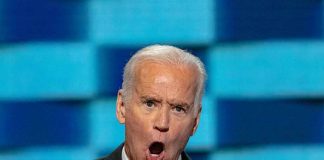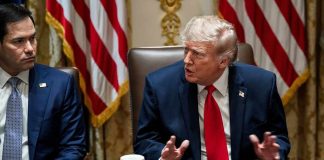
Thomas Massie’s loss and concession in Kentucky’s Republican primary is not the story of a man who refused defeat, but of how a real populist rebellion can outlive the candidate who led it.
Story Snapshot
- Thomas Massie did, in fact, concede his Republican primary loss to Trump-backed challenger Ed Gallrein.
- The race became a national test of Donald Trump’s power over Republicans who buck him.
- Massie framed his record as fighting his own party when its agenda hurt his constituents.
- The movement he described may matter more than the single night he admitted defeat.
Massie’s Concession Versus The Myth Of Refusal
News accounts left no ambiguity: Representative Thomas Massie called his opponent and conceded the Republican primary for Kentucky’s Fourth Congressional District.[1] He even joked that he “had to call my opponent and concede” before he came out to speak to supporters, making light of how long it took to track Ed Gallrein down.[1] That single line undercuts any claim that he refused to concede. Massie accepted the basic democratic reality: voters chose someone else.
The concession was not begrudging silence; it was a full speech captured and distributed by national outlets, described explicitly as his “full concession speech after defeat.”[2] The record shows formal acceptance, not an open-ended protest. Yet the narrative of Massie as the man who “would not back down” sticks because it points to something deeper than the mechanics of conceding. The real fight was never about whether to accept vote totals. The fight was about who owns the Republican Party.
How A Trump-Backed Challenger Took Down An Incumbent
President Donald Trump did not merely endorse a challenger; he made Massie’s scalp a symbol of his grip on the party.[3] National reporting described the result as leaving “no doubt” about Trump’s power over Republicans who cross him.[3] Gallrein was not just a local upstart. He was Trump’s handpicked vehicle to punish a congressman who questioned the party line. That transforms a district primary into a referendum on national loyalty, not just local service.
Analysts noted this primary as part of a pattern: incumbents who buck Trump or the leadership face expensive, highly nationalized primaries where outside money and presidential branding decide outcomes.[3] The Kentucky race became one of the most expensive House primaries in history, which tells you something about who wanted Massie gone.[3] When that much national firepower lands on one district, ordinary ballot counting is almost the least interesting part of the story. The power message is the point.
Massie’s 90 Percent Argument And Conservative Independence
Massie tried to defuse the “traitor” label by putting numbers on his record: he said he voted with his party the vast majority of the time, but refused to go along when leadership pushed something that hurt his own voters.[1] That frame resonates with an older conservative idea: the representative answers first to his district and the Constitution, not to a party boss or a social media mob. Massie cast his 10 percent of defiance as the most important part of his job.
That stance challenges a troubling trend. Many Republican voters say they value independence, but the primary system often rewards strict obedience to national figures. When Trump’s endorsement becomes the main credential, a representative’s willingness to say “no” on spending, surveillance, or foreign entanglements becomes a liability, not a virtue. From a common-sense conservative perspective, that is upside down. Limited government requires legislators willing to resist pressure, including pressure from their own side.
Why The Movement Outlives The Man
Massie’s concession speech reportedly described his campaign as a “movement,” not just a failed reelection bid.[2] That choice of language reflects an important distinction. He could admit he lost the vote count while still arguing that his core message—skepticism of centralized power, national spending sprees, and personality cult politics—remained unfinished business. The voters could take his seat away, but they could not erase the questions his campaign raised about who Republicans truly represent.
Thomas Massie Delivers Concession Speech After Kentucky Primaryhttps://t.co/cQdzMj9c72
— English Speech TV (@EnglishSpeechTV) May 31, 2026
The available record contains no evidence of court challenges, recounts, or claims of tabulation error.[1] It shows a clean procedural outcome and a clear concession. Yet many conservatives will still feel this race as a warning. When a president can “dislodge” a sitting representative with a single endorsement and a tidal wave of outside money, as the Associated Press put it,[3] the line between representative government and top-down enforcement grows thin. Massie bowed to the result, but his real refusal—his refusal to treat loyalty to any one man as the test of being Republican—may be the part that endures.
Sources:
[1] Web – Thomas Massie Won’t Back Down
[2] YouTube – Election results: Thomas Massie loses Kentucky Republican primary …
[3] YouTube – WATCH: Rep. Thomas Massie’s full concession speech after defeat …