
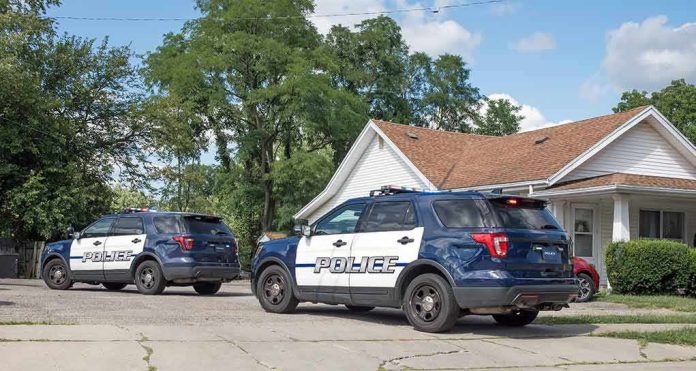
A $25 package, a green truck, and a swarm of cameras turned one woman’s day into a constitutional fight.
Story Snapshot
- A Colorado woman says police used camera searches to accuse her without a warrant.
- The charge rested on vehicle-location images, not proof she took the package.
- Her evidence placed her away from the porch; the town later dropped the case.
- The lawsuit targets both the misidentification risk and warrantless tracking.
A porch theft, a camera trail, and a hard accusation
The theft was small, but the accusation was not. Sergeant Jamie Milliman showed Chrisanna Elser still images of her forest-green Rivian truck entering and leaving Bow Mar around the time of a $25 package theft, then told her he was sure she did it, according to the lawsuit and local reports. The complaint says the officer linked her to the crime through Flock camera searches and her vehicle’s movement pattern, not any footage of her at the porch. The town issued a summons anyway.
Elser says she pushed back with receipts, timestamps, and location evidence. She says she was about a quarter mile away getting fitted for a dress. News reports say the town dropped the case after she submitted exculpatory material about two weeks later. That turn ended the charge, but not the dispute. Elser filed a federal lawsuit against Flock Group, Bow Mar, Columbine Valley, and the officer, arguing they searched and seized her movement data without a warrant or probable cause.
What the suit argues, and why it matters beyond one porch
The complaint frames a clear constitutional theory. It claims the defendants built or used a system that let officers comb through people’s travel history with no warrant, no supervisor sign-off, and no defined purpose limits. It also argues the reliance on vehicle travel as near-sole proof short-circuited basic police work. American conservative values view process as protection. If the government can trace your daily drives with no warrant, today’s porch theft can become tomorrow’s dragnet. The suit asks a court to set guardrails.
Flock Safety responds with a narrower point: the system found the right vehicle location; human judgment went wrong. The company says its cameras showed Elser’s truck in Bow Mar between 11:52 a.m. and 12:09 p.m., and that officers must weigh that clue with other evidence. That line aims the blame at police use, not the tool. It also avoids a bigger policy question: when does stitching together vehicle pings become tracking a person, and when does that require a warrant under modern privacy expectations?
The evidence gap that swallowed common sense
The public record shows no image of a person taking a box from the porch. The record shows a vehicle moving through town. The jump from “truck was nearby” to “owner stole it” is the gap where common sense should win. Investigators can, and often do, use cameras to build leads. But a lead is not a lock. The lawsuit also claims officers brushed off her contrary video and location evidence until later, which, if true, flips probable cause into probable shortcut.
The legal footing is still early. A complaint is an allegation, not a verdict. There is no court ruling yet on whether the search was unconstitutional or whether the defendants are liable. But the facts already carry a caution sign. A charge tied mainly to travel records, then dropped after exculpatory proof, is not the steady hand people expect from public safety. That is where trust starts to crack, even before any judge rules.
From one driveway to a wider map of risk
This case fits a broader pattern with automated plate readers. Agencies now convert street sightings into rich, searchable logs. Some police and policy groups argue this is like any cop jotting a plate number in a notebook; courts have often let basic plate checks proceed without warrants. But history-rich travel data looks less like a note and more like a map of your life. That is where the Supreme Court’s cell-location ruling nudges common sense: long-term tracking can demand a warrant.
A Colorado woman is taking legal action after being mistakenly accused of stealing a $25 package, raising serious questions about police surveillance technology and the protection of personal privacy.
Chrisanna Elser filed a federal lawsuit against Flock Safety, two Colorado… pic.twitter.com/wZuCMUkQa8
— Charles Frank (@Charles32962) October 12, 2026
So where does prudence land? Use the tech as a tip, then go verify. Demand policies that require warrants or, at minimum, clear approval before mining historical movement. Log every search. Audit the logs. Treat exculpatory evidence as urgent, not optional. Conservatives champion limited government and accountability. That starts with making sure a camera hit never substitutes for proof, and that your daily drive does not become an open file without a judge’s say.
Sources:
townhall.com, courthousenews.com, coloradosun.com, denverpost.com, www-cdn.abcnews.com, denverite.com, disputeindex.com