Mark Hamill posted an AI-generated image depicting President Trump dead in a grave just days after the president survived a third assassination attempt, igniting a firestorm that reveals how far celebrity political activism has strayed from responsible discourse.
Story Snapshot
- Star Wars actor Mark Hamill posted an AI-generated image on Bluesky showing Trump lying dead in a shallow grave with the caption “If Only” on May 7, 2026
- The White House condemned Hamill as “one sick individual” and connected the post to three recent assassination attempts against the president
- Hamill deleted the post and issued a clarification claiming he wanted Trump to face legal accountability, not death, but refused to apologize
- Conservative media figures called for Star Wars boycotts while Disney and Lucasfilm remained notably silent on the controversy
When Celebrity Activism Crosses the Line
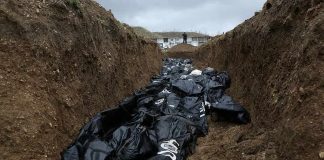
The image Hamill shared on his verified Bluesky account showed Trump with eyes closed, surrounded by daisies, with a gravestone reading “Donald J Trump 1946-2024.” The timing proved particularly inflammatory. Trump had survived what officials characterized as a third assassination attempt within two years just three days earlier. Two suspects, Cole Allen and Dean Delchay, face federal charges related to plots against the president. Hamill’s post materialized in this charged atmosphere, where the line between political commentary and dangerous incitement has already been tested by actual violence.
The actor’s choice of platform matters. Hamill migrated to Bluesky after repeatedly announcing and then abandoning social media boycotts following Trump’s election. He quit X to protest the election results, returned within hours, announced a social media fast to protest the inauguration, then ended it within eight hours. Bluesky became his preferred venue for political commentary, a platform positioned as a liberal alternative where like-minded users could engage without mainstream scrutiny. The strategy backfired spectacularly when conservative media amplified the post, bringing it before millions who would never have seen it otherwise.
The White House Responds with Force
The Trump administration’s response came swiftly and without diplomatic hedging. The White House Press Team called Hamill “one sick individual” and characterized him among “Radical Left lunatics.” Their official statement drew a direct connection between celebrity rhetoric and presidential security threats: “This kind of rhetoric is exactly what has inspired three assassination attempts in two years against our President.” The administration’s willingness to publicly condemn a Hollywood icon by name represents a calculated political move, transforming Hamill’s post into evidence of what they frame as pervasive left-wing extremism.
Disney and Lucasfilm, entities with the power to discipline or distance themselves from their Star Wars franchise icon, chose complete silence. This vacuum speaks volumes about corporate America’s paralysis when political controversy intersects with beloved entertainment properties. Conservative commentator Jack Posobiec called for a Star Wars boycott, framing the incident as the “last straw” in Hamill’s pattern of political activism. Whether such boycotts gain meaningful traction remains unclear, but Disney’s refusal to comment leaves the franchise vulnerable to association with imagery depicting presidential assassination.
Hamill’s Non-Apology Clarification
After deleting the post, Hamill issued what can only be described as a defiant clarification rather than an apology. He asserted Trump “should live long enough to witness his inevitable devastating loss in the midterms, be held accountable for his unprecedented corruption, impeached, convicted & humiliated for his countless crimes.” He added that Trump should live “long enough to realise he’ll be disgraced in the history books, forevermore.” This statement attempts to reframe his intent from wishing death upon the president to desiring political and legal consequences, but the original imagery of Trump in a grave undermines that interpretation significantly.
The clarification reveals either remarkable tone-deafness or deliberate provocation. Hamill maintained his platform and continued posting critical commentary about Trump, showing no indication he recognizes the dangerous territory he entered. His explanation asks Americans to ignore the plain meaning of an image showing the president dead and focus instead on his claimed internal motivations. This disconnect between obvious visual messaging and subsequent verbal explanation raises serious questions about either his judgment or his honesty about his original intent.
The Broader Pattern of Political Violence
Context matters profoundly here. President Trump has faced documented threats against his life, with federal charges filed against individuals who allegedly planned or attempted to carry out attacks. Cole Allen faces charges related to a shooting outside the White House Correspondent’s Dinner. Dean Delchay, an FAA employee, allegedly researched methods to smuggle firearms into federal facilities to kill the president. These represent not hypothetical concerns but actual criminal cases working through the justice system. Celebrity rhetoric depicting presidential death occurring against this backdrop carries weight beyond typical political satire.
Conservative media correctly identifies a double standard in how violent political imagery is treated depending on its target. Imagine the response if a conservative actor posted an AI-generated image of a Democratic president lying dead in a grave days after assassination attempts. The outcry would be deafening, immediate, and likely result in career-ending consequences. Yet Hamill continues his social media presence without apparent professional repercussions, shielded by the cultural power of the Star Wars franchise and Hollywood’s general political alignment. This disparity fuels legitimate anger among Americans who see rules applied selectively based on political ideology.
Free Speech Versus Responsible Speech
The First Amendment protects wide-ranging political speech, including harsh criticism of presidents and elected officials. Courts have consistently upheld the right to engage in political satire, even when offensive or disturbing. However, legal protection does not equal moral justification or freedom from consequences. Hamill’s post likely qualifies as protected speech under current jurisprudence, but that legal analysis sidesteps whether such speech represents responsible use of celebrity influence. The question is not whether he can post such images legally, but whether he should, particularly given recent attempts on Trump’s life.
Americans over forty remember when political disagreement, however heated, maintained certain boundaries regarding violence and assassination imagery. The erosion of those norms accelerated in recent years across the political spectrum, but this incident exemplifies how celebrity culture amplifies and normalizes what previous generations would have universally condemned. Hamill commands millions of followers across platforms. His Star Wars legacy grants him cultural authority extending far beyond typical political commentators. That power carries corresponding responsibility he failed to exercise when posting an image of presidential death during an active threat environment.
Where This Leads
The incident remains unresolved. No legal action has been announced. Disney maintains its silence. Boycott calls circulate without clear evidence of economic impact. Hamill continues posting on Bluesky, his clarification apparently sufficient in his own estimation. The White House condemnation stands as the primary consequence, useful for political messaging but carrying no formal weight. This outcome establishes a troubling precedent: celebrities can post violent imagery targeting the president during assassination attempt investigations, issue non-apologetic clarifications, and face no meaningful professional consequences if their employers and platforms choose silence over accountability.
The long-term implications extend beyond one actor’s poor judgment. Entertainment industry figures observing this incident learn that political activism, even when crossing into violent imagery, carries minimal career risk if directed at acceptable targets. Social media platforms receive signals about which content merits enforcement action and which can slide through with deletion and clarification. The public grows increasingly desensitized to violent political rhetoric as boundaries continue expanding. Most concerning, potential threats against elected officials see celebrity figures with massive platforms depicting exactly what they contemplate, normalizing images of presidential death in the national consciousness. Mark Hamill created an AI-generated image of Trump in a grave. The question Americans must answer is whether that represents the political discourse we accept or the line where condemnation becomes universal regardless of party.
Sources:
White House calls actor Mark Hamill ‘sick’ over Trump grave image – SCMP
Trump administration lashes out at ‘sick individual’ Mark Hamill for AI… – The Independent
Mark Hamill condemned for BlueSky post depicting Trump in a grave – ABC News 4