French officials say Iran’s most elite military cyber unit quietly turned supermarket refrigerators into a weapon, spoiling food and sparking fires at roughly 700 stores overnight.
Story Snapshot
- France’s Foreign Minister Jean-Noël Barrot directly blamed the Islamic Revolutionary Guard Corps for the October 11–12 attack on supermarket refrigeration systems.
- Paris prosecutors opened a formal investigation into Shahid Kaveh, an Iranian offensive cyber unit, and its named leadership.
- About 700 retail locations saw refrigeration controllers hijacked, causing spoiled food and roughly twenty fires.
- Iran’s Foreign Ministry called the accusations “baseless and one-sided,” and France summoned Iran’s ambassador in response.
What French Officials Say Happened Overnight
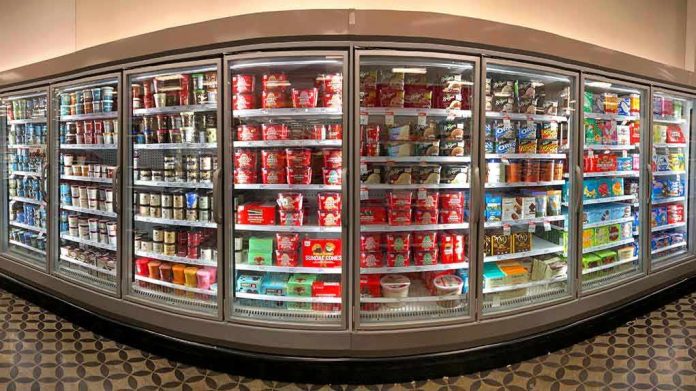
Sometime during the night of October 11 into October 12, someone remotely seized control of refrigeration systems at hundreds of French grocery stores. Temperatures spiked. Food spoiled by the ton. The Paris prosecutor’s office later said the malfunctions caused roughly twenty fires, turning a digital intrusion into a physical safety hazard inside ordinary neighborhood supermarkets.
French Foreign Minister Jean-Noël Barrot did not hedge when describing who was behind it. “I can confirm that this attack was carried out by the Islamic Revolutionary Guard Corps (IRGC) of the Islamic Republic of Iran,” he said, calling the operation unprecedented. That is a direct state-to-state accusation, not a vague reference to hackers operating somewhere inside Iran’s borders.
Paris Prosecutor Laure Beccuau followed with a judicial investigation naming a specific target: Shahid Kaveh, described as an offensive cyber unit tied to the IRGC’s Electronic and Cyber Center. Investigators are also looking at two deputies and other possible participants, moving the case from diplomatic accusation into a formal criminal probe with named suspects.
The Technical Trail Investigators Point To
Reporting on the investigation describes Persian-language material found in the operational infrastructure used during the attack, along with tactics resembling other operations already linked to Shahid Kaveh. French cyber authorities also pointed to publicity around the attack that surfaced on channels tied to the group, including one called CyberbanNews, as part of the picture tying the intrusion back to Tehran.
Iran rejected all of it. Its Foreign Ministry called the accusations “baseless and hostile” and accused Paris of a “hackneyed policy of leveling accusations against Iran”. France responded by summoning Iran’s ambassador, a diplomatic step that signals how seriously Paris is treating the episode, even as the two governments trade sharply opposite accounts of what happened.
Why Supermarket Freezers Became a Battlefield
This attack did not happen in isolation. Refrigeration controllers across Europe’s grocery supply chain are increasingly connected to the internet, often running outdated software with weak login protections. Security researchers have flagged exposed refrigeration systems, default passwords, and unpatched firmware as recurring weaknesses across the industry, long before this particular incident made headlines.
That vulnerability matters because food refrigeration sits at the center of what experts call the cold chain, the unbroken link of cooling that keeps groceries safe to eat. A hacker does not need to steal money or data to cause damage here. Simply flipping a thermostat setting can spoil inventory, trigger fire risk, and disrupt a retailer’s entire supply chain in a single night.
What Remains Unsettled in the Case
France has not released the full technical report behind its conclusion, leaving the public to rely on government statements and investigative leaks rather than published forensic evidence. That is a normal feature of an active criminal investigation, not necessarily a weakness in the underlying case, since prosecutors routinely hold back evidence during an open inquiry.
France Attributes Cyberattack on Supermarket Refrigeration to Iran
• France accuses Iran of responsibility for cyberattacks on supermarket refrigeration systems.
• The operation is linked to Iran's Revolutionary Guards Corps.
• Hundreds of stores saw temperatures rise above… pic.twitter.com/XvGATEgP6z— The Unbiased Update (@unbiased_update) November 9, 2026
Attribution in cyberspace is genuinely hard, and skilled operators can route attacks through compromised devices far from their actual location. That technical reality does not erase France’s conclusion. It simply explains why Paris leaned on more than just IP addresses, pairing location data with language artifacts, known group tactics, and propaganda tied to Shahid Kaveh before naming the IRGC publicly.
A Pattern Conservatives Should Watch Closely
Iran-linked cyber units targeting Western food supply infrastructure fits a troubling pattern of hostile regimes probing soft civilian targets rather than military ones. Grocery stores have no army protecting their thermostats. If Tehran’s cyber corps can spoil food and start fires in French supermarkets, the same playbook applies anywhere connected refrigeration runs unprotected, including American commissaries already flagged for similar malfunctions.
France’s willingness to name the IRGC publicly, rather than quietly managing the dispute through diplomatic backchannels, reflects a harder line Western governments are increasingly taking against Iranian cyber aggression. Holding a hostile regime’s military unit publicly accountable, even before every technical detail is released, sends a clearer deterrent signal than silence ever could.
Sources:
apnews.com, bbc.com, cbsnews.com, thegrocer.co.uk, cybersecuritydive.com, abc.net.au