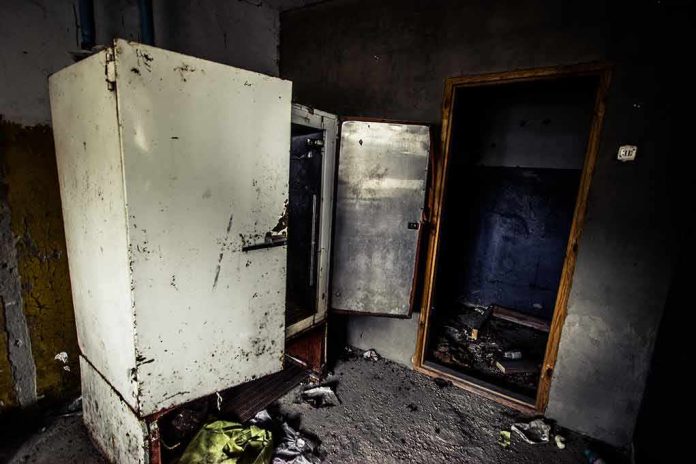
One rat problem became a public-relations problem because the visuals were too vivid to ignore and the official response was too generic to settle anything.
Story Snapshot
- An IRS employee at the Chamblee Tucker Road office quit after describing a severe rodent infestation in the building.
- Reporters said employees shared photos and videos showing dead rats, droppings, and traps placed around work areas.
- The IRS acknowledged employee reports and said it was investigating and remediating the situation.
- The central dispute is not whether there was a rodent issue, but how severe it was and what the public record can actually prove.
The Complaint That Turned Into a Headline
The strongest detail in the reporting is not the headline phrase about rats “falling out of ceilings.” It is the simpler fact that a former employee, Sydney Monger, said she quit after the problem became impossible to ignore. Reporters described her account as coming after weeks of growing concern, with the issue becoming especially obvious after Memorial Day. That timeline matters because it frames the story as an escalating workplace breakdown rather than a one-day shock.
Photos and videos shared by employees gave the story its force. The reports say those images showed dead rats, droppings, and workers sitting on desks to avoid contact with the floor. That is the kind of detail that changes a building complaint from an internal annoyance into a public embarrassment. It also explains why the story spread quickly: people do not need a technical report to understand what rat droppings in an office mean.
What the IRS Said, and What It Did Not Say
The IRS did not deny the problem. According to the reporting, the agency said it was aware of employee reports and was working to investigate and remediate the situation. It also described the issue as the kind of pest-related challenge that can affect any large building in an urban environment. That wording is important because it narrows the agency’s position: the IRS acknowledged a problem, but it did not publicly concede the kind of facility-wide failure employees described.
That gap between acknowledgment and admission is where the story becomes politically and institutionally interesting. A government agency can sound responsive while revealing very little. The statement signals action, but it does not provide inspection results, pest-control logs, or a timeline for fixes. For readers, that leaves two competing realities on the table at once: a credible-sounding employee account and an official response that sounds careful enough to avoid specifics.
Why the Story Feels Bigger Than One Office
The broader lesson is that large office buildings create the perfect conditions for this kind of controversy. Dense occupancy, food at desks, older infrastructure, and shared mechanical spaces can make rodent problems harder to contain and easier to deny until the evidence becomes visible. The IRS’s own urban-building framing hints at that reality. In other words, the public may be looking at one building, but the dynamics belong to a much larger facilities-management problem.
A former IRS employee resigned from the Chamblee office after a severe rat infestation compromised workplace safety. https://t.co/bGySEF4aYv
— FOX 5 Atlanta (@FOX5Atlanta) June 3, 2026
Still, the public record supplied here remains mostly testimonial. The most serious claims come through employee quotes and reporter narration, not through a released inspection report or a formal environmental assessment. That matters because sensational phrases can harden into “fact” long before the documentary record catches up. The allegation that rats were falling from ceilings is unforgettable, but the available material shows it as a reported statement, not independently verified evidence.
What Makes This Case Hard to Dismiss
Even with those limits, the account is not easy to wave away. Multiple reports describe the same basic pattern: an employee resigning, other workers raising concerns, traps appearing in the office, and the IRS acknowledging a pest issue. That alignment across outlets makes the story more than a stray complaint. It suggests a real facilities problem that affected morale, comfort, and possibly health perceptions inside the building.
The weakest part of the public narrative is the jump from “rodent problem” to “proven severe infestation.” That leap depends heavily on witness characterization because the supplied material does not include counts, inspection findings, or maintenance records. The public can reasonably conclude there was a rat issue. What remains unsettled is scale, duration, and whether management responded quickly enough to prevent the office from becoming, in employees’ words, a place where people sat on desks just to feel safe.
Why This Story Sticks
This story sticks because it combines two things Americans instantly recognize: a gross workplace failure and an institution speaking in sterile language. The vivid imagery does the emotional work, while the official statement does the bureaucratic work. Those two registers rarely meet. When they do, the public usually trusts the picture over the press release. That is why this case travels so easily: it feels like a glimpse behind the curtain, even before every fact is pinned down.
Sources:
[1] Web – Rat infestation in IRS building leads to staff sitting on their desks, …
[2] Web – Former Chamblee IRS employee says severe rat problem led to …
[3] YouTube – Rat infestation at IRS building has staffers sitting on their desks
[4] YouTube – Severe rodent infestation forces worker to walk out | FOX 5 News
[5] Web – Rat infestation at IRS building has staffers sitting on their desks
[6] Web – Former IRS employee resigns following severe Chamblee office rat …
[7] YouTube – Rat infestation at IRS building has staffers sitting on their desks