The fight over a helicopter ride for JD Vance’s son is really a fight over where security ends and entitlement begins.
Story Snapshot
- Vice President JD Vance’s detail reportedly sought a military helicopter for his son’s golf lesson, a flight that never happened.
- Secret Service agents called the request “crazy” and “unprecedented,” and mocked a pattern of last-minute personal trips.
- Vance’s family only got full protection after the Trump rally shooting, raising real security questions for his kids.
- Americans now wonder: when does necessary protection turn into expensive perks paid by taxpayers?
The basic facts of the golf helicopter fight
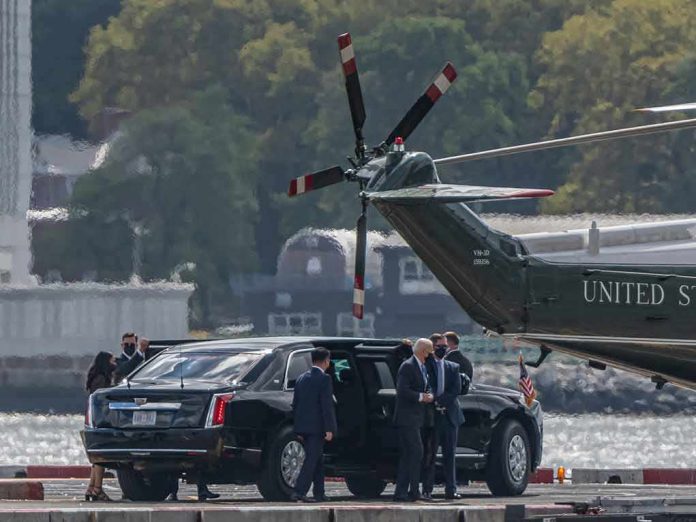
Reports say Secret Service agents planned a military helicopter trip from Joint Base Andrews to take JD Vance’s young son to a golf lesson. An administration official told reporters that Vance planned to ride along with his son, turning the trip into a family outing rather than an official event. A Defense Department budget estimate put the cost of such a helicopter flight between sixteen thousand and twenty four thousand dollars per hour, all paid by taxpayers. Thunderstorms forced the cancelation of the flight, so the trip never took off.
The vice president’s office did not publicly explain why a helicopter was chosen instead of a car. There is no statement from Vance or his staff laying out a clear security or logistics reason for using Marine Two for a child’s sports lesson. That silence helped shape the public story. Media outlets from London to New York framed the episode as elite “royal treatment,” not basic safety, and focused on the price tag and luxury optics rather than any risk assessment.
How we got to full protection for the Vance family
To understand why a kid’s golf lesson even touches federal assets, you need to look back to the Trump rally shooting. After the attempted assassination of Donald Trump at a July 2024 rally, Homeland Security Secretary Alejandro Mayorkas announced that both Robert F. Kennedy Jr. and JD Vance would receive Secret Service protection. That protection, according to reporting, covered Vance’s family as well, based on a higher threat level in the post-assassination climate. Federal law allows broad protection for vice presidents, their spouses, and their children, especially when credible threats exist.
Vance has talked in public about that protection with respect. At a Michigan rally, he said he had not asked for more agents and praised the detail as doing “a great job.” He called himself thankful and proud of the people guarding him. That tone matters because it clashes with the picture painted by anonymous agents who say they are frustrated by personal demands. The result is a strange split screen: a vice president praising his detail in public while leaked stories portray the same detail as fed up behind the scenes.
A pattern of personal trips and growing agent frustration
The golf helicopter story did not land in a vacuum. It came on the heels of other controversial security moves around Vance’s leisure time. For a birthday kayaking trip on Ohio’s Little Miami River, the Secret Service asked the United States Army Corps of Engineers to raise water levels by increasing outflow from Caesar Creek Lake. That request drew local complaints and national headlines, with critics arguing that a river should not be adjusted for one man’s enjoyment. In the United Kingdom, neighbors of Vance’s vacation rental were upset after a makeshift helipad and heavy security presence turned their quiet area into a “circus.”
Inside the Secret Service, sources describe a morale problem tied to these kinds of trips. Some agents reportedly created custom coins and stickers labeled “BOB CAT OTR,” a joking reference to surviving off-the-record last-minute travel requests. That kind of internal mockery usually signals more than mild annoyance. It points to a belief that resources are being stretched for things that feel personal, not official. For a conservative reader, this raises a basic question of stewardship: are security tools being used as shields, or as perks?
Security needs versus taxpayer common sense
Supporters of Vance can point to one simple fact: the world is more dangerous now for national leaders and their families. The Secret Service itself traces its modern protection mission back to the assassination of William McKinley in 1901, and that mission has only grown since then. After 9/11, vice presidents’ children became routine protectees, and threats today can appear anywhere, including at a child’s sports practice. In that light, a higher level of transport for a kid tied to a top target does not sound crazy on its face.
Yet the details here undercut that defense. Unnamed agents say the golf helicopter idea was “crazy” and “unprecedented,” and stress its personal nature. Vance planned to accompany his son, and there is no sign of a unique ground threat that day. The vice president’s team has thanked the Secret Service but has not addressed the specific complaints about cost and necessity. For many Americans, especially those who value limited government and fiscal restraint, this silence feels like an admission that the optics are bad and the judgment was off.
What this episode tells us about power and limits
This dispute fits a wider pattern that spans administrations from both parties. Families tied to top offices now live under constant guard. The line between safety and convenience blurs, and once that line moves, it rarely moves back. When a helicopter for a golf lesson even enters the planning stage, it shows how normalized high-cost protection for personal life has become. That should concern anyone who cares about equal treatment and wise spending.
A fair reading of the facts does not say JD Vance is lawless or uniquely corrupt. It does say he sits at the center of a culture where powerful people often treat government resources as flexible tools for comfort. Conservatives argue that public servants should bend their lives around duty, not bend the system around leisure. The golf helicopter story is a small case with a big question inside it: will leaders choose restraint even when the system would let them choose more?
Sources:
independent.co.uk, aol.com, bbc.com, cnn.com, thehill.com, abcnews4.com, facebook.com