
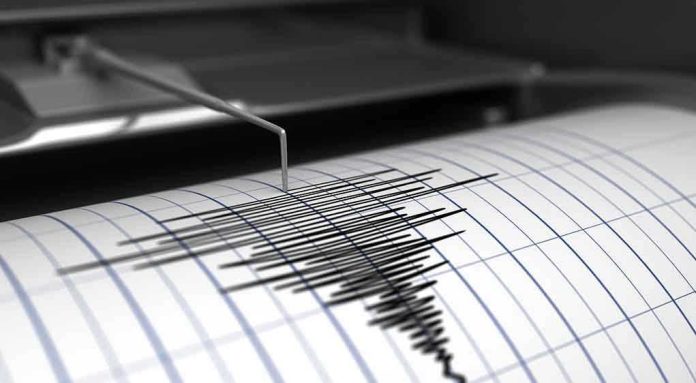
A devastating 7.6-magnitude earthquake has unleashed tsunami waves along Japan’s Pacific coast, serving as a stark reminder that nature’s most destructive forces can strike without warning in one of the world’s most seismically active regions.
Story Snapshot
- Powerful 7.6-magnitude earthquake struck off northern Japan late Monday evening
- Tsunami waves reached up to 70 centimeters along Pacific coastal communities
- Japanese Meteorological Agency issued warnings for potentially higher surge levels
- Event highlights Japan’s ongoing vulnerability to seismic disasters despite advanced warning systems
Seismic Violence Strikes Japan’s Northern Coast
The earthquake struck late Monday evening off Japan’s northern coastline, generating immediate concern among meteorological officials who recognized the potential for widespread coastal damage. The 7.6-magnitude tremor represents a significant seismic event, powerful enough to displace massive volumes of ocean water and create the tsunami conditions that followed. Japan’s location along the Pacific Ring of Fire makes such events an unfortunate reality for the island nation’s 125 million residents.
The Japanese Meteorological Agency responded swiftly to the seismic activity, tracking the earthquake’s impact and monitoring coastal conditions as the first tsunami waves began reaching shore. Their rapid response demonstrates the sophisticated early warning infrastructure Japan has developed following decades of seismic disasters, yet even the most advanced systems cannot prevent nature’s destructive power from reaching vulnerable coastal populations.
Tsunami Waves Batter Pacific Communities
Coastal communities along Japan’s Pacific shore experienced tsunami waves measuring up to 70 centimeters in height, a substantial surge capable of causing significant flooding and property damage in low-lying areas. While not reaching the catastrophic heights witnessed during the 2011 Tohoku disaster, these waves still posed serious threats to waterfront infrastructure, fishing vessels, and residential areas built near the shoreline.
The 27-inch wave height may seem modest compared to Hollywood depictions of tsunamis, but oceanographers understand that even relatively small tsunami surges carry enormous destructive force. The waves move with tremendous velocity and volume, pushing debris, vehicles, and structures inland with devastating efficiency. Coastal residents who have lived through previous tsunami events know to take these warnings seriously regardless of predicted wave heights.
Warning Systems Activate Amid Uncertainty
Japanese authorities issued tsunami warnings extending beyond the initial wave measurements, cautioning that higher surges could still develop as seismic energy continued propagating through the Pacific Ocean. This precautionary approach reflects hard-learned lessons from past disasters where initial wave measurements failed to predict subsequent, more destructive surges that arrived hours after the initial earthquake.
The uncertainty surrounding potential wave heights underscores the complex physics governing tsunami behavior. Underwater topography, coastal geography, and the earthquake’s specific characteristics all influence how tsunami energy travels and concentrates along different coastal segments. Meteorological agencies must balance public safety with avoiding unnecessary panic, making these warning decisions particularly challenging during rapidly evolving seismic events.
Japan’s Perpetual Seismic Reality
This latest earthquake reinforces Japan’s position as one of the world’s most earthquake-prone nations, sitting atop multiple tectonic plate boundaries that generate regular seismic activity. The country experiences thousands of earthquakes annually, though most register below the threshold for tsunami generation. When larger earthquakes do occur, Japan’s extensive network of seismometers, ocean buoys, and coastal monitoring stations provides crucial early warning capabilities.
The economic and social implications of living with constant seismic risk have shaped Japanese society in profound ways, from building codes requiring earthquake-resistant construction to cultural practices emphasizing disaster preparedness. Yet despite these adaptations, each significant earthquake serves as a sobering reminder that human engineering and preparation have limits when confronting the planet’s most powerful geological forces.