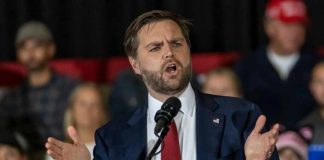

Melania Trump’s private complaint about deported acquaintances reportedly triggered President Trump to tell aides that Stephen Miller had gone too far on immigration, even as he also pushed for tougher action at other moments.
Story Snapshot
- Reports attribute Trump’s private criticism of Miller to Melania’s concern over deported people she knew.
- Timing and identities of those deported remain unclear, limiting outside verification.
- Coverage says Trump oscillated between urging a harder line and saying Miller exceeded the mark.
- Public messaging still cast Miller as a trusted driver of voter-backed enforcement.
What sparked the reported Trump–Miller rift
Mediaite, The Independent, and other outlets reported a Wall Street Journal account saying Melania Trump complained that people she knew were deported. After that, Trump told aides that Stephen Miller had gone too far with the immigration operation. The reports do not name the deported individuals or the dates. That gap leaves the trigger event unconfirmed to the public. The core claim rests on attribution to the Journal’s reporting rather than on direct quotes or documents available for review.
The Daily Mail and TMZ described a sequence: Melania’s complaint came first, and soon after, Trump voiced that Miller had overreached. This cause-and-effect picture is plausible on its face. It also matches accounts that Trump sometimes demanded an even stronger push, then at other times said the operation went too far. That back-and-forth sounds like a leader stress-testing the policy’s edges. It does not, by itself, prove a durable change in strategy or a limit placed on Miller’s role.
Why the sourcing leaves key questions open
The outlets that surfaced the claim mainly summarize the Wall Street Journal report rather than present new, named sources. That creates an echo effect, not independent proof. No public record shows a memo, directive, or staffing action that traces to Melania’s concern. IndiaTimes noted that the reporting did not show a formal shift at Immigration and Customs Enforcement that would confirm a policy pivot tied to her complaint. A prudent reader should separate a vivid anecdote from hard administrative evidence.
Mediaite also said it was unclear who the deported acquaintances were or when the removals happened. That matters. Without names and case numbers, outside checks cannot test whether those removals were routine, tied to criminal convictions, or involved contested status. Anonymous sourcing can surface real news, but it also raises the bar for corroboration. Until details surface, the story remains credible as a reported claim, not as a fully verified chain of events.
Public posture: unity on enforcement and Miller’s role
Public statements during the period painted a united front. News reports quoted White House and Department of Homeland Security messaging that the administration enforced the law, focused on criminal undocumented immigrants, and defended the homeland. Those same accounts described Stephen Miller as one of Trump’s most trusted aides who worked to carry out the America First agenda. In 2017, Miller told reporters the push for skills-based immigration and financial self-sufficiency reflected strong public support. That aligns with longstanding conservative views on sovereignty and rule of law.
🇺🇸 Melania Trump privately confronted Trump after people she PERSONALLY KNEW were deported under his administration's immigration crackdown…
Melania complained about the deportations, prompting Trump to tell aides that Stephen Miller, the architect of his aggressive… pic.twitter.com/Tdj5mpwWX5
— Mario Nawfal (@MarioNawfal) November 5, 2026
Some outlets also said Trump at times wanted the deportation drive to go further than staff proposed. That framing tracks with Trump’s campaign vow to restore order at the border and remove those here unlawfully. From a common-sense conservative lens, leaders can press agencies to act hard on lawbreakers while warning aides against steps that create unfair edge cases. That is not hypocrisy; it is calibration. The real test is whether the White House put any caution into writing and changed operations. The reporting so far does not show that.
How to read the claim without getting played by palace intrigue
This story can slide into soap opera if we let it. The substance is not about who scolded whom. It is about whether a specific complaint led to a measurable change in federal enforcement. The available coverage shows none yet. It does show a leader who pushed hard on border security while venting about excess at times, and an adviser who framed the mission as what voters asked for. That tension is normal in a presidency where politics, policy, and human stories collide.
Sources:
mediaite.com, dailymail.com, thedailybeast.com, theblast.com, independent.co.uk, indiatimes.com