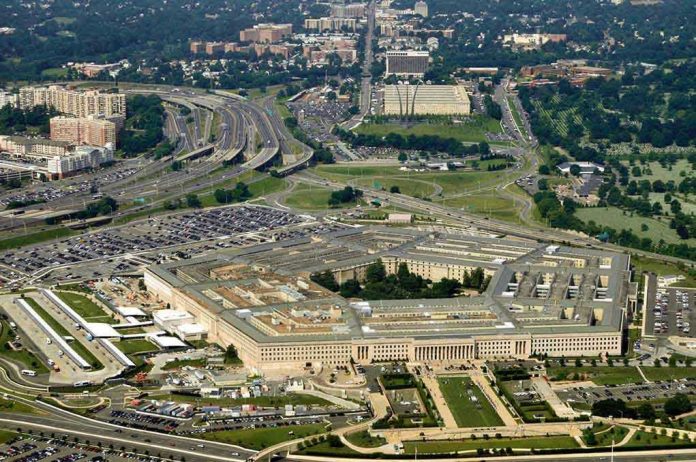
The Pentagon cannot account for trillions in assets after failing its eighth straight financial audit, raising alarms about unchecked spending in America’s defense machine.
Story Snapshot
- Department of Defense failed FY 2025 audit, marking eighth consecutive year since Congress mandated reviews in 2018.
- Auditors found 26 material weaknesses and 2 significant deficiencies, including unreported F-35 program assets.
- Pentagon manages $4.65 trillion in assets across 50 states and 40+ countries but remains the only major agency never to pass an audit.
- Congress set 2028 deadline for clean audit; leaders promise acceleration but progress lags.
- Historical issues include $7 trillion in undocumented adjustments and lost billions in equipment.
Pentagon’s Audit Streak Hits Eight Years
The Department of Defense released FY 2025 audit results on December 19, 2025, one day after President Trump signed the National Defense Authorization Act. Auditors confirmed the agency failed again, unable to provide assurance over internal controls for reliable financial reporting. This marks the eighth straight failure since Congress required annual audits in 2018. The Pentagon stands alone among 24 major federal agencies, never passing a single review.
Material weaknesses number 26, with two significant deficiencies. These flaws mean errors in accounting could distort financial statements. Fund balance with Treasury reporting failed scrutiny. Inventory and real estate accounting showed gaps. The audit exposed systemic controls too weak to meet legal standards.
F-35 Program Assets Vanish from Ledgers
Auditors pinpointed the F-35 Joint Strike Fighter Program’s Global Spares Pool as a key failure. Pentagon officials could not verify existence, completeness, or value of these assets. This omission created material misstatements in agency-wide statements. The program’s undocumented parts highlight deeper tracking problems across vast inventories.
Department leaders closed one material weakness and consolidated another in FY 2025. Incremental gains exist, but 26 remaining issues demand overhaul. Acting CFO Jules Hurst called for significant acceleration to hit the 2028 clean audit goal. Common sense demands accountability for every dollar when taxpayers fund $824 billion annually.
Historical Waste Sets Stage for Current Failures
Before 2018 audits, chaos reigned. The GAO listed Pentagon financial management as high-risk since 1995. Navy officials lost track of $3 billion in equipment over three years. A distribution center hoarded 122,000 unprocessed items, prompting needless buys. Pentagon accountants jotted $7 trillion in ledger adjustments one year, $2.3 trillion without documentation.
Scale compounds issues: $4.65 trillion assets, $4.7 trillion liabilities span 4,500 locations worldwide. Decentralization frustrates fixes. New comptroller Michael Powers vows milestones soon. Defense Secretary Pete Hegseth pledges transparency for improvement. Conservative values prioritize stewardship; persistent lapses erode trust in defense priorities.
2028 Deadline Looms with High Stakes
The 2024 NDAA mandates clean audit by 2028. Failure risks congressional pushback on budgets. Taxpayers lack verification of spending efficiency. Military readiness suffers from misallocated resources. Contractors face payment delays. GAO doubts success, citing entrenched problems.
Leadership frames audits as progress tools. Yet facts show no major DoD component has passed. Reforms need tech upgrades and cultural shifts. America demands fiscal discipline in defense, aligning with principles of limited government and accountability.
Sources:
Pentagon Fails Its 8th Consecutive Annual Financial Audit
Pentagon fails financial audit for 8th year
Pentagon fails another audit, restates 2028 goal
Has the Pentagon Failed its 7th Audit in a Row?
Why Can’t the Pentagon Pass an Audit?
Congressional Document on Pentagon Audits
Pentagon Achieves Uninterrupted Success in Annual Financial Audits for Nine Years