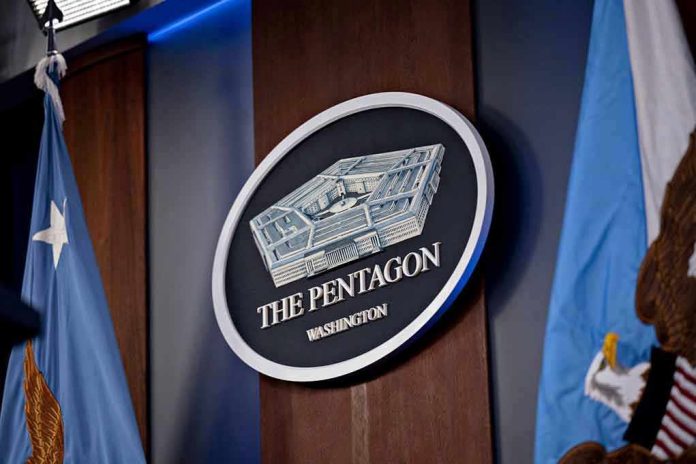
The Pentagon placed a January 6 convict in an irregular warfare and counterterrorism office, and the unanswered vetting questions matter more than the headline.
Story Snapshot
- A convicted January 6 participant, Elias Irizarry, was reported hired into a Defense Department office tied to irregular warfare and counterterrorism [1].
- The role is portrayed as touching highly sensitive missions, heightening scrutiny of vetting rigor [1].
- Public records do not confirm clearance level, access to classified systems, or specific duties [1].
- Supporters cite youth and remorse; critics cite trust, judgment, and the integrity of security standards [5].
The core facts and the gray areas that inflame trust
Reports identify Elias Irizarry as a Pentagon hire placed in the Office of the Assistant Secretary for Special Operations and Low-Intensity Conflict, within its irregular warfare and counterterrorism section [1]. Those same reports state he previously pled guilty for his role in the January 6 Capitol breach [1]. The public narrative frames that placement as linked to missions involving sensitive or classified information, a detail that naturally raises concern about who gains proximity to critical national security portfolios [1]. What remains unclear is his specific job title, clearance, or access.
Coverage emphasizes the contradiction: a person convicted in connection with the attack on Congress now working in a mission area concerned with defending the government [1]. The surface-level shock is obvious. The deeper question is procedural: Did the hiring and any clearance process apply the same standards to Irizarry that would govern any other applicant with a recent criminal conviction? The record presented in reports does not show a waiver, an exception memo, or a formal deviation. Without those documents, the headline cannot prove a broken system—only that the optics are troubling [1].
Security vetting has rules; the debate is about risk tolerance
Personnel adjudication in national security hinges on trustworthiness, judgment, reliability, and susceptibility to coercion. A recent conviction or participation in anti-government conduct can weigh heavily in that calculus, particularly for roles near irregular warfare or counterterrorism. Conservative common sense tilts toward rigorous screening, equal treatment under the rules, and zero tolerance for double standards. If this hiring followed the book, agencies should be able to show it. If it did not, accountability demands a paper trail that explains who approved what and why [1].
Political oxygen in this story comes from the polarized frame. Some voices pitch rehabilitation and a youthful mistake; others focus on deterrence and institutional integrity. Both instincts exist in American life. But national defense jobs do not exist to send cultural messages. They exist to protect the country. If Irizarry accessed planning meetings or systems that handle operational details, the justification should be documented. If he had no clearance and performed administrative tasks, officials could say so without compromising security, closing the door on rumor [1].
What we know, what we do not, and what would settle it
Known: a hire into a sensitive mission office; a January 6-related conviction; public claims that missions tied to the office involve sensitive information [1]. Unknown: the exact billet, whether he held a clearance, scope of access, and whether adjudicators weighed the conviction against the role’s risk profile. Media accounts mention support that highlights remorse and youth at the time of the offense, presenting a case for redemption, but they do not substitute for documentary evidence of suitability and clearance determinations [5].
Washington Post: Elias Irizarry, a convicted Jan. 6 rioter, has been hired by the Trump administration to work in a Pentagon office that oversees highly classified military operations, according to four people familiar with the matter.
The hire has raised alarm among staff, who… pic.twitter.com/34zwHxwSi1
— Republicans against Trump (@RpsAgainstTrump) June 2, 2026
Clarity requires paperwork, not press releases. The vacancy announcement, appointment memo, suitability adjudication, and any clearance decision would show whether the Department applied consistent standards. Access logs or role descriptions would indicate the real risk surface. Congress, inspectors general, or formal records requests can elicit those materials. If everything aligns with procedure, the Pentagon can defend the decision on process grounds. If it does not, course correction should be public and swift. National security credibility depends on it [1].
Sources:
[1] Web – Pentagon hires convicted Jan. 6 rioter for sensitive counterterror …
[5] Web – Trump’s Pentagon hires Jan 6 rioter for highly sensitive …