
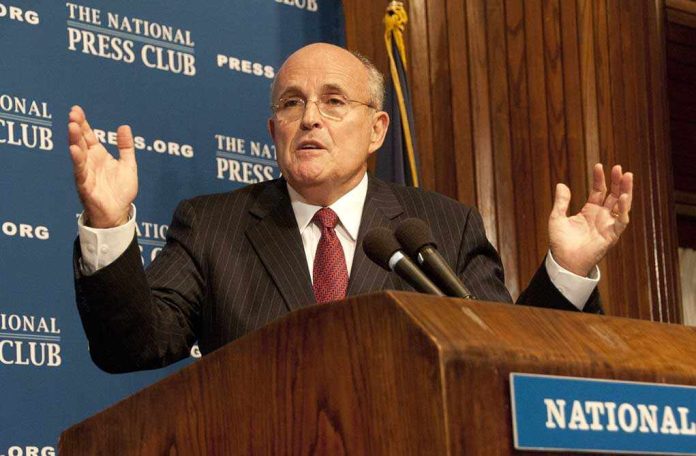
President Trump moved to honor Rudy Giuliani with the Presidential Medal of Freedom, putting a defining stamp on a turbulent American story.
Story Snapshot
- Trump announced a Medal of Freedom for Giuliani, citing service and 9/11 leadership.
- The White House used “America’s Mayor” framing for the honor.
- The medal rests on broad presidential discretion under long-standing orders.
- The award highlights how presidents use medals to signal national ideals and priorities.
What The White House Says Is Being Honored
The White House framed the award around Giuliani’s public service and his leadership after the September 11 attacks. Official communications tied the honor to the image of “America’s Mayor,” the label that followed his work in New York City during and after that day. The administration also highlighted that this is a Presidential Medal of Freedom, the nation’s highest civilian honor conferred by the president, and used recent 9/11 remembrance messaging to set the context for valor and duty.
Presidents enjoy wide legal latitude to select Medal of Freedom recipients. There is no formal public nomination or review board. Executive orders and congressional research summaries describe a standard that covers national security, world peace, and significant cultural or civic contributions. That breadth allows the president to credit service that may span decades and different roles, as the administration signals here with Giuliani’s mix of crime-fighting credentials and crisis leadership.
How Giuliani’s Record Fits The Medal’s Long Tradition
Giuliani’s brand was built in two chapters most Americans remember: prosecuting organized crime and leading New York City after September 11. The White House’s medal framing leans on that widely known identity and links it to a current promise to honor 9/11 sacrifice. On policy grounds, this tracks with how presidents have long used the medal to showcase traits they want the country to praise—courage, order, and civic grit—alongside their own governing themes.
Research on the medal’s history shows that selections often reflect a president’s values and messaging aims. Analysts describe the medal as symbolic unilateral power: a way for a president to lift up certain lives as national examples. That does not cheapen the award; it explains its role. Criteria are broad by design, so judgment matters. Voters should expect a president to defend choices in plain terms and anchor them in service the public can recognize.
The Conservative Case And The Inevitable Debate
On the merits, a conservative reading sees a core claim: honor proven service that kept people safe and embodied resolve in crisis. That claim sits comfortably inside the medal’s purpose. Rewarding leadership under fire and decades of work against violent crime align with order, duty, and respect for those who run toward danger. The White House’s 9/11 language underscores this ethos and signals that the administration wants the country to remember courage more than controversy.
President Donald Trump on Tuesday will award the Medal of Freedom, the nation’s highest civilian honor, to former New York Mayor Rudy Giuliani. https://t.co/8fIJRTm1xj
— News19 WLTX (@WLTX) November 24, 2026
Public reaction will split, because modern medal choices often double as political signals. The medal’s design invites that; it rests on presidential judgment, not a committee. History shows every administration uses it to teach by example. Judging this award, then, means weighing the service the president spotlights against one’s own view of civic virtue. The institution allows that debate, and it also expects the president to own the choice and the message it sends.