Texas now bans “hypnosis justice” in new trials, yet the same junk science still helps keep Charles Flores on death row.
Story Snapshot
- Texas outlawed investigative hypnosis in 2023, but the ban is not retroactive to Flores’ 1999 conviction.[19]
- The only eyewitness first described a tall white man with long hair, not Flores, and twice failed to pick him from photo lineups.[4]
- A parole officer with no hypnosis training hypnotized her; no physical evidence ties Flores to the crime.[4]
- Texas courts and now the United States Supreme Court refuse to reopen the case despite scientific and legislative doubts.[1][16]
How A Neighborhood Murder Became A Test Of “Hypnosis Justice”
The case starts in a quiet Dallas County neighborhood in 1998. A woman named Elizabeth “Betty” Black is found murdered in her home. Police focus on a drug ring and three men tied to it: Charles Flores, a Hispanic man; Richard Childs, who later admits he pulled the trigger; and another accomplice.[3] The state does not find fingerprints, DNA, fibers, or ballistics that link Flores directly to the crime scene, but prosecutors still aim for a capital murder conviction.[4] For that, they need a story the jury will believe—and a witness who can tell it.
The key witness is neighbor Jill Bargainer. Within days of the killing, she tells police she saw a Volkswagen arrive that morning and describes the passenger as a tall white man with long hair.[4] That does not match Flores, who is short, stocky, Hispanic, and had a shaved head at the time. She twice looks at photo lineups and fails to pick him.[4] Under traditional standards of common sense, this should have raised a red flag. Instead, officers decide her memory just needs “help.”
The Hypnosis Session That Changed Everything
Police bring in a parole officer—no medical training, no scientific credentials—to hypnotize Bargainer in February 1998.[4] Forensic guidelines say hypnosis makes people more suggestible and more confident in false memories, especially when used by authority figures.[18][21] Yet the officer goes ahead, with a tape recording running. After this session, Bargainer suddenly can identify Flores and later does so in court, with great confidence. Experts in eyewitness science have called that reversal “astounding” and classic evidence of suggestion.[7]
Decades of research show hypnosis increases the amount people recall, but not the accuracy.[21] Courts around the country have tossed cases built on hypnotically “refreshed” identifications because they create memories that feel real but are not.[18][17] Jurors tend to trust a confident witness, even when confidence comes from hypnosis rather than honest recall.[18][20] From a conservative standpoint, that should anger anyone who believes in personal responsibility and limited government. When the state uses a psychological trick it knows is shaky, then hides behind legal technicalities, that looks less like justice and more like bureaucracy protecting itself.
Texas Changes The Law, Then Slams The Door
Texas lawmakers eventually caught up to the science. In 2021 they passed a bill banning hypnotically induced statements in criminal trials; it became Article 38.24 of the Texas Code of Criminal Procedure.[19] The law says statements made during or after investigative hypnosis, including identifications, cannot be used against a defendant. The legislative analysis even cites Johns Hopkins Medicine warning that hypnosis does not work as a memory recovery tool.[19] In plain English: what happened to Flores would be illegal in a Texas courtroom today.
Here is the catch: the statute does not apply retroactively.[19] Flores’ lawyers argue under Texas’ “junk science” law that the conviction rests on discredited methods and should at least get a new hearing.[14] Prosecutors historically fight such claims, but in another Texas death penalty case—Areli Escobar—the state’s own district attorney joined the defense to urge a new trial after forensic evidence collapsed, and the United States Supreme Court backed the inmate’s right to pursue relief.[2] That shows the Court can act when the state admits a conviction is rotten. In Flores’ case, the machinery of Texas justice stands by the verdict.
What The Courts And The Supreme Court Just Did Not Want To Touch
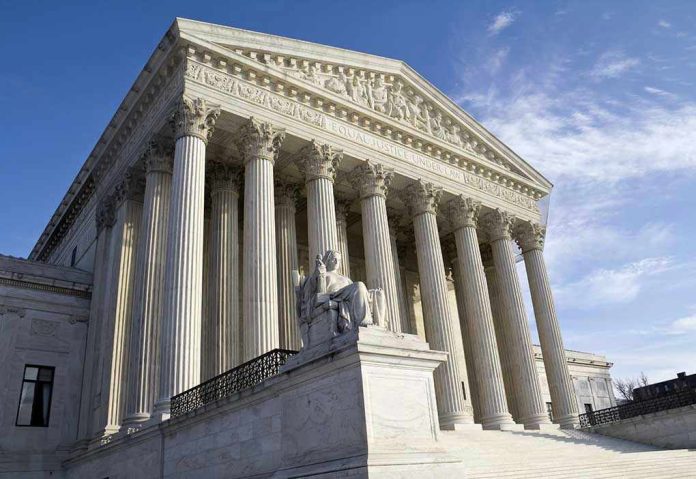
The Texas Court of Criminal Appeals, which handles all death penalty appeals, has repeatedly denied Flores’ petitions, often without reviewing the merits of the hypnosis evidence.[14] Flores’ certiorari petition to the United States Supreme Court lays out the contradictions in Bargainer’s story, the flawed hypnosis, and the lack of physical proof.[4] Psychological experts and even entertainers Penn and Teller file briefs explaining that investigative hypnosis is junk science that supercharges false certainty.[8] In June 2026, the Supreme Court denies review without comment.[1][16] The legal message is simple: the door is closed, no matter how shaky the foundation looks now.
Charles Flores argued that his 1999 conviction should be overturned under the Texas “junk science” law because testimony from a key witness was improperly influenced by hypnosis. The Supreme Court denied the petition without comment.https://t.co/AYB7bsIKyd
— myparistexas.com (@myparistexas1) June 16, 2026
For people who care about originalist principles and limited government, that stance raises a hard question. The Constitution promises due process, not perfect process. But when a state itself bans a technique as unreliable, while still planning to execute a man whose guilt depends on that same technique, many citizens will see a double standard. Conservative values prize accountability; that ought to apply to the state as much as to the accused. If the government would not dare use hypnosis to convict someone today, why stake a man’s life on it from yesterday?
Sources:
[1] Web – Supreme Court Denies Appeal from Texas Death Row Inmate Even Though …
[2] Web – Supreme Court rejects Texas death row inmate’s hypnosis appeal
[3] YouTube – Man on death row fights conviction after testimony from …
[4] Web – Trial and conviction of Charles Flores – Wikipedia
[7] Web – CHARLES FLORES – Witness to Innocence
[8] Web – Recent research on eyewitness memory may be Texas death row …
[14] Web – [PDF] Anatomy of a Wrongful Conviction: The Case of Charles Don Flores
[16] Web – Charles Flores argued that his conviction was improperly based on …
[17] Web – U.S. Supreme Court Refuses to Consider Fairness of Hypnotizing …
[18] Web – U.S. Court Tosses Indiana Conviction Based on Hypnosis of …
[19] Web – Martin T. Orne, David A. Soskis, David F. Dinges, Emily Carota Orne
[20] Web – Art. 38.24. STATEMENTS OBTAINED BY INVESTIGATIVE …
[21] Web – Eyewitness Testimony and Memory Biases – Noba Project