New York’s governor is now publicly begging millionaires to come home and pay up, even as hard data says most of them never left in the first place.
Story Snapshot
- Governor Kathy Hochul blames Donald Trump’s tax law and COVID for wealthy New Yorkers leaving.
- She now calls remaining and returning millionaires “patriotic” and urges them to fund social programs.
- Studies show millionaire migration barely changed after tax hikes and the 2017 State and Local Tax cap.
- The real squeeze is on the working and middle class, while the millionaire “exodus” looks more like a scare story than a stampede.
How Hochul Turned Millionaire Flight Into a Political Story
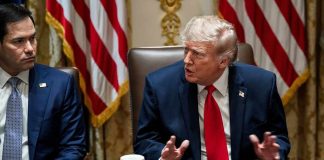
Governor Kathy Hochul did not stumble into this debate by accident. She was confronted on live television with a study claiming high earners were fleeing New York City, taking about eleven billion dollars in tax revenue with them. Under pressure, she drew a straight line from Washington to Wall Street. She said that when the Donald Trump administration and Congress capped the State and Local Tax deduction in 2017, “everybody in New York paid higher taxes,” and that this was “a big driver of people leaving.” She paired that with COVID, describing wealthy families decamping to Palm Beach when the city “was falling apart” and people were getting sick. That framing did two things at once. It blamed federal Republicans and a global pandemic, and it carefully avoided admitting that New York’s own tax and spending choices might be part of the problem.
New York Gov. Kathy Hochul knows the solution: beg the millionaires to leave Florida and fund New York's plethora of social programs. pic.twitter.com/1zr8bsLO8P
— The Daily Signal (@DailySignal) July 15, 2026
Hochul then pushed a moral angle that plays well with her base but lands differently with taxpayers who feel squeezed. She insisted she would not raise taxes on “high-net-worth individuals” or on companies that create jobs, saying she wants to “expand the pie” instead of chasing people away. At the same time, she admitted the tax base “has been eroded” and said outright that she needs affluent residents to fund “generous social initiatives” in the state. That is a revealing phrase. It tells you this is less about principle and more about math. When you build a budget on a narrow set of top earners, you become dependent on them. Losing even a few hurts. Conservative critics argue this is the predictable result of a long “tax the rich” mindset: drive out wealth, then plead for it to return.
Remote Work, Florida, And The New Freedom To Leave
Hochul has also latched onto remote work as the villain that broke New York’s hold over its elite workers. She said that before widespread work-from-home, people who had to be in offices in Manhattan were “captives to our state” who were going to stay. Once remote work exploded, they could do their jobs from Florida or Texas. She acknowledged bluntly that New York is “in competition with other states who have less of a tax burden” and that Wall Street businesses look at Texas “because of the tax rate.” This part of her story rings true with common sense and with conservative values about choice. When government finally loses its power to trap people in one place, those people can vote with their feet. Yet here again, she casts the change as something done to New York, rather than something New York must adapt to. She talks about flying down to Palm Beach to persuade former residents to come back and “support the generous social initiatives,” but she offers no serious plan to lower the cost of living or restrain spending.
On the right, this has become a viral symbol of what they see as blue-state arrogance colliding with reality. Commentators replay her 2022 jab telling Republicans to “jump on a bus” to Florida, then cut to her recent plea for wealthy New Yorkers in Florida to return and refill the tax coffers. Donald Trump chimed in on social media, painting New York as a “tax hell” and Florida as “freedom,” and claiming Hochul is panicking because millionaires are fleeing. From a conservative lens, the lesson is simple: when you mock people for leaving and treat them as walking wallets, do not be shocked when they decide to stay gone.
What The Numbers Really Say About Millionaire Migration
The political story is sharp, but the economic story is more complicated. A deep analysis from the Fiscal Policy Institute tracked high-earner migration before, during, and after the pandemic. The data show that during normal years, only about two out of every one thousand top earners leave New York, a rate far below that of the rest of the population. During COVID, departure rates went up, but over seventy-five percent of wealthy movers went to other high-tax states like Connecticut, New Jersey, and California, not to Florida or Texas. That alone undercuts the idea that state income taxes were the main driver. The same report found “no significant rise” in millionaire departures after the 2017 State and Local Tax cap or the 2021 state tax hikes. Another fact that should calm the rhetoric: by early 2023, millionaire migration patterns had largely returned to pre-pandemic norms. The spike looks temporary, tied to social disruption and the sudden freedom of remote work. It does not look like a permanent structural rejection of New York’s tax code. That does not mean taxes do not matter at all; it means most millionaires weigh family, business ties, culture, and lifestyle over the chance to shave a few percentage points off their bill.
Where the pain shows up most is not at the very top, but in the working and middle class. Reporting on city demographics and tax burdens makes clear that while the millionaire class has actually grown in New York, many regular families are leaving because they cannot handle housing costs and daily expenses. That fits a broader conservative critique. When politicians fixate on keeping “patriotic millionaires” around to fund big social programs, they often ignore the people who do not have a second home in Palm Beach but do have a grocery bill that keeps rising. A state can brag that its richest residents stayed and “pay a larger share of the bill,” yet still lose its backbone of teachers, cops, small business owners, and parents seeking a sane cost of living. That tradeoff is not sustainable. The smarter question is not whether millionaires are fleeing, but why everyday New Yorkers feel they must.
NYC Mayoral Candidate Zohran Mamdani's Tax Plan Sparks Debate as Report Warns of Wealthy Residents Leaving New York
A new report has raised concerns that New York could lose billions of dollars in tax revenue if more high-income residents leave the state, as New York City mayoral… pic.twitter.com/F8e0EP567Z— Voice of Germany (@NewsVOG) July 16, 2026
Sources:
redstate.com, foxnews.com, youtube.com, finance.yahoo.com, nytimes.com, yahoo.com, fiscalpolicy.org