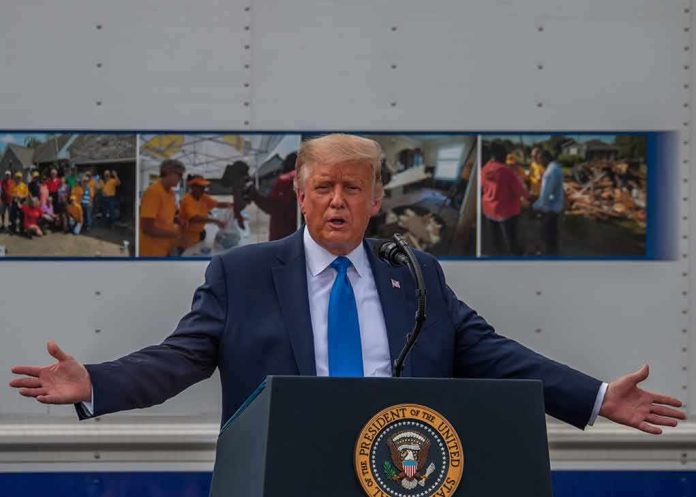
Trump’s latest stock disclosure lands on a timing pattern that keeps raising the same blunt question: who knew what, and when?
Quick Take
- President Donald Trump’s financial disclosure showed 327 previously unreported stock purchases made on April 8, 2025, one day before he announced a tariff pause.
- The filing includes big technology names such as Apple, Microsoft, Nvidia, Amazon, and Alphabet, with some trades listed in ranges as high as $250,000.
- Trump Organization statements say outside managers make the investment choices through automated, model-based portfolios, not the president.
- Critics say the timing still looks bad, while defenders say the volume and structure fit direct indexing and other automated strategies.
What The Disclosure Shows
Two things are true at once. Trump’s accounts made a burst of stock purchases on April 8, and that date came just before his tariff pause announcement. The disclosure also shows a much larger trading picture, with more than 3,700 trades in the first three months of the year, according to Bloomberg and PBS reporting.
That scale matters because it changes the fight. Critics focus on the timing of the April 8 trades and the companies involved. Defenders focus on the sheer volume and say the trades look like routine portfolio management, not a hidden scheme. The public is left staring at a familiar Washington puzzle: evidence that looks sharp enough to fuel suspicion, but not clean enough to settle the case.
Why The Timing Set Off Alarm Bells
The April 8 purchases landed one day before Trump paused many tariffs, which is why the story spread so fast. The tariff move jolted markets, and Trump had also posted a social media message urging people to buy shortly before the pause, which intensified the appearance of market timing. That does not prove insider trading. It does explain why lawmakers and ethics critics saw a flashing red light.
Federal ethics rules require many securities transactions to be reported within 45 days, and the reporting itself is part of the story here. NBC News reported that Trump did not file reports for the April 2025 trades when expected, then later paid late filing fees. That detail does not answer the bigger question of intent, but it does keep the focus on disclosure, delay, and transparency.
The Defense: Outside Managers And Automation
The strongest counterpoint comes from the Trump Organization itself. It says Trump, his family, and the organization have no role in selecting, directing, approving, influencing, or soliciting specific investments, and that the portfolio is managed by independent third-party firms using automated processes. Bloomberg also reported that the accounts were described as being run through model-based portfolios and direct indexing.
That explanation is not trivial. Direct indexing can produce a lot of trades, especially in large, diversified accounts, and Fortune noted that the pattern can resemble the work of automated wealth management rather than hand-picked stock plays. CBS News and Bloomberg likewise framed the trading volume as unusually high, but still compatible with third-party management. In plain English, a lot of trades can come from software, not from a person leaning over a desk.
Trump discloses 327 unreported stock trades made a day before his first tariff pause
Source: NBC Newshttps://t.co/38XpbZetqI— Myrna Laboy (@laboy_myrn35302) July 3, 2026
What Still Remains Unproved
The missing piece is direct proof of personal direction. The available reporting does not show Trump personally choosing the April 8 purchases, and it does not provide internal trade instructions or private messages showing he approved them. That gap matters. Suspicious timing can raise a legitimate ethics problem, but suspicion is not the same thing as proof of a personal violation.
That is why the story has two tracks. One track is political and moral: a sitting president should not make the public wonder whether policy and personal wealth are tangled together. The other track is legal and evidentiary: without records showing who chose the trades, the case remains circumstantial. The market may react to appearances, but a formal finding would need much more than bad optics.
For readers who want the straightest read, the safest conclusion is simple. Trump’s disclosure shows a large number of trades, a narrow window before a major tariff move, and a continuing cloud of ethics criticism. It also shows an active defense built on outsourced management and automation. Those facts can sit in the same file without canceling each other out.
Sources:
feedpress.me, nbcnews.com, youtube.com, x.com, facebook.com, reddit.com