Donald Trump walked into the G7 claiming he had ended a war and reopened the world’s most dangerous shipping lane — but what he really carried was a high-stakes bet dressed up as a “done deal.”
Story Snapshot
- Trump arrived at the G7 touting a U.S.-Iran “peace deal” that he says ends the war and reopens the Strait of Hormuz.
- The text on the table is a short-term memorandum of understanding, not a full peace treaty, and much of it remains untested.
- Supporters see a bold diplomatic win; critics see a fragile ceasefire wrapped in Trump’s trademark sales pitch.
- The real story is whether this framework leads to lasting peace or just pauses the shooting until the cameras leave.
Trump’s big entrance: a war “ended” on the way to France
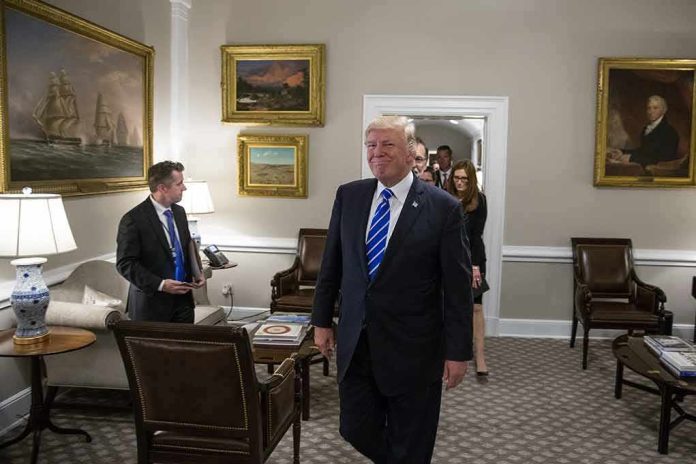
Trump did not just fly to the G7; he staged an entrance. After days of hints, he announced late Sunday that he had reached a deal with Iran to end nearly four months of war and reopen the Strait of Hormuz, the narrow waterway that carries a huge share of the world’s oil. Reporters say he bragged that shipping would be “permanently toll-free” and that fighting would stop under the agreement as he headed to meet other leaders in France.[5]
Television coverage set the mood before his motorcade even rolled up. One analyst said Trump arrived at the summit with “this deal, this agreement he reached yesterday ending nearly four months of war and reopened the Strait of Hormuz,” adding that it was supposed to take effect by Friday.[3] That framing turned the G7 into his victory lap. The stage was set: Trump the dealmaker had, once again, “fixed” a war on the eve of a big global meeting.
What the agreement actually is—and what it is not
The hard details of the deal tell a cooler story. People who have seen the terms describe it as a preliminary memorandum of understanding, not a full peace treaty. One veteran reporter who spoke directly with Trump called it “really all they’ve done here” — reopen the strait, end the blockade of Iranian ports, start a serious nuclear conversation, and lock in a short ceasefire.[5] On paper, the strait is toll-free for now, but the text only suspends tolls for about 60 days, not forever.
The agreement also pushes Iran to blend down its nuclear stockpile to material that cannot be used in weapons, and it commits both sides to return to nuclear talks in Switzerland.[5] That sounds strong, but there is a catch. None of this carries the binding power of a formal treaty. The same analyst bluntly warned that a memorandum of understanding “doesn’t have any particular enforceable capability” and is more like a table of contents for future talks than a finished deal.[5] That gap between Trump’s sales pitch and the legal reality is where the risk sits.
Supporters see a bold win; skeptics see political theater
Supporters of the deal, including many conservatives tired of endless Middle East wars, see something valuable here. Trump halted active fighting, reopened a vital shipping lane, and got Iran to step back from nuclear escalation, all without sending more Americans into combat. For people who believe in peace through strength, getting Iran to talk while U.S. forces still hold leverage looks like smart pressure, not weakness. Ending a blockade and restarting trade also helps the global economy and U.S. energy security.[1]
Critics, including some security experts, warn that this is not yet the solid peace deal Trump sells on television. Network reports still describe a “framework to end the war” and stress that the United States and Iran are “expected to sign a deal in Switzerland on Friday,” language that signals moving parts, not a finished, ratified pact.[4] From that view, Trump’s bold claims that the ceasefire is “now complete” run ahead of the paperwork and ahead of any proven verification system.[7] To them, this looks like classic diplomatic theater timed perfectly for a global summit.
The enforcement problem both sides prefer not to talk about
The real test of any deal with Iran is not the press conference; it is enforcement. This memorandum relies on trust backed by vague threats, not on a strict, published mechanism everyone can check. Trump has told reporters that if Iran fails to follow through, he will resume military action or even have the United States patrol the Gulf in exchange for a cut of regional oil revenue.[5] That kind of threat may sound tough, but it is not written into a binding treaty, and Congress has not voted on it.
Trump touches down in Geneva for G7 meeting https://t.co/mVsfzBxQJa
— John Solomon (@jsolomonReports) June 15, 2026
From a common-sense conservative view, that should raise flags. America wants peace, but not at the price of illusion. A short ceasefire that restores shipping is good. Calling a 60-day pause with loose edges a “peace deal” is not. Iran’s leaders have a long record of pocketing short-term gains, then pushing the line again. Without a clear verification plan, serious penalties, and a Congress-backed structure, this deal could slide back to where the region was before the war—only with more headlines and fewer real safeguards.
Sources:
[1] Web – President Trump meets with fellow G7 leaders after securing a deal …
[3] YouTube – Expert warns against mistaking Trump’s Iran deal for …
[4] YouTube – Trump leaves for G7 Summit with U.S.-Iran deal in place
[5] YouTube – Latest details on the U.S.-Iran deal as Trump heads to G7 …
[7] Web – Watch! U.S. President Donald Trump departs for G7 summit in …