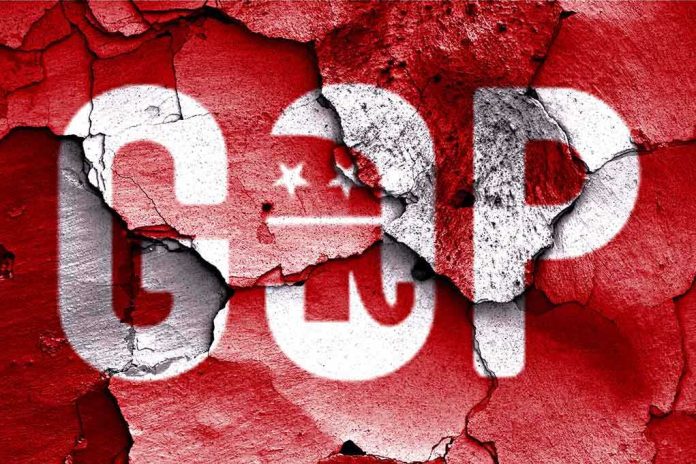
Another GOP resignation hints at deeper turmoil within the party, as internal conflicts and controversial figures like Marjorie Taylor Greene shape the Republican landscape.
Story Highlights
- GOP congressional resignations reflect internal party conflicts and polarization.
- Marjorie Taylor Greene remains a divisive figure influencing Republican dynamics.
- Recent resignations could impact GOP’s legislative capacity and political cohesion.
- Understanding the broader implications of these departures is crucial for future party strategy.
GOP Resignations and Internal Strife
Recent GOP resignations from Congress highlight a pattern of internal strife and polarization within the party. Members like Rep. George Santos and Rep. Matt Gaetz have left under ethical clouds, while others like Rep. Ken Buck have cited frustrations over partisan gridlock as reasons for their departures. These resignations not only reduce GOP representation but also signal deeper issues in party cohesion and direction.
Marjorie Taylor Greene’s role in this dynamic cannot be overstated. Known for her controversial statements and actions, Greene has become a polarizing figure within the GOP. Her influence and confrontational style contribute to the internal tensions that have led to resignations and reshaped the party’s landscape. Understanding her impact is crucial to grasping the current state of Republican politics.
The Role of Marjorie Taylor Greene
Marjorie Taylor Greene’s presence in Congress has been marked by contentious committee assignments and frequent clashes with Democratic colleagues. Her role in shaping party direction through a far-right lens has intensified internal GOP conflicts. Greene’s tactics and statements have not only stirred controversy but also divided Republican ranks, complicating efforts for party unity and coherent messaging.
Greene’s influence extends beyond her own actions, affecting the broader GOP strategy. Her presence raises questions about the party’s future, as it struggles to balance traditional conservative values with the populist rhetoric that Greene embodies. This tension impacts legislative priorities and the Republican brand, challenging leadership to manage diverse ideological factions.
Implications for GOP Strategy
The wave of GOP resignations, coupled with Greene’s divisive influence, carries significant implications for the party’s strategy. In the short term, reduced representation affects legislative capacity and committee work, while special elections strain resources and shift power dynamics. Long-term, these departures raise concerns about voter confidence and recruitment of future candidates.
Political dynamics within the GOP are increasingly influenced by figures like Greene, whose presence challenges the party’s cohesion. This environment provides ammunition for Democratic narratives about Republican dysfunction and instability. Moving forward, the GOP must navigate these internal challenges to maintain its legislative effectiveness and voter appeal.