
Law enforcement says about 300 Somali youths across a dozen groups are driving a spike in shootings around the Twin Cities, and the fallout now stretches from police briefings to political brawls.
Story Snapshot
- Officials estimate roughly 300 Somali youths tied to about 12 groups in the metro.
- Recent shootings in Eden Prairie and Bloomington pushed the issue to the forefront.
- Rep. Tom Emmer blasted media coverage and labeled the violence “Somali gang” crime.
- Somali leaders and some officers reject blanket “gang” labels as harmful and misleading.
What police say is happening across the metro
Ramsey County investigators say roughly 300 Somali youths operate in about 12 groups across the Twin Cities. They describe a mobile network that reaches beyond Minneapolis into suburbs like Burnsville, Bloomington, and Eden Prairie. Those estimates flow through public briefings and local reporting. While the numbers are rounded, the trend line points to repeat conflicts among the same circles. Commanders also note that about 40 agencies are sharing intelligence but still lack a single regional gang task force.
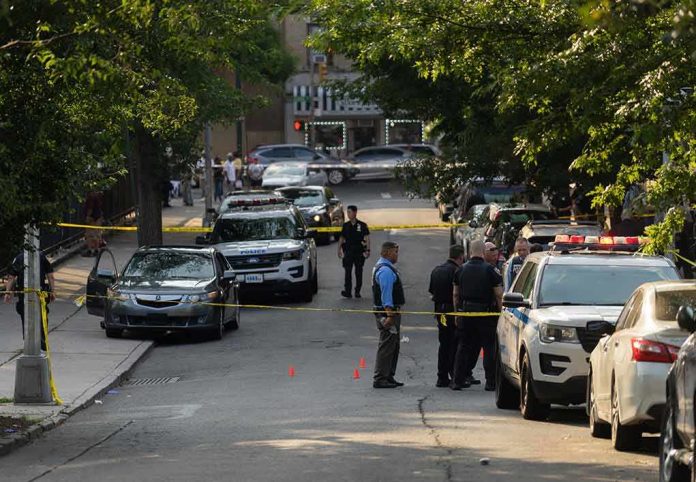
Eden Prairie’s homecoming game on October 2 became a turning point. Gunfire outside the stadium wounded two people and led to multiple arrests and charges in the days that followed. Local coverage reported law enforcement linked the case to Somali American gang violence while still checking ties between incidents. Bloomington saw another burst of gunfire around the same period, with almost 100 shell casings recovered and no arrests at the time. These episodes raised pressure for a coordinated plan.
Why Tom Emmer threw a political match on a hot sidewalk
Representative Tom Emmer moved fast online and in letters. He told the top federal prosecutor in Minnesota that Somali gang violence is surging, and he blasted local outlets for downplaying who was responsible. He wrote that these gangs “shot up high school graduations” and even used tire irons on athletes. He then posted that Eden Prairie was “another Somali gang crime,” daring media to say it plainly. His critics call that rush to label premature and inflammatory.
Here is what his push gets right and where it overreaches. He aligns with police estimates that name roughly 300 Somali youths across a dozen groups tied to repeated violence. That is a concrete claim with public attribution. But categorical language runs ahead of case files when detectives still sort motive and links across scenes. When facts are strong, say them. When details are open, say that too. Precision upholds both truth and trust, which conservative readers value.
Community backlash and what it reveals
Somali community leaders reject any claim that paints more than 100,000 Somali Minnesotans with a gang brush. They warn that a broad label turns neighbors into suspects overnight. Several Somali American police officers also pushed back on the word “gangs” for every youth conflict. They argue the term can harden lines, slow cooperation, and miss the mix of peer status, online beefs, and quick access to guns. That feedback reflects real street-level tradeoffs.
Ramsey County Sheriff Bob Fletcher has tried to keep both lanes open. He cites serious harm and repeat offenders. He also convenes public meetings, brings Somali parents into the room, and says he wants less politics and more problem-solving. That dual track matches common sense. The public expects honest numbers and fast arrests for shooters. The public also knows arrests alone will not pull a 16-year-old out of a spiral. Both can be true at once.
The facts to watch next, not the noise
Three questions now decide whether this story cools or explodes. First, can agencies publish a clean case list that shows which shootings and homicides tie to which groups over which dates? Second, will a real metro gang task force stand up so records, rules, and tactics match from city to city? Third, can leaders narrow the target to the 300 or so identified youths without smearing everyone else by ethnicity? Clear answers would drain heat and add light.
🚨 JUST IN: SOMALI GANGS are wreaking HAVOC on Minnesota neighborhoods, shooting up places, and residents are growing furious
"There are 13 Somali gangs involving roughly 300 KIDS in the Metro area."
REP. EMMER: "The MEDIA REFUSES to identify who the perpetrators are! […]… pic.twitter.com/QiYh0ke1f6
— Eric Daugherty (@EricLDaugh) November 21, 2026
Practical steps should come next. Police need consistent criteria for confirming group ties, not just hunches or friend lists. Prosecutors need swift charges on gun crimes tied to these crews. Schools and parks need on-site mentors who can cut off beefs before they turn into shootings. Media should stick to what is charged and what is proven, then update fast as files firm up. That is how a metro wins back Friday nights, one stadium and one street at a time.
Sources:
facebook.com, madisoncourier.com, startribune.com, usnews.com